
Uganda and the World Bank have renewed efforts to accelerate implementation of a US$4.6 billion development portfolio covering 18 operations, amid concerns over delayed projects, slow disbursement and implementation bottlenecks.
The commitment was made during the Uganda–World Bank Country Portfolio Performance Review held at Sheraton Hotel in Kampala, where officials assessed the performance of World Bank-funded projects and agreed on time-bound measures to turn approved financing into tangible development outcomes.
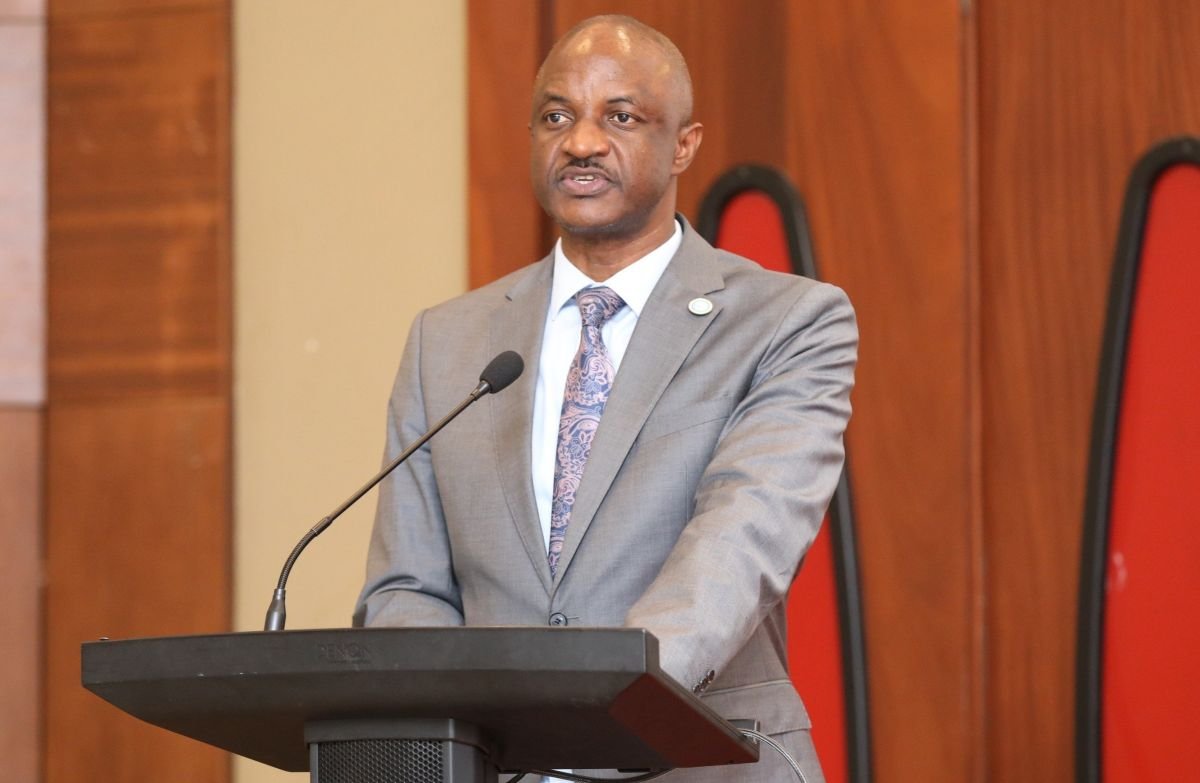
Permanent Secretary and Secretary to the Treasury Ramathan Ggoobi said Government is undertaking a detailed assessment to establish whether delays are caused by funding constraints or weaknesses in project management.
“We are going to get quantified answers that separate the fiscal constraint from the management constraint,” Ggoobi said.
The PSST identified poor project preparation before commitment as one of the major causes of delays, saying some projects only begin physical implementation in their third year.
According to Ggoobi, such delays leave projects with insufficient time to complete planned activities, increasing the risk of extensions, unfinished works and additional costs to Government.
Government tightens project gatekeeping
Ggoobi said Government has strengthened project gatekeeping to ensure that investments satisfy requirements under the Public Investment Management System before negotiations begin.
He said implementation-readiness conditions must also be fulfilled before financing agreements are signed.
These include approved procurement plans, completion of environmental and social safeguards and acquisition of necessary rights-of-way.
The reforms are intended to ensure that projects do not spend years in preparatory stages after financing has already been secured.
Ggoobi also singled out electronic government procurement (e-GP) as a key reform for improving efficiency, transparency and accountability in public projects.
He said all Programme-for-Results operations are required to use the system, while Government will continue discussions with the World Bank to bring other projects onto the platform.
Nine projects face 2027–2028 deadline
The pressure to improve implementation is heightened by the approaching closure of nine projects scheduled to close in 2027 and 2028.
Ggoobi called for faster implementation and timely decisions on projects that cannot realistically be completed within their remaining implementation periods.
Projects that cannot be delivered within the available timeframe could be restructured, scaled down or cancelled, he said, while extensions should be limited to essential ongoing contractual obligations.
The review is expected to produce an improvement plan for each project, detailing the action required, responsible institution, financing implications and implementation timeline.
Ggoobi warned that persistently underperforming projects could ultimately face restructuring or termination.
$3.1bn still available
The World Bank said Uganda’s partnership with the institution has expanded significantly, with almost US$2 billion in new financial commitments added to the country’s portfolio over the past two years.
Qimiao Fan, World Bank Division Director for Uganda, Kenya, Somalia and Rwanda, said Uganda’s portfolio is among the largest International Development Association (IDA) portfolios in Africa and the second largest in his unit.
Despite the size of the portfolio, approximately US$3.1 billion remains available for disbursement, equivalent to about five percent of Uganda’s GDP.
Fan described the undisbursed financing as a major opportunity for Uganda to accelerate development, particularly as the portfolio is aligned with the Government’s Tenfold Growth Strategy, the National Development Plan and the World Bank’s FY2026–FY2035 Country Partnership Framework.
The framework prioritises stronger governance, human capital development, connectivity, private-sector productivity and the creation of more and better jobs.
Nearly $2bn in new projects barely disbursing
The scale of the implementation challenge was further highlighted by Tonderai Fadzai Mukonoweshuro, World Bank Senior Operations Officer, who said six operations approved during FY2025/2026 had added nearly US$2 billion to Uganda’s portfolio.
However, Mukonoweshuro said the newly approved operations had barely started disbursing, underscoring the gap between securing development financing and translating it into actual investments on the ground.
The portfolio review therefore places renewed emphasis on project readiness, procurement, land acquisition, safeguards, counterpart funding and contract management as Uganda seeks to ensure that approved development financing produces measurable economic and social returns.
For Government, the immediate task is no longer simply securing large volumes of development financing, but ensuring that projects are sufficiently prepared before approval and implemented fast enough to deliver results before their financing windows expire.