
Uganda’s Parish Development Model (PDM) has reached 3,571,108 beneficiaries, with Government injecting Shs4.317 trillion into the Parish Revolving Fund in a major push to move millions of households from subsistence production into the money economy.
The funds have been channelled through 10,589 PDM Savings and Credit Cooperative Organisations (SACCOs) across the country, with each SACCO receiving at least Shs400 million over the four-year implementation period.
Under the programme, eligible beneficiaries can access loans of up to Shs1 million at an annual interest rate of 6 percent, repayable over three years, including a two-year grace period.
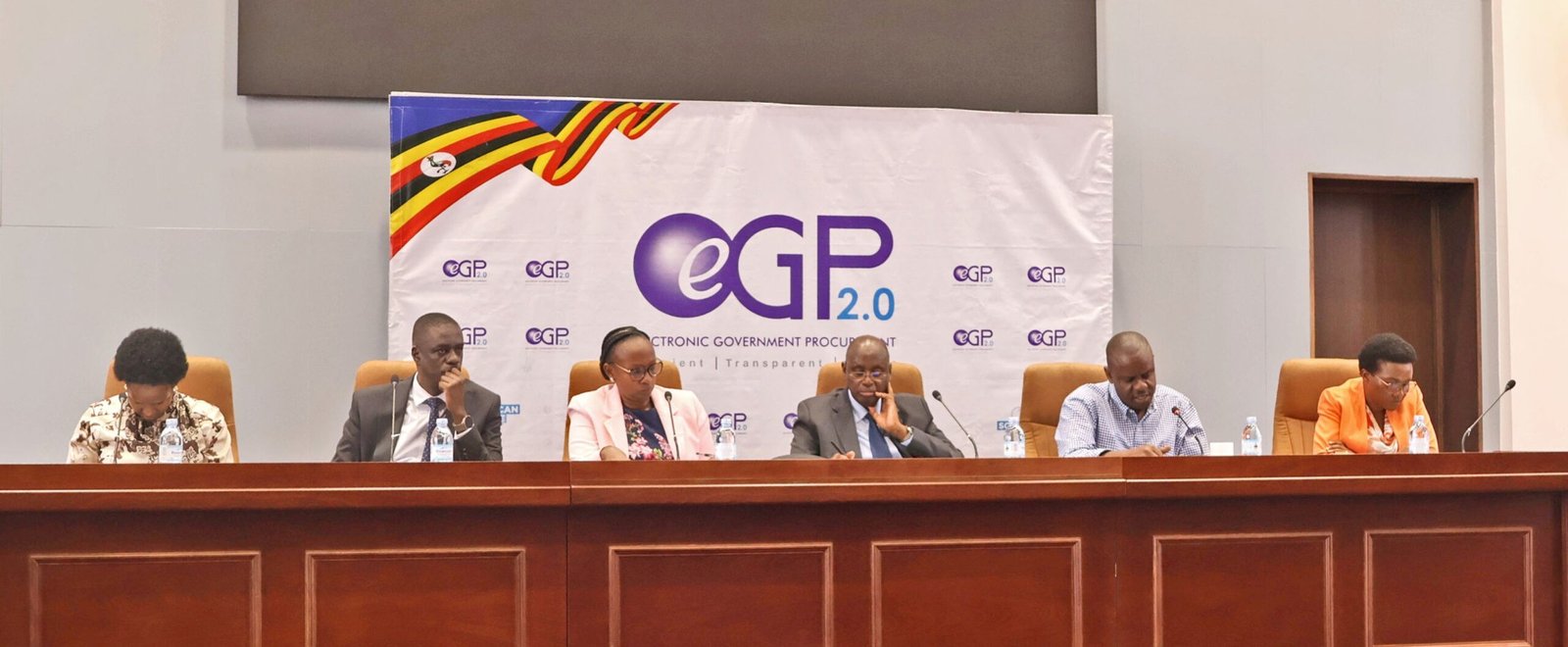
The latest figures were presented during a PDM inter-ministerial meeting chaired by Minister of State for Microfinance Haruna Kasolo Kyeyune, where ministers and technical officials reviewed implementation of the programme’s seven pillars and discussed reforms aimed at improving accountability, sustainability and its impact on household incomes.
Women dominate PDM beneficiary base
The Ministry of Finance’s Financial Inclusion Pillar report shows that adults aged 31–59 years constitute the largest beneficiary group, accounting for 1,946,086 people, or 54.50 percent.
Youth aged 18–30 years account for 1,086,998 beneficiaries (30.44 percent), while elderly persons above 60 years number 538,024 (15.07 percent).
Women make up the majority of beneficiaries, with 1,924,188 women (53.88 percent) compared to 1,646,920 men (46.12 percent).
The Financial Inclusion Pillar has also recorded 222,389 enterprise groups, although only 183,430 have so far been profiled on the PDM Information System.
The scale of the programme places PDM among Government’s major interventions targeting household-level economic transformation, particularly for communities that remain outside formal financial systems.
Digital tracking takes centre stage
Government has increasingly turned to digital systems to control the movement of PDM funds and improve beneficiary tracking.
The Integrated Financial Management System (IFMS) is being used to transfer funds directly to PDM SACCO accounts, while the PDM Information System is responsible for registering eligible beneficiaries.
Loan disbursement is being supported by Wendi, managed by Pearl Bank, which sends funds directly to beneficiaries through their mobile phones. Zaidi provides real-time tracking and verification of transactions.
Government has recruited 14,133 Wendi agents and distributed 27,100 tablets to support beneficiary registration and programme monitoring.
The digital infrastructure is intended to reduce leakages and create a clearer trail of funds from Government to SACCOs and ultimately to individual beneficiaries.
Billions flow into poultry, piggery and coffee
The programme is also beginning to generate significant investment in selected household enterprises.
As of June 2026, beneficiaries had invested:
- Shs425.27 billion in poultry;
- Shs461.12 billion in piggery; and
- Shs453.52 billion in coffee.
The figures provide an indication of where PDM financing is being concentrated as Government seeks to build household enterprises around agricultural value chains.
PDM National Coordinator Dennis Galabuzi said the programme was moving towards a coordinated, whole-of-government approach built around complete value chains.
The approach covers inputs, production, storage, electricity, processing, value addition and markets, rather than treating household financing as an isolated intervention.
Government tightens agricultural input controls
Minister of State for Animal Industry Bright Rwamirama said Government had registered 645 premises handling agricultural chemicals and seeds as part of efforts to curb counterfeit agricultural inputs.
Rwamirama also reported that Government had procured and distributed 50.6 million doses of Foot and Mouth Disease vaccines and established solar-powered cold-chain facilities in 53 districts.
The measures are intended to protect livestock and improve the reliability of agricultural production, which remains central to many PDM-funded enterprises.
Officials warn against corruption and extortion
Minister of Local Government Barugahara Balaam called for tighter accountability in the management of PDM funds, warning against extortion, illegal charges, favouritism, political interference, fraud and diversion of funds.
He urged local government officials to take greater ownership of the programme and measure its success not simply by the amount of money disbursed, but by whether beneficiaries are actually becoming economically stronger.
According to Balaam, indicators should include increased production, savings, value addition, market access, enterprise growth and improved household incomes.
Minister of State for Gender and Culture Mary Kamuli Kuteesa similarly called for beneficiaries to be adequately prepared before receiving funds.
She emphasised stronger training, involvement of political leaders in monitoring and sustained follow-up after beneficiaries have received training and financing.
Government pushes repayment sensitisation
Minister of State for National Guidance Alion Yorke Odria commended cooperation among the ministries implementing PDM and proposed greater use of Government agencies and regional radio platforms to sensitise beneficiaries.
The proposed campaigns would focus on loan repayment, programme updates and policy changes, amid growing emphasis on ensuring that the revolving fund remains sustainable.
The inter-ministerial review comes as Government shifts attention from simply expanding PDM coverage to ensuring that the money reaches productive enterprises, generates income and is repaid to enable continued lending to other households.
With more than 3.5 million beneficiaries and Shs4.317 trillion committed to the Parish Revolving Fund, the next phase of PDM is increasingly centred on whether the huge public investment can translate into sustainable household businesses, stronger local value chains and measurable improvements in incomes.