
Uganda’s ambition to transform its economy into a US$500 billion powerhouse by 2040 will depend heavily on the availability of reliable and affordable energy, Permanent Secretary and Secretary to the Treasury Ramathan Ggoobi has said.
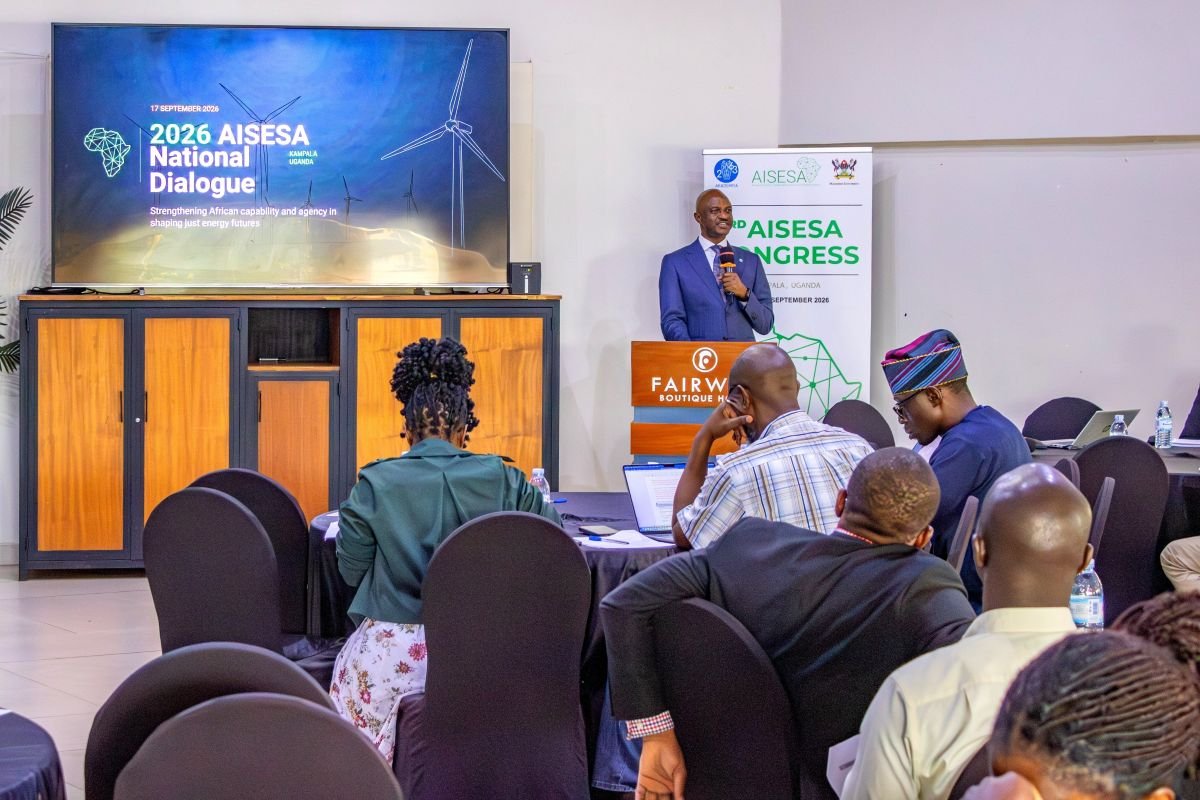
Ggoobi made the remarks during the Uganda National Dialogue on Energy, Climate and Development, convened by the African Institute for Sustainable Energy and Systems Analysis (AISESA), where government officials, researchers, financiers, private-sector players and development partners discussed Uganda’s energy future.
The PSST said energy should be viewed not merely as an infrastructure requirement but as a critical driver of Uganda’s wider economic transformation agenda.
He linked the energy transition to the Government’s Tenfold Growth Strategy, which seeks to expand Uganda’s economy to US$500 billion by 2040. The strategy identifies agro-industrialisation, tourism development, mineral-based development including oil and gas, and science, technology and innovation as key engines of growth.
According to Ggoobi, these sectors cannot achieve their full potential without sufficient, dependable and competitively priced energy.
“Reliable and affordable energy” is therefore expected to play a central role in lowering production costs, supporting industrialisation, increasing competitiveness and enabling Ugandan businesses to participate more effectively in regional and international markets.
The Finance Ministry has previously identified electricity and other energy sources among the major areas of public investment required to support the Tenfold Growth Strategy, alongside transport infrastructure, education, health, ICT and private-sector development.
Financing Uganda’s energy transition
Ggoobi also called for a shift towards well-prepared and bankable energy projects capable of attracting both domestic and international financing.
He stressed the need for value for money and measurable development outcomes, warning that financing mechanisms must ultimately translate into lower costs of capital and stronger economic returns.
Among the instruments highlighted were blended finance, green and sustainability-linked financing, carbon markets and public-private partnerships.
The approach, he said, should allow Uganda to mobilise additional investment while protecting public finances.
The emphasis on project quality and value for money comes as Government seeks to accelerate implementation of the Fourth National Development Plan (NDP IV), which is the first of three five-year development plans intended to deliver the Tenfold Growth Strategy. Government’s planning framework envisages doubling the economy every five years on the path toward the US$500 billion target.
Energy at the heart of industrialisation
The Finance Ministry has repeatedly positioned energy as one of the critical enablers of Uganda’s economic transformation.
In July 2026, Ggoobi said Uganda’s economy had reached about US$70 billion, leaving the country with a substantially larger economic base from which to pursue the US$500 billion target.
The Government’s strategy also seeks to increase the country’s productive capacity by expanding value-added exports, attracting significantly higher foreign direct investment and building infrastructure, including energy systems, railways, roads and digital connectivity.
Ggoobi said Uganda’s energy transition should ultimately be judged by its contribution to structural economic transformation.
This means using energy investment to reduce the cost of doing business, support competitive industries, expand exports, raise household incomes and improve livelihoods while strengthening the country’s resilience to climate-related challenges.
The message places energy policy firmly within Uganda’s broader economic agenda: power is not the end goal, but a foundation for production, industrialisation and wealth creation.