
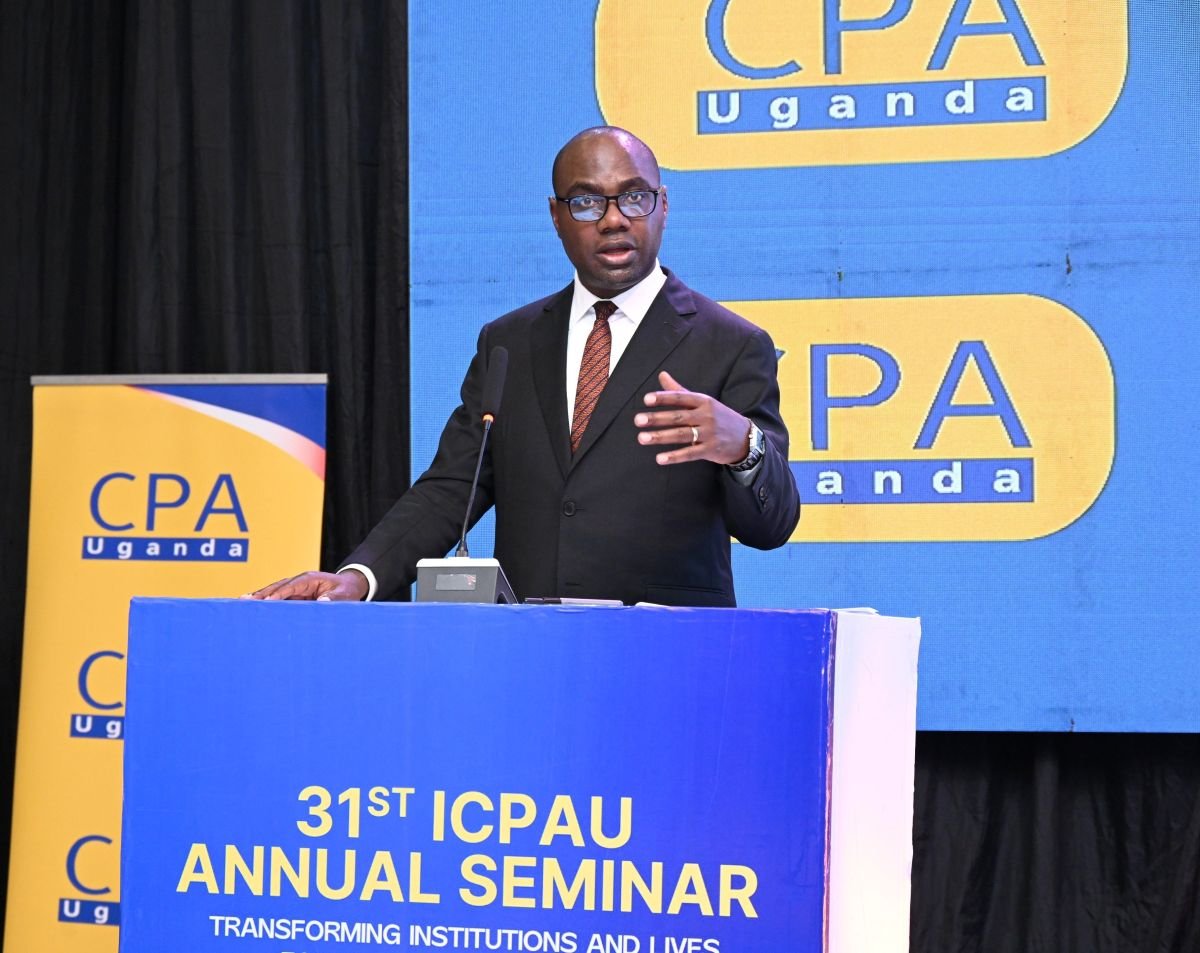
Parliament’s Committee on Commissions, Statutory Authorities and State Enterprises (COSASE) has suspended its proceedings into a controversial Shs140.487 billion Bank of Uganda liability after Finance Minister Henry Musasizi failed to appear before the committee to answer questions surrounding the long-running financial exposure involving businessman Hassan Basajjabalaba.
The committee had expected Musasizi to provide clarification on the government’s role in the transaction and respond to audit queries surrounding the money, which has remained outstanding for years.
The latest development comes amid a major contradiction between documents before Parliament and testimony given by Basajjabalaba, the chairman of Haba Group.
Basajjabalaba disputes Shs140.4bn payment
During his appearance before COSASE on September 23, Basajjabalaba disputed the Auditor General’s account that Shs140.487 billion had been disbursed to his company.
He told MPs that he had never received Shs140 billion from Bank of Uganda and instead claimed that his total outstanding compensation claim stood at Shs168.8 billion.
According to Daily Monitor, Basajjabalaba said the original claim was about Shs142 billion before another market was included, pushing the amount he says was owed to Shs168.8 billion.
His testimony has now placed the committee at the centre of a critical question: if the Auditor General’s records show the money was disbursed, where did the funds go and who ultimately received them?
The Auditor General’s report on Bank of Uganda’s 2024/25 financial statements records the Shs140.487 billion as an outstanding liability, with the matter dating back to 2017.
How the controversial liability arose
The dispute traces back to compensation claims involving companies associated with Basajjabalaba and several Kampala markets.
According to background presented to COSASE, companies linked to Haba Group had entered into lease and management arrangements involving markets including Nakasero, St Balikuddembe (Owino), Shauri Yako and Nakawa.
After some of the agreements were terminated or cancelled, Haba Group and associated companies pursued compensation from Government.
Bank of Uganda subsequently issued letters of comfort or guarantees to commercial banks to facilitate financing for Haba Group, following instructions from the Ministry of Finance.
Bank of Uganda officials told COSASE earlier in September that the exposure had remained unresolved since 2017.
The central bank’s Head of Legal, Dorothy Masifa Ochola, told MPs that the guarantee was issued on instructions from the Ministry of Finance and that no security had been presented to Bank of Uganda by Haba Group. She also said the central bank had been exploring legal options for recovery.
MPs demand answers from Finance Ministry
The committee has questioned why an exposure of more than Shs140 billion has remained unresolved for nearly a decade.
COSASE Chairperson Muwada Nkunyingi previously criticised Bank of Uganda for relying on correspondence with the Ministry of Finance instead of taking decisive recovery action.
Parliament formally summoned Basajjabalaba after he initially failed to appear before the committee. The committee said its investigation was intended to establish the respective roles of Bank of Uganda, the Ministry of Finance, Haba Group and the commercial banks involved.
The committee is now seeking clarification from Musasizi on the Ministry of Finance’s involvement, particularly because Bank of Uganda officials have maintained that the guarantee was issued following instructions from the ministry.
Musasizi became Uganda’s Finance Minister in 2026 after serving as State Minister for Finance, General Duties, with the Ministry confirming his appointment and handover from former minister Matia Kasaija in June.
With his failure to appear, COSASE has suspended the sitting, leaving the committee to reconvene and seek answers to the growing discrepancies between the Auditor General’s records, Bank of Uganda’s account and Basajjabalaba’s testimony.
At the heart of the investigation is no longer simply why the Shs140.4 billion has not been recovered, but also what exactly was paid, to whom, under what arrangement, and how the conflicting figures and accounts can be reconciled.