
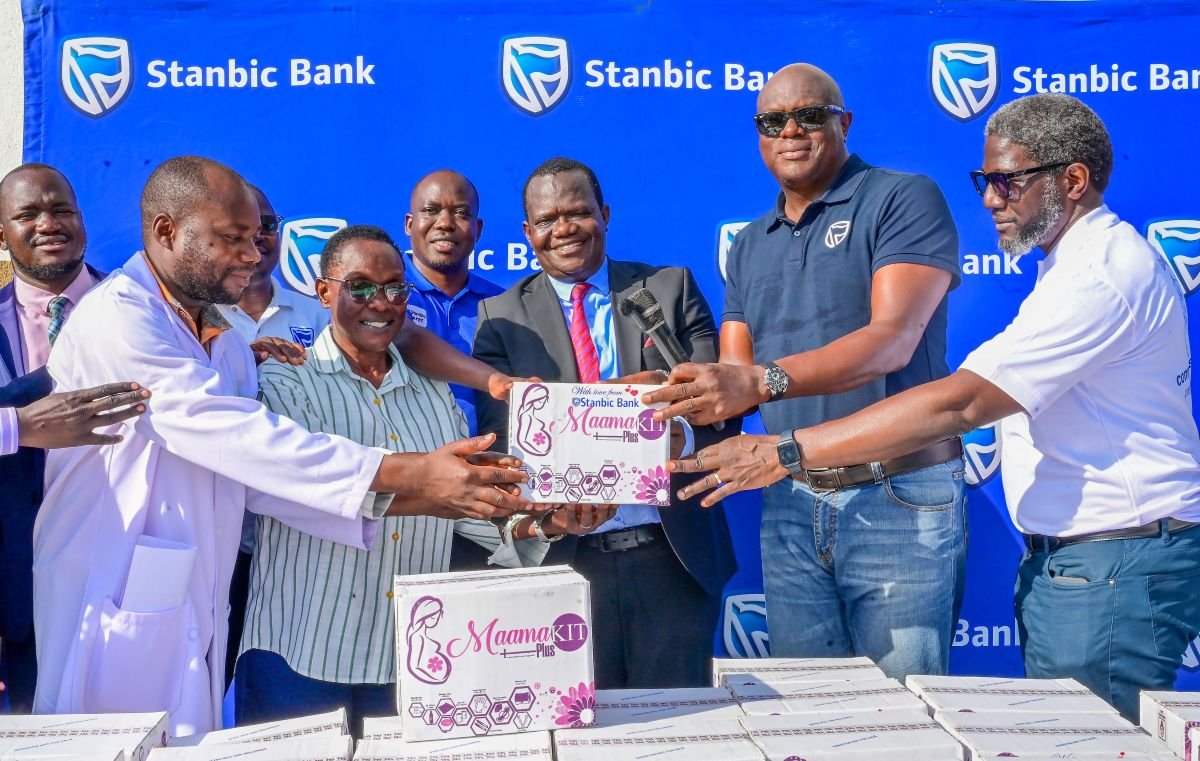
Stanbic Bank Uganda has donated hospital beds, mattresses, patient monitors and maternal health supplies worth Shs40 million to Obongi Health Centre IV, seeking to strengthen maternal and child healthcare services at a facility grappling with severe staffing shortages and increasing demand.
The donation comprises 20 hospital beds, 30 mattresses, two patient monitors and 200 Mama Kits to support expectant mothers, newborns and healthcare workers at the district’s main referral facility.
Obongi Health Centre IV conducts approximately 1,388 deliveries annually, including 322 Caesarean-section procedures, according to Dr Tagule Sunday, the Assistant District Health Officer in charge of Maternal and Child Health.
The facility serves a population of more than 240,000 people, including communities hosting refugees, placing additional pressure on its already constrained healthcare resources.
The equipment handover took place on Wednesday as Stanbic Bank Uganda stepped up its community outreach initiatives aimed at improving access to essential services.
Speaking at the ceremony, Stanbic Uganda Holdings Chief Executive Mark Ocitti Ongom said improving healthcare delivery required collaboration between government, the private sector and communities.
“A nation’s social progress cannot be the responsibility of government alone. It depends on government providing leadership, the private sector investing responsibly, and citizens and communities playing their part,” Ocitti said.
He said the donation was intended to improve the facility’s capacity to provide safer deliveries, better patient care and stronger support for frontline health workers.
“This is a practical investment in dignity: safer deliveries, better patient care and stronger support for the health workers who serve families every day. Every mother deserves a safe environment in which to give life, and every child deserves a healthy beginning,” he added.
Obongi Health Centre IV Operates at 32% Staffing Capacity
Despite the donation, the facility continues to face significant operational challenges, with health officials and local leaders pointing to inadequate staffing and limited access to modern medical equipment as major obstacles to effective service delivery.
Obongi County Member of Parliament Hassan Kaps Fungaro revealed that the health centre operates at only 32 per cent of its required staffing levels, leaving a substantial gap in the workforce needed to meet the district’s healthcare demands.
The staffing deficit raises concerns about the pressure on available health workers, particularly at a referral facility handling more than 1,300 deliveries annually and hundreds of Caesarean-section procedures.
The shortage also highlights the broader challenges confronting healthcare delivery in Obongi, a relatively young district whose communities include hard-to-reach areas and refugee-hosting settlements.
While the donated beds and mattresses are expected to improve patient accommodation, the availability of adequate medical personnel remains critical to ensuring that mothers receive timely and quality care before, during and after childbirth.
Fungaro’s remarks underscore the need for sustained investment in both medical equipment and human resources if the facility is to meet the growing demand for maternal and child healthcare.
RDC Calls for Proper Utilisation of Equipment
Assistant Resident District Commissioner Eva Kwesiga Nalongo welcomed Stanbic’s contribution, describing it as an important intervention for a district facing persistent development and service delivery challenges.
She urged health workers and facility administrators to ensure that the donated equipment is properly maintained and used for its intended purpose.
“We are a vulnerable district and hard to reach, but with support like this from partners like Stanbic, we stand firm that soon this young district will overcome our prevailing challenges,” Nalongo said.
Her remarks highlighted the importance of partnerships between public institutions and private-sector organisations in complementing government efforts to improve healthcare infrastructure and access to essential services.
For Obongi Health Centre IV, the donation is expected to provide additional resources for patient care, particularly for mothers requiring delivery services and other forms of maternal healthcare.
However, addressing the facility’s staffing gap and ensuring a consistent supply of essential medical resources will remain important to sustaining improvements in service delivery.
Stanbic Marks 35 Years in Uganda
The donation was made under Stanbic Bank’s annual October Love Month community outreach programme and forms part of activities marking the bank’s 35 years of operations in Uganda.
The initiative reflects the bank’s continued engagement in community-focused interventions, including support for essential services in vulnerable communities.
Among the officials present at the handover was Stanbic Bank Uganda Executive Director and Head of Personal and Private Banking, Sam Fredrick Mwogeza.
The Shs40 million contribution provides Obongi Health Centre IV with additional equipment to support its maternal and child healthcare services. For a facility operating with only about a third of its required staffing, however, the intervention also draws attention to the need for broader and sustained support to ensure mothers and newborns receive safe and timely care.