

By Ronald Nyanzi
Artificial intelligence (AI) is increasingly changing how people work, communicate, conduct research and solve problems. The education sector is among the areas experiencing this transformation, with AI tools offering new opportunities to improve teaching, personalise learning and make academic research more efficient.
From generating lesson plans and assessment questions to developing personalised learning materials, generative AI is opening up possibilities that were previously difficult or time-consuming for educators to achieve.
However, as schools, universities and other learning institutions embrace these technologies, an important question remains: Are teachers and lecturers adequately prepared to use AI effectively and responsibly?
For Uganda, where efforts to expand digital learning continue to gain momentum, the answer to this question could determine whether AI becomes a meaningful tool for improving education or simply another technology introduced into classrooms without delivering lasting results.
The challenge is no longer whether AI should be part of education. It is whether educators have the skills, knowledge and institutional support to integrate it into teaching in ways that improve learning outcomes.
The teacher remains central to educational transformation
One of the biggest misconceptions surrounding artificial intelligence in education is that technology alone can revolutionise the learning experience.
While AI can generate lesson plans, develop examination questions and summarise large volumes of information within seconds, it cannot independently determine whether the content is accurate, appropriate for a particular learning environment or aligned with the curriculum.
That responsibility remains with the educator.
Teachers must therefore develop skills that go beyond basic computer literacy. They need what is increasingly referred to as AI literacy, which includes understanding how AI systems work, knowing how to give effective instructions (prompts), evaluating generated information and recognising potential biases.
Equally important is the ability to protect students’ personal information, respect intellectual property rights and uphold academic integrity when using AI-generated content.
Educators must also exercise professional judgment in determining when AI can improve teaching and when human interaction, critical thinking and personal guidance are more important.
Without these competencies, the adoption of AI risks becoming superficial. Teachers may end up distributing AI-generated information without verifying its accuracy, potentially introducing misinformation and reinforcing existing inequalities in the education system.
Lessons from teacher capacity-building initiatives
My experience in teacher capacity building has reinforced an important lesson: educators cannot be expected to transform their classrooms through technology if they are not first equipped with the skills to use it.
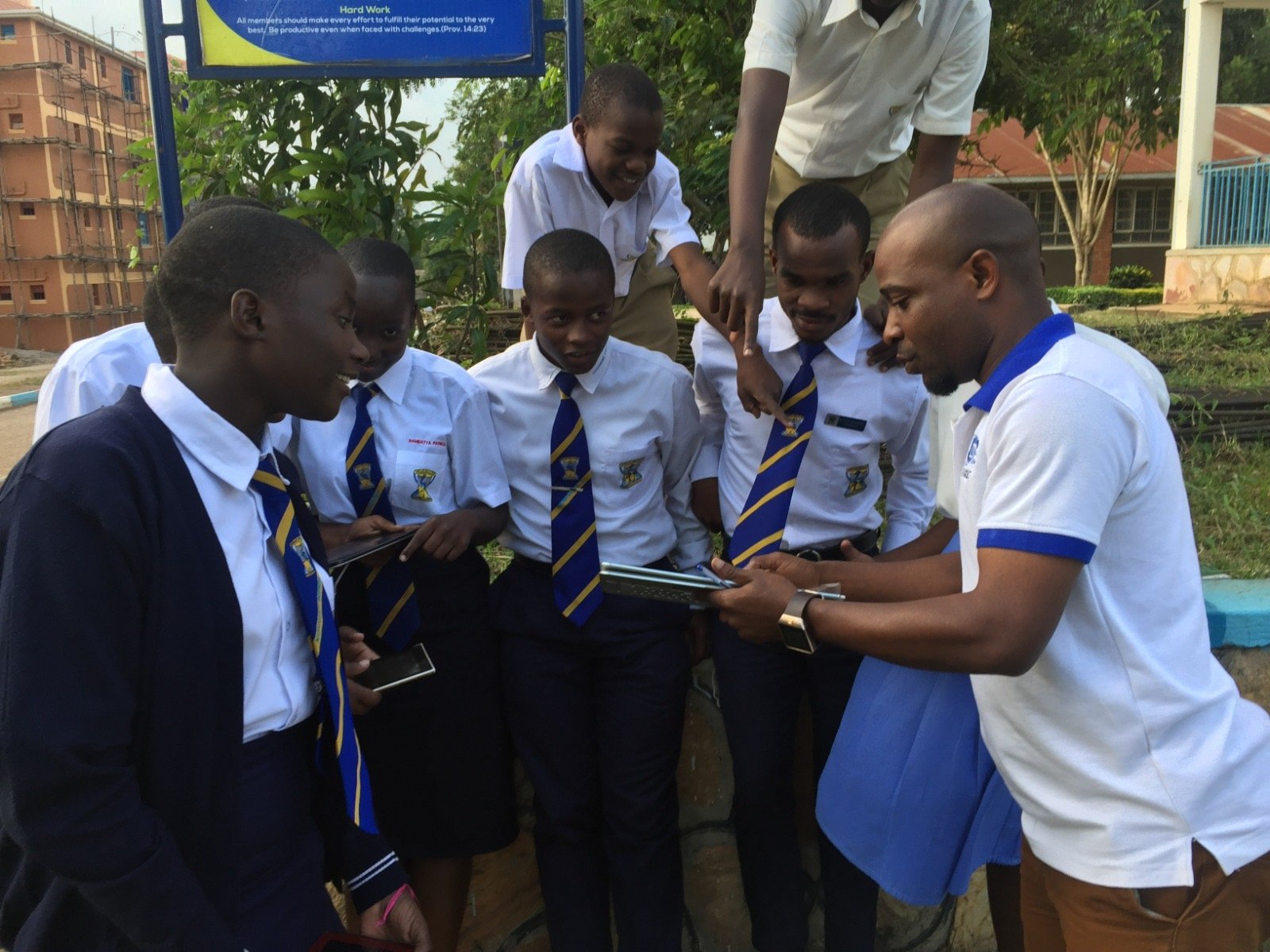
Through collaborative professional development initiatives with fellow Fulbright alumni, I have participated in training programmes that reached more than 400 educators.
The programmes focused on strengthening instructional practices, including technology integration, differentiated instruction and inclusive teaching approaches.
More recently, through the Indiana University of Pennsylvania (IUP) Noyce Grant, I have contributed to professional development activities involving more than 50 STEM educators, with a particular focus on integrating emerging technologies and artificial intelligence into classroom instruction.
These engagements have demonstrated that introducing technology into education must go hand in hand with investing in the people expected to use it.
A school may have computers, internet connectivity and access to advanced AI platforms, but without adequately trained teachers, the potential benefits of these investments may remain unrealised.
Sustainable educational innovation must therefore begin with the educator.
Uganda’s opportunity to prepare for AI-driven education
Uganda is at an important stage in its digital transformation journey. National initiatives, including the Education Digital Agenda and ongoing efforts to develop a national strategy for artificial intelligence and emerging technologies, demonstrate growing recognition of technology’s role in national development.
However, having policy documents, computers and internet connectivity in schools does not automatically translate into better teaching and learning.
For AI to make a meaningful contribution to Uganda’s education system, deliberate investment is needed in four key areas.
1. Integrating AI literacy into teacher training
Practical AI competencies should become part of pre-service teacher education and continuing professional development programmes.
Training should go beyond demonstrating how different AI tools work. Educators should learn how to use them to develop lesson plans, prepare assessments, support learners with different abilities and improve research.
2. Establishing ethical guidelines
Universities, schools and teacher-training institutions need clear guidelines on the responsible use of AI.
These should address academic integrity, student data protection, intellectual property, algorithmic bias and the appropriate use of AI in examinations and assessments.
3. Investing in sustainable digital infrastructure
Reliable internet connectivity, affordable digital devices and accessible learning platforms remain essential.
Without addressing these foundational needs, AI adoption could widen the existing gap between well-resourced urban schools and institutions in rural communities.
4. Promoting continuous professional development
One-off training workshops are not enough to prepare educators for a rapidly changing technological environment.
Institutions should establish professional learning communities where teachers can share experiences, receive mentorship, experiment with new tools and evaluate how AI is affecting classroom instruction.
What Uganda can learn from global developments
Although education systems in developing countries such as Uganda face different resource constraints from those in the United States, the underlying challenge is similar: technological advancements are moving faster than educators’ skills and institutional preparedness.
The United States has increasingly recognised the importance of preparing educators and learners for an AI-driven future.
In April 2025, the White House issued an Executive Order on Advancing Artificial Intelligence Education for American Youth, highlighting the need to promote AI literacy and strengthen teacher professional development.
In March 2026, the National Science Foundation also announced an $11 million initiative to expand AI professional development for K-12 educators across the United States.
These developments reinforce an important lesson: successful AI adoption requires more than providing schools with access to software. It calls for coordinated efforts involving teachers, universities, policymakers, researchers, technology developers and communities.
There is also an opportunity for international collaboration.
Uganda’s experiences in introducing technology into resource-constrained learning environments can contribute valuable lessons to global discussions on inclusive education and responsible AI adoption.
At the same time, research and practical frameworks from countries such as the United States can inform Uganda’s approaches to teacher preparation, institutional governance and ethical technology integration.
Moving from technological excitement to evidence-based adoption
As a doctoral researcher examining the adoption of generative AI in Ugandan higher education through the Unified Theory of Acceptance and Use of Technology (UTAUT) framework, I am particularly interested in understanding the factors that influence whether educators embrace or resist these technologies.
Research into technology adoption shows that access alone does not guarantee meaningful use.
Educators are more likely to adopt AI when they understand its benefits, find it easy to use, receive encouragement from colleagues and institutions, and have access to the necessary resources.
They must also be confident that integrating AI into their work will not compromise academic standards, professional judgment or student privacy.
This is why Uganda’s approach to AI in education must be guided by research and evidence rather than technological excitement or commercial hype.
Universities and other learning institutions should continually assess how educators are using AI, the challenges they encounter and whether the technology is contributing to improved teaching and learning outcomes.
Such evidence can inform better policies, more effective training programmes and smarter investments in educational technology.
Empowering teachers is the key to sustainable change
The future of education will not necessarily be determined by the institutions that acquire the most advanced artificial intelligence tools. It will be shaped by those that prepare their educators to use these technologies critically, ethically and creatively.
For Uganda, the opportunity is not simply to introduce AI into classrooms but to build an education system in which teachers are confident and competent enough to use technology to improve the learning experience.
Artificial intelligence should not be viewed as a replacement for educators. Rather, it should be treated as a tool that strengthens their ability to teach, inspire, guide and support learners.
Ultimately, investing in teacher preparation is not an optional addition to AI adoption. It is the foundation upon which meaningful and sustainable educational transformation must be built.
ABOUT THE AUTHOR & SCHOLARLY CONTEXT
Ronald Nyanzi is an Education Technology and Instructional Design Specialist and a Doctoral Researcher investigating AI adoption in higher education through the UTAUT framework. He has spearheaded international teacher capacity-building initiatives with Fulbright alumni (reaching 400+ educators) and contributed to STEM AI integration through the IUP Noyce Grant (50+ STEM educators). His research advances evidence-based digital policy, ethical AI integration, and educator empowerment across international learning environments.