

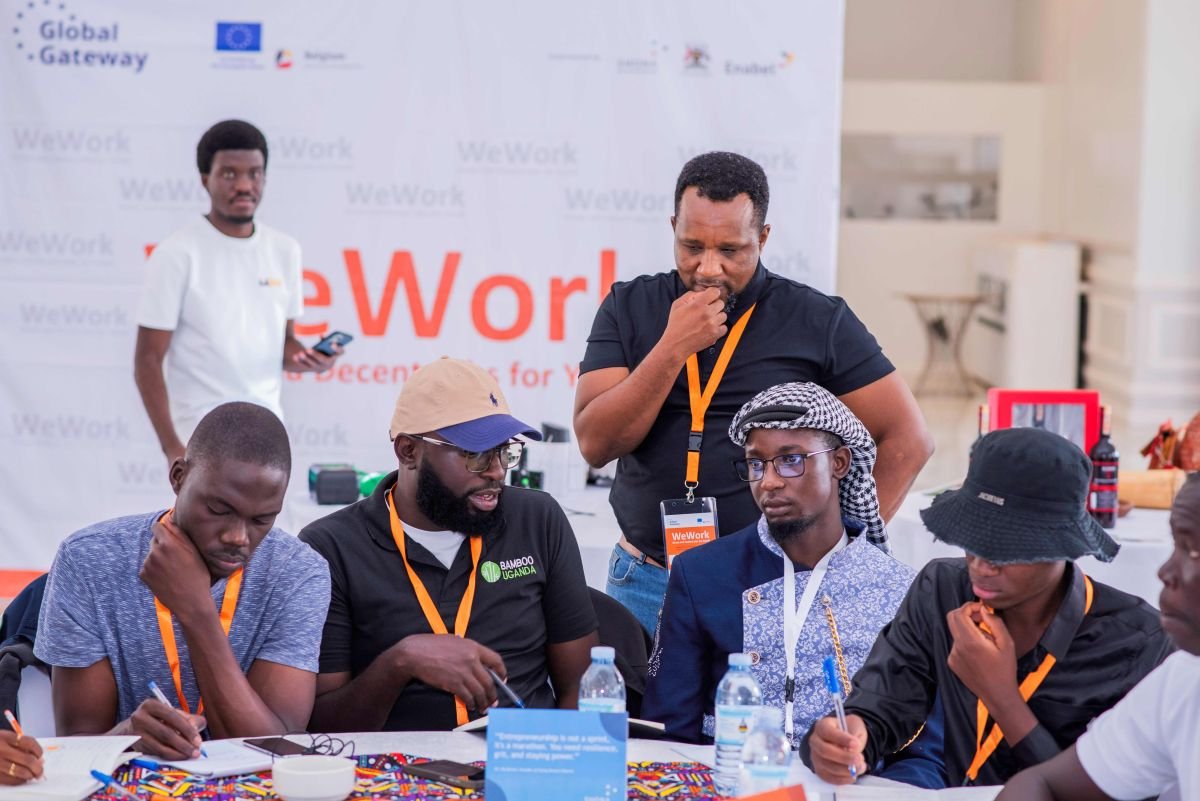
More than 50 Small and Medium Enterprises (SMEs) from Kampala Metropolitan, Busoga and West Nile have completed intensive business growth bootcamps aimed at strengthening Uganda’s green and circular economy while creating more decent jobs for young people.
The three-day bootcamps were conducted under the WeWork — Green and Decent Jobs for Youth project through The Good Green Business Accelerator, implemented by SHONA Group in partnership with Enabel and the Government of Uganda, with funding from the European Union and the Kingdom of Belgium.
The programme selected high-potential enterprises from hundreds of applicants operating across Uganda’s emerging green economy, including renewable energy, sustainable agriculture, smart irrigation, sustainable fashion and interior design, eco-tourism, waste management, green construction, green manufacturing and digital green marketplaces.
The initiative comes at a time when SMEs remain a major engine of Uganda’s private sector and employment, but many businesses operating in environmentally sustainable sectors continue to face significant barriers to growth.
These include limited access to finance, inadequate business management skills, high collateral requirements and difficulties finding the right talent.
The WeWork project is seeking to address these challenges through an integrated support model combining business capacity building, access to finance and talent connections.
The ultimate goal is to develop competitive and investment-ready green enterprises capable of creating decent employment for young Ugandans while reducing environmental damage and promoting efficient use of resources.
Regina Bamugye, Project Manager at SHONA Group, said the programme is designed to help entrepreneurs deliberately integrate sustainability into their business models rather than treating it as an incidental benefit.
“Our objective is to move entrepreneurs from being green by accident to being green by design,” Bamugye said.
She added that strengthening business skills and operationalising green and circular value chains would position participating enterprises to grow, access affordable capital and create sustainable jobs.
Entrepreneurs Gain Practical Growth Tools
For the participating business owners, the bootcamps provided practical training intended to address some of the day-to-day challenges involved in scaling an enterprise.
Aminata Najjingo, founder of Amylia Fashions, described the programme as an opportunity to gain new business knowledge, develop practical tools and establish networks with other entrepreneurs.
She said the experience had given her greater clarity about the future of her business and helped her develop a three-year growth plan.
Najjingo said she was particularly looking forward to implementing the plan using lessons and insights gained from the facilitators and fellow entrepreneurs.
The programme’s focus on sustainable fashion is part of a broader effort to demonstrate how businesses can combine commercial growth with environmental responsibility and job creation.
More Support for Selected Businesses
Completion of the bootcamps marks the beginning of further support for selected enterprises.
The businesses will receive continued advisory support and additional capacity building aimed at preparing them to access capital and strengthen their operations.
Under the programme, eligible enterprises will also have access to catalytic matching grants, designed to support business growth and investment.
The initiative will further provide talent matching grants, which subsidise 50% of the wages of newly hired young people for up to six months.
The wage subsidy is intended to help SMEs overcome one of the common challenges facing growing businesses—being able to afford and attract new talent while expanding their operations.
With SMEs accounting for a substantial share of Uganda’s private-sector activity, organisers say strengthening green businesses could simultaneously support enterprise development, environmental sustainability and youth employment.
The programme is therefore positioning participating businesses not only as beneficiaries of capacity building, but as potential drivers of Uganda’s transition toward a more sustainable and circular economy.