
Parliament’s accountability watchdog expected to spend Monday interrogating the Insurance Regulatory Authority (IRA) over its books.
Instead, the committee found itself confronting a rather more basic accounting question: how many chief executive officers does one regulator have?
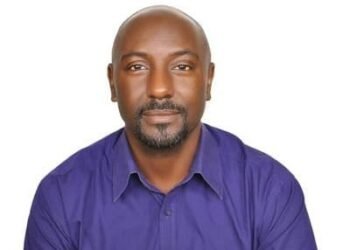
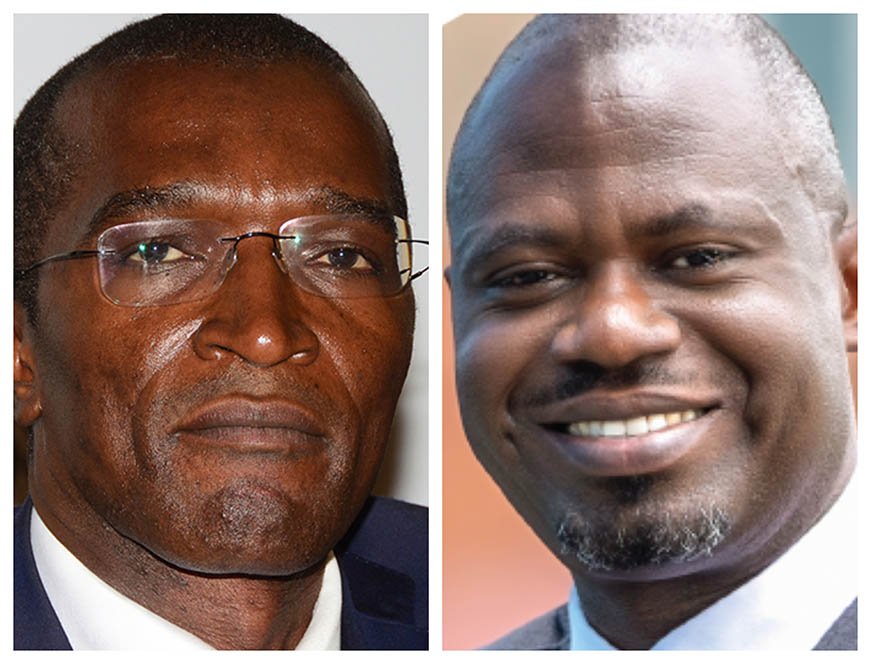
The Parliamentary Committee on Commissions, Statutory Authorities and State Enterprises (COSASE) was forced to suspend scrutiny of the Auditor General’s report on IRA after Dr Protazio Sande appeared as Acting Chief Executive Officer while Dr Ibrahim Kaddunabbi Lubega also presented himself as Chief Executive Officer.
In the theatre of public accountability, it was an awkward plot twist: before MPs could establish whether the Authority’s accounts were in order, they first had to establish who was actually in charge of signing them.
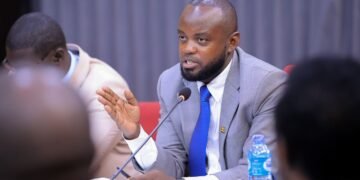
Committee Chairperson Muwada Nkunyingi, the NUP MP for Kyadondo County East, said COSASE will now seek clarification from Permanent Secretary and Secretary to the Treasury Ramathan Ggoobi on who is lawfully occupying the top office at the regulator.
The committee also wants a copy of the court order obtained by Kaddunabbi before proceeding with the audit interrogation.
The CEO who left — but apparently did not quite leave
Kaddunabbi’s five-year contract formally expired on May 31, 2026, after he had spent more than a decade at the helm of IRA.
The IRA Board subsequently appointed Sande, substantively the Authority’s Director of Strategy and Market Development, as Acting CEO effective June 1.
IRA itself announced the appointment on June 2, saying Sande’s elevation was intended to guarantee continuity of operations after Kaddunabbi’s contract expired.
But Kaddunabbi did not simply disappear into the former-CEO category.
He went to court challenging the Board’s decision not to recommend him for another term, arguing, among other things, that he was eligible for reappointment and that he had not been accorded a fair hearing.
The High Court subsequently complicated an already complicated succession saga by stopping the process of appointing a substantive CEO until Kaddunabbi’s case is determined.
Importantly, however, the court did not remove Sande from the acting position. The interim order allowed him to remain Acting CEO while freezing the process of substantially filling the position.
And that is precisely where the COSASE headache begins.
If Sande is the acting CEO, and the court has preserved his position, why is Kaddunabbi appearing before Parliament identifying himself as CEO?
That is now a question for the Treasury and, potentially, the courts — not for MPs to answer by guesswork.
Board says Kaddunabbi was not coming back
Former IRA Board Chairperson Dr Isaac Nkote Nabeta told the committee that the Board had resolved not to recommend Kaddunabbi for another term.
The decision, according to the former chairperson, followed an evaluation of Kaddunabbi’s performance and subsequent Board deliberations.
The current Board Chairperson, Keto Nyapendi Kayemba, told MPs that the new Board upheld the earlier decision and moved to identify an acting replacement.
The Authority has previously said Sande was selected to ensure continuity while the process of resolving the substantive leadership question continued.
The Board’s decision has nevertheless become the subject of litigation, with Kaddunabbi challenging the refusal to recommend him for reappointment.
Then came the Auditor General
The leadership dispute would have been messy enough on its own.
Then the Auditor General entered the story.
A special investigation by Auditor General Edward Akol, commissioned after concerns raised about the regulator’s administration, flagged a series of financial and governance issues during Kaddunabbi’s tenure.
Among the findings reported from the investigation were questions over salary increments, leave payments, travel allowances and recruitment.
The investigation found that Kaddunabbi’s monthly salary increased from about Shs46.34 million to Shs60.85 million between the 2021/22 and 2025/26 financial years, with auditors questioning whether the increases had followed the required approval process.
Auditors also questioned payments relating to leave, including Shs36.8 million in leave allowances and Shs87.18 million paid as compensation for untaken leave.
Another finding concerned travel-related payments linked to Kaddunabbi’s role at Africa Reinsurance Corporation. The Auditor General reportedly calculated an irregular payment of about Shs57.4 million, arguing that the external engagements were already sponsored and therefore did not justify payment of the full IRA per diem.
The audit also questioned the recruitment of six additional employees beyond the positions originally advertised, with the resulting salaries and benefits estimated at about Shs647.6 million.
Those are precisely the kinds of findings COSASE would ordinarily relish putting under the microscope.
Except Parliament first needs to know which CEO is entitled to sit under the microscope.
A regulator caught between Parliament and court
The dispute has now evolved from an ordinary succession question into a broader governance battle involving IRA’s Board, the former CEO, the Ministry of Finance, the Auditor General and the High Court.
The Ministry itself has been pulled into the dispute because the Permanent Secretary/Secretary to the Treasury is expected to clarify the legal status of the Authority’s leadership.
Meanwhile, the High Court’s interim order means the substantive CEO recruitment process remains frozen pending determination of Kaddunabbi’s challenge.
Kaddunabbi’s camp maintains that his challenge remains alive and that he was entitled to consideration for another term. IRA, on the other hand, has maintained that his fixed-term contract ended on May 31 and that the Board acted within its mandate in declining to recommend his renewal.
The disagreement is therefore not merely about a title.
It potentially affects who is the Authority’s accounting officer, who answers for its financial statements, who can make binding administrative decisions and who should be held accountable for the Auditor General’s findings.
COSASE presses pause
Rather than risk conducting an accountability hearing with competing claims of authority hanging over the table, Nkunyingi’s committee has opted to pause the proceedings.
The committee will seek clarification from Ggoobi on the lawful status of the IRA leadership and obtain the relevant court injunction before returning to the accounts.
For now, the insurance regulator has managed the rare feat of turning an audit hearing into a constitutional and corporate-governance puzzle.
The irony is difficult to miss.
COSASE came looking for answers about IRA’s accounts and left needing an answer to a much simpler question: who, exactly, is the CEO?
Until that is settled, Parliament appears unwilling to audit an institution that cannot first agree on who should be sitting in the CEO’s chair.
And somewhere between the Boardroom, the Treasury and the High Court, Uganda’s insurance regulator has acquired something no insurance policy can easily cover: a leadership dispute with two people claiming the same job.