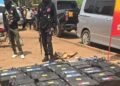


Members of Parliament on the Committee on Physical Infrastructure have confirmed that Uganda’s controversial digital number plate system is operational, following a live demonstration at the Police Command Centre in Naguru.
The committee, chaired by Mwine Mpaka, conducted the verification on Friday, October 2, 2026, after lawmakers had raised questions about whether the technology was actually delivering the promised vehicle-tracking and security capabilities.
Unlike previous demonstrations, the MPs reportedly used their own vehicles and digital registration plates to test whether the system could identify and track vehicles in real time.
MPs test system themselves
The inspection followed a heated parliamentary inquiry into the implementation of the Intelligent Transport Management System (ITMS), under which Uganda’s digital number plates are being rolled out.
Committee members had specifically demanded practical evidence that the security component of the system works, rather than relying on presentations from government officials or the contractor.
After the demonstration at Naguru, Mpaka said the committee had established that vehicles could indeed be tracked.
The test came after Security Minister Jim Muhwezi told Parliament on September 30 that the digital plate tracking system was operational across the country.
According to figures presented to MPs by Uganda Police Director of ICT, AIGP Felix Baryamwisaki, police had tracked and recovered 337 of 375 stolen motor vehicles, representing a reported 90 percent recovery rate.
The minister also told MPs that a stolen police vehicle had been tracked as far as Kenya and subsequently recovered, suggesting that the tracking capability extends beyond Uganda’s borders.
How the digital number plate system works
Uganda’s digital plates form part of the Intelligent Transport Management System, a wider government initiative intended to modernise vehicle registration, identification, monitoring and enforcement.
Importantly, police officials told Parliament that the vehicle tracker is GPS-based rather than dependent on cameras. This means the system can provide location information associated with vehicles fitted with the technology.
The system is also designed to allow authorities to identify vehicles and integrate vehicle information with police operations.
The rollout began in phases, with the third phase launched in January 2025 for vehicles entering Uganda for first-time registration. The Ministry of Works and Transport lists the current digital number plate fee at Shs714,300 for both motor vehicles and motorcycles under first registration.
Motorcycle tracking remains a major challenge
Despite the reported success with motor vehicles, Parliament has been told that tracking motorcycles remains considerably less effective.
Police reported that only 174 of 782 stolen motorcycles fitted with digital plates had been recovered, translating to a recovery rate of about 22 percent.
This discrepancy has become one of the issues under scrutiny as Parliament examines whether the system is delivering value across all categories of road users.
MPs still questioning the Shs714,000 cost
The confirmation that the technology is operational does not end Parliament’s wider investigation.
Lawmakers have continued to question why motorists and boda boda riders must pay Shs714,300 for the digital plates.
The committee has also been examining complaints over delays in obtaining plates, the capacity of the contractor and the economic impact of shortages.
Government officials recently reported significant improvements, with average waiting time for plate installation falling from 19 days in December 2025 to two days in September 2026.
Parliament’s inquiry was partly triggered by complaints that shortages and delays were disrupting vehicle imports, registration and businesses.
Russian contractor under scrutiny
The digital number plate project is being implemented by Joint Stock Company Global Security, a Russian-based company that signed a 10-year agreement with the Ugandan government in 2021 to manufacture the plates.
The contractor has faced questions from MPs and industry stakeholders over supply shortages and delays.
The Uganda Manufacturers Association has also raised concerns about the company’s monopoly, while the contractor has defended its technical capacity and blamed some supply disruptions on international logistical challenges.
With the Naguru demonstration now confirming that the tracking technology is functioning, the committee’s focus is expected to shift toward cost, contractor capacity, implementation efficiency and the system’s performance for motorcycles and other users.