

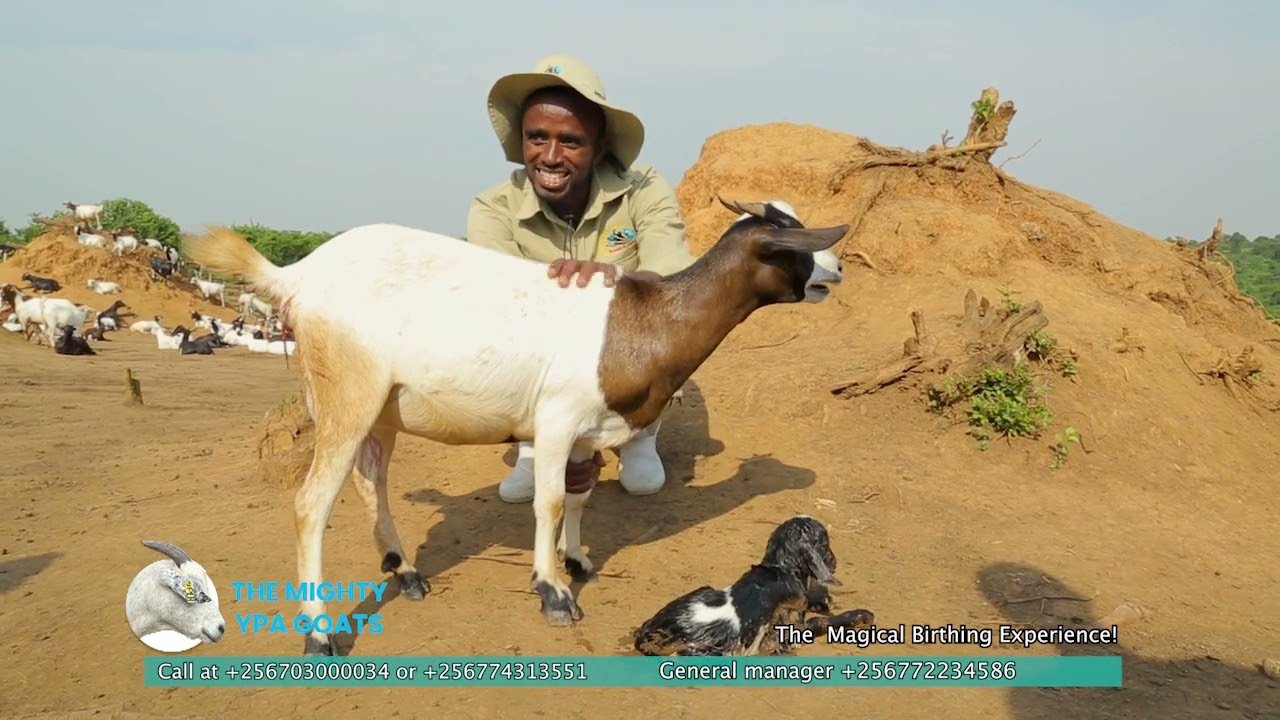
A fresh warning from former Kampala Resident City Commissioner and government official, Burora Herbert Anderson, has reignited debate over the controversial Youth Platform Africa (YPA) goat investment project, a scheme that has attracted thousands of Ugandans with promises of high returns from commercial goat farming.
In a lengthy social media statement, Burora stopped short of calling YPA a scam but raised fundamental questions about the project’s sustainability, transparency, and investor protection mechanisms.
His concerns strike at the heart of what financial analysts often consider the biggest red flag in any investment venture: guaranteed returns.
“How do you guarantee 100 percent returns on investment for three years without insurance?” Burora asked, arguing that even agriculture, one of the riskiest sectors globally, cannot promise profits without accounting for disease outbreaks, market shocks, drought, theft, or management failures.
A Business Model Drawing Both Praise and Suspicion
YPA, founded by entrepreneur Obed Ben, has emerged over the years as one of Uganda’s most visible agribusiness movements. The organization claims to have grown from a small community initiative into a large-scale livestock enterprise managing tens of thousands of goats and involving thousands of members across the country.
It has also enjoyed public endorsements from senior government figures, including the Head of the State House Investors Protection Unit, Col. Edith Nakalema, who has praised its contribution to youth empowerment and agribusiness development.
Yet alongside the success stories has been a growing chorus of skeptics questioning whether the numbers add up.
The debate intensified in 2025 after details of YPA’s investment contracts circulated online. According to reports, investors purchase goats through YPA, pay membership and administrative fees, and are promised herd growth through breeding.
Critics highlighted clauses requiring investors to recruit new members and surrender the original goat stock back to YPA at the end of contract periods, raising concerns that the model may depend heavily on continuous expansion.
The Ghost of Uganda’s Ponzi Scandals
Burora’s intervention comes at a time when Uganda is still recovering from a series of high-profile investment collapses.
The country has witnessed multiple agricultural investment schemes promising extraordinary returns before eventually attracting regulatory scrutiny. The collapse of poultry investment ventures such as Capital Chicken and Vetaplan left many investors counting losses, with investigations later revealing that some schemes were operating without the required licenses and allegedly using new investors’ money to pay earlier participants.
In fact, previous police warnings cited Great Wealth Youth Platform Africa — the entity associated with YPA — among several organizations that had attracted the attention of investigators over concerns surrounding investment activities and licensing requirements.
While no court has declared YPA a Ponzi scheme, the repeated comparisons have become difficult to ignore.
The Regulatory Grey Area
Perhaps Burora’s strongest criticism was directed not at YPA itself but at government regulators.
He questioned why businesses soliciting money from the public are allowed to operate without first demonstrating what safeguards exist should the venture fail.
The concern reflects a wider regulatory dilemma in Uganda. Agriculture itself does not require licensing, but where entities pool public funds and promise investment returns, regulators such as the Capital Markets Authority may have an interest in determining whether such activities fall under investment management regulations. This has been at the center of previous enforcement actions against similar schemes.
Burora argues that government should not wait for a collapse before intervening.
“We cannot always have to read the postmortem report, yet we saw symptoms and chose to keep a deaf ear,” he wrote.
The Critical Question: Where Is the Risk?
At the center of the controversy lies a simple question.
Traditional goat farming is a profitable business when managed properly, but profits are never guaranteed. Livestock can die. Prices fluctuate. Markets collapse. Export restrictions emerge.
For critics, any enterprise that markets certainty in an inherently uncertain sector deserves heightened scrutiny.
For supporters, YPA represents an innovative attempt to aggregate small investors into a large commercial farming ecosystem capable of achieving economies of scale.
The truth may ultimately lie not in whether goats exist or farms operate — evidence suggests YPA does run substantial agricultural activities — but in whether the financial promises being made can remain sustainable over the long term without constant recruitment of new participants.
As Uganda’s appetite for alternative investments grows, Burora’s warning serves as a reminder that the most important question for investors is often not how much profit can be earned, but what happens if things go wrong.
Until clear answers emerge on insurance, guarantees, independent audits, and regulatory oversight, the questions surrounding YPA are likely to grow louder rather than disappear.