

The Inspectorate of Government (IGG) has appealed to Members of Parliament to take a leading role in Uganda’s fight against corruption by encouraging citizens to report graft and maladministration, warning that entrenched social attitudes continue to shield corrupt individuals from accountability.
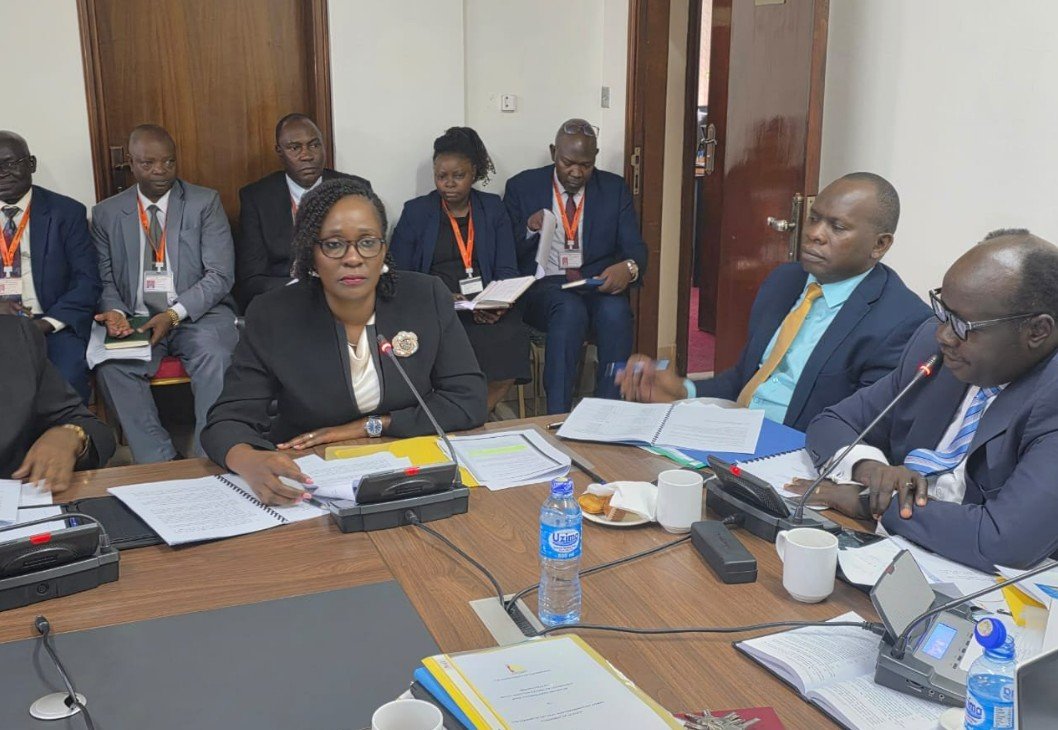
The appeal was made by the Deputy Inspector General of Government, Anne Twinomugisha Muhairwe, during the Inspectorate’s appearance before Parliament’s Legal and Parliamentary Affairs Committee.
Mrs. Muhairwe told legislators that despite ongoing anti-corruption efforts, many Ugandans remain reluctant to report corruption because of societal beliefs that either glorify corrupt individuals or discourage whistleblowers.
“It is a very big challenge because some people now glorify the corrupt while others are discouraged from reporting corruption. However, you can help us change this mindset because you have a great deal of influence,” she said.
She urged MPs to leverage their close relationship with constituents to transform public attitudes and encourage citizens to actively participate in exposing corruption in their communities.
Balaam’s interdictions welcomed but caution urged
The Deputy IGG also weighed in on the recent interdiction of local government officials by the Minister of State for Youth and Children Affairs, Balaam Barugahara Ateenyi.
While describing the minister’s anti-corruption drive as timely, particularly amid growing concerns over impunity in local governments, she cautioned that spontaneous disciplinary actions could expose government to costly legal challenges.
She acknowledged that there are instances where immediate action may appear necessary, especially where officials are allegedly caught in the act. However, she argued that strengthening institutional systems remains a more sustainable and legally sound approach to fighting corruption.
Mrs. Muhairwe clarified that ministers do not directly interdict public officers. Instead, they work through accounting and responsible officers, including Permanent Secretaries and Chief Administrative Officers, who implement the formal disciplinary process in accordance with the Public Service Standing Orders.
“We cannot violate the law to enforce it”
Responding to questions on why the Inspectorate does not adopt similar swift measures, the Deputy IGG said the institution is bound by the principles of the rule of law and natural justice.
She stressed that every suspect is entitled to a fair hearing and the presumption of innocence before any administrative or criminal action is taken.
“The Inspectorate of Government cannot subvert the very law it is mandated to enforce. Our investigations must be thorough, evidence-based, and procedurally sound. Any departure from the principles of natural justice would not only undermine public confidence but also expose our actions to successful civil litigation,” she said.
Her remarks underscored the Inspectorate’s insistence that anti-corruption efforts must remain firmly grounded in due process despite public pressure for swift action.
AI, asset recovery among new anti-corruption priorities
Looking ahead to the next financial year, the Deputy IGG unveiled an ambitious strategy aimed at modernising the country’s anti-corruption architecture.
Among the Inspectorate’s priorities are institutionalising intelligence-led and prosecution-driven investigations, deploying artificial intelligence-powered leadership code verification systems, expanding asset tracing and recovery mechanisms, and mainstreaming Transparency, Accountability and Anti-Corruption (TAAC) initiatives across Ministries, Departments, Agencies and Local Governments.
The Inspectorate also intends to strengthen enforcement of its recommendations and improve compliance monitoring among public institutions.
Inspectorate rolls out digital transformation
The Secretary to the Inspectorate of Government, Rose Kafeero, told MPs that the institution has embarked on a comprehensive digital transformation programme aimed at automating its internal systems and business processes.
She said the initiative aligns with the Government of Uganda’s wider digital transformation agenda and is expected to improve operational efficiency, service delivery and the institution’s ability to detect, prevent and investigate corruption.
According to Kafeero, digitisation will enable the Inspectorate to respond more effectively to emerging governance challenges while enhancing transparency in its operations.
Call for broader partnerships
Mrs. Muhairwe concluded by reaffirming the Inspectorate’s commitment to working closely with Parliament, government institutions, accountability agencies, civil society organisations, the private sector and the public to strengthen integrity and promote accountable governance.
She said defeating corruption requires a collective national effort involving both institutions and ordinary citizens, with Members of Parliament playing a critical role in changing public attitudes and encouraging communities to reject corruption rather than celebrate it.
The Deputy IGG was accompanied by directors and assistant directors of the Inspectorate during the engagement with the parliamentary committee.