
President Yoweri Museveni has rejected the resignation of Uganda Human Rights Commission (UHRC) Chairperson Mariam Fauzat Wangadya, directing her to remain in office and continue executing the mandate of the country’s constitutional human rights watchdog.
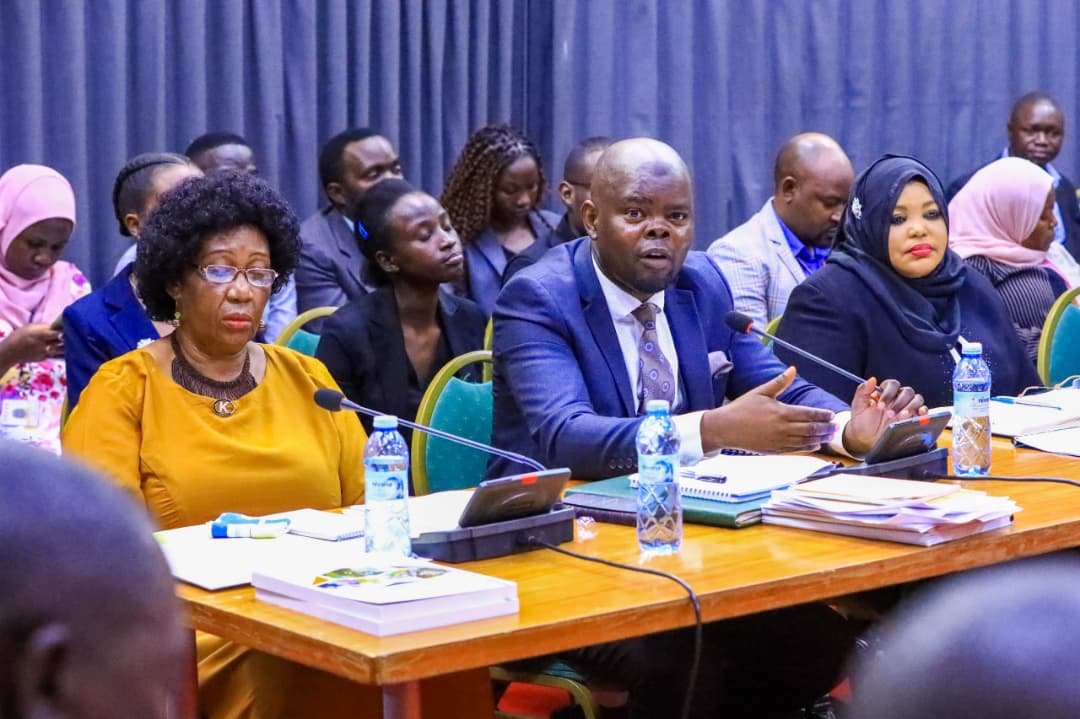
Wangadya disclosed the development on Tuesday while appearing before Parliament’s Committee on Commissions, Statutory Authorities and State Enterprises (COSASE), bringing a fresh twist to a leadership saga that has engulfed the UHRC for weeks.
The revelation means that despite a resignation letter she submitted to President Museveni in July, Wangadya remains the substantive chairperson of the Commission and is expected to continue performing her duties.
Wangadya had previously confirmed that she submitted her resignation to Museveni on July 6, 2026. At the time, reports indicated that she was waiting for the President’s response.
She has now told MPs that the President declined to accept the resignation and instead instructed her to continue serving.
The development comes at a particularly turbulent moment for the UHRC, with Wangadya facing intense scrutiny from Parliament over the administration and management of the Commission.
Resignation saga takes another turn
Wangadya’s resignation initially appeared to mark the end of her tenure at the Commission.
In her July resignation letter, she thanked Museveni for the opportunity to serve Uganda in the promotion and protection of human rights. The letter followed a period in which she had publicly expressed strong concerns about the direction of the Commission and the calibre of some of the people appointed to serve on it.
Her decision came days after she criticised the President over appointments to the UHRC, accusing him of filling the institution with people she considered unsuitable for a body whose work requires professional expertise and independence.
The resignation subsequently triggered speculation over who would replace her, with several names reportedly emerging as possible successors.
But the Attorney General later told Parliament that Wangadya had not formally left office, setting the stage for the latest clarification that Museveni had rejected her resignation.
Her latest statement therefore effectively settles the immediate question of whether she remains in charge: she does.
Parliament’s growing scrutiny
The presidential decision comes as Wangadya and the UHRC face an increasingly aggressive parliamentary accountability process.
COSASE has been examining the Commission’s financial and administrative affairs following findings contained in the Auditor General’s report for the 2024/25 financial year.
The committee’s inquiry has expanded beyond financial matters to questions concerning governance, management and the handling of human rights complaints.
Wangadya’s relationship with Parliament has already become strained.
She previously failed to appear before COSASE on several occasions, prompting the committee to order that she be brought before it under police custody. The committee’s action followed concerns over her failure to honour its summons and questions arising from the Auditor General’s findings.
The confrontation has transformed what began as an accountability inquiry into a broader institutional dispute over leadership, parliamentary oversight and the functioning of Uganda’s principal state human rights body.
Questions over the Commission’s operations
Among the issues raised during parliamentary scrutiny are allegations concerning the handling of human rights complaints and the functioning of the Commission.
Reports from previous parliamentary proceedings indicate that lawmakers have questioned allegations that more than 200 human rights files were closed without due process, as well as claims that the Commission had not held meetings for several months in 2026.
Wangadya has also faced questions over the Commission’s internal administration and the status of senior positions.
In a submission to COSASE, she rejected questions concerning the position of a deputy chairperson, arguing that the office does not exist under the law governing the UHRC and that creating such a position would require a constitutional amendment.
The committee’s investigation therefore comes at a time when the institution is facing questions about both its finances and its internal governance.
What the law says about Wangadya’s position
The UHRC is not an ordinary government department. It is a constitutional institution established under Article 51 of the Constitution of Uganda.
The Constitution provides for a commission consisting of a chairperson and at least three other members, appointed by the President with the approval of Parliament.
It further provides that the chairperson must be a judge of the High Court or a person qualified to hold that office. Members of the Commission serve for six years and are eligible for reappointment.
The Uganda Human Rights Commission Act reinforces the President’s role in appointments, providing that the chairperson and other members are appointed by the President with Parliament’s approval.
The chairperson is also designated as the head of the Commission and is responsible for directing its affairs and administration.
This constitutional arrangement explains why Wangadya’s resignation was addressed to Museveni rather than simply announced as an immediate departure.
Article 252 of the Constitution provides generally that a person appointed to a constitutional office may resign through a written notice addressed to the person or authority that appointed them, with the resignation taking effect according to the terms of appointment or, where there are no such terms, when the written resignation is received by the relevant authority.
The precise legal effect of Wangadya’s attempted resignation and the President’s subsequent decision to reject it could therefore become an important question if the dispute escalates further.
For now, however, the political reality is clear: Museveni wants Wangadya to remain at the helm.
A controversial tenure
Wangadya is no stranger to the UHRC.
She was among the Commission’s early members before moving to the Inspectorate of Government, where she served as Deputy Inspector General of Government for several years.
Museveni appointed her chairperson of the UHRC in 2021, and she assumed office in September of that year. The Commission’s official profile identifies her as a lawyer and former Deputy Inspector General of Government.
Her tenure has included both institutional achievements and controversy.
The UHRC has continued to monitor detention facilities, investigate alleged human rights violations, issue reports and engage state agencies over rights concerns.
In January 2026, for example, Wangadya led the Commission in issuing its preliminary statement on the country’s 2026 general elections.
But her leadership has also attracted criticism, including disagreements over the Commission’s independence, internal administration and its handling of politically sensitive human rights complaints.
In recent weeks, the pressure intensified dramatically.
At one parliamentary appearance, Wangadya reportedly broke down in tears as she described what she characterised as a coordinated smear campaign against her. She told lawmakers that the pressure had pushed her “to the edge” and apologised for remarks she acknowledged had fallen below her standards.
Human rights watchdog caught in institutional crossfire
The latest development places the UHRC at the centre of an unusual institutional confrontation.
On one side is Parliament, through COSASE, demanding answers over financial and administrative accountability.
On the other is the Commission’s leadership, which has defended its decisions while challenging some of the premises underlying the parliamentary inquiry.
And now there is the President’s decision to retain Wangadya despite her own attempt to step down.
That decision could have wider implications because the UHRC is constitutionally mandated to operate as an independent institution.
Under Article 52 of the Constitution, the Commission has broad responsibilities, including investigating human rights violations, inspecting prisons and other detention facilities, promoting human rights education, recommending measures to Parliament and monitoring Uganda’s compliance with international human rights obligations.
The Commission’s credibility is therefore closely tied to public confidence in its independence and effectiveness.
Museveni’s decision raises fresh questions
Museveni’s refusal to accept Wangadya’s resignation raises an obvious question: why did the President choose to retain a chairperson who had publicly expressed frustration with the institution and had herself decided to leave?
Wangadya’s earlier criticism of presidential appointments had already exposed tensions over the composition and independence of the Commission.
Her decision to resign appeared to offer a way out of the confrontation.
Instead, Museveni’s intervention has prolonged it.
The President’s instruction that she continue executing her mandate means Wangadya must now return to the centre of an institution facing a major parliamentary examination.
The decision also puts Wangadya in an unusual position: she wanted to leave, but the appointing authority has told her to stay.
Parliament probe now carries greater significance
For COSASE, the President’s decision does not remove the committee’s questions.
The committee is still expected to examine the issues contained in the Auditor General’s report and other governance concerns surrounding the UHRC.
The committee has already demonstrated that it is prepared to use its powers to compel Wangadya’s attendance.
Indeed, Parliament recently ordered her arrest and production before the committee after she repeatedly failed to appear for questioning.
The standoff is therefore far from over.
If anything, Wangadya’s confirmation that Museveni rejected her resignation could make the parliamentary inquiry even more consequential.
She remains responsible for the Commission’s administration and must answer questions about decisions made under her leadership.
A critical test for Uganda’s human rights institution
The unfolding saga comes at a sensitive time for Uganda’s human rights environment.
Ahead of the January 2026 elections, the UN Human Rights Office raised concerns about repression and intimidation involving opposition figures, journalists, human rights defenders and other critics.
The government has disputed or defended many of the allegations, while the UHRC remains one of the key domestic institutions expected to investigate rights violations and provide an avenue for complaints.
The Commission’s own constitutional mandate gives it powers to investigate violations on its own initiative or following complaints, inspect places of detention and monitor government compliance with international human rights obligations.
That makes stability and public confidence in its leadership particularly important.
For now, Wangadya remains in office.
Her resignation has been rejected.
Museveni has told her to continue working.
And Parliament, meanwhile, is demanding answers.
The result is a rare and potentially consequential collision between the presidency, Parliament and Uganda’s constitutional human rights watchdog — with Wangadya at the centre of all three.