
The National Agricultural Research Organisation (NARO) is exploring Public-Private Partnerships (PPPs) to unlock the commercial potential of its research infrastructure, increase internally generated revenue and strengthen its financial sustainability.
The proposed partnerships seek to attract private sector investment, expertise, technology and innovation to maximise the utilisation of NARO’s existing facilities and assets, create new revenue streams and support the Organisation’s agricultural research and innovation mandate.
The initiative follows a top management meeting held today at Speke Resort Munyonyo, where NARO management received presentations and reviewed project concept notes and feasibility study reports for proposed PPP investments across the Organisation.
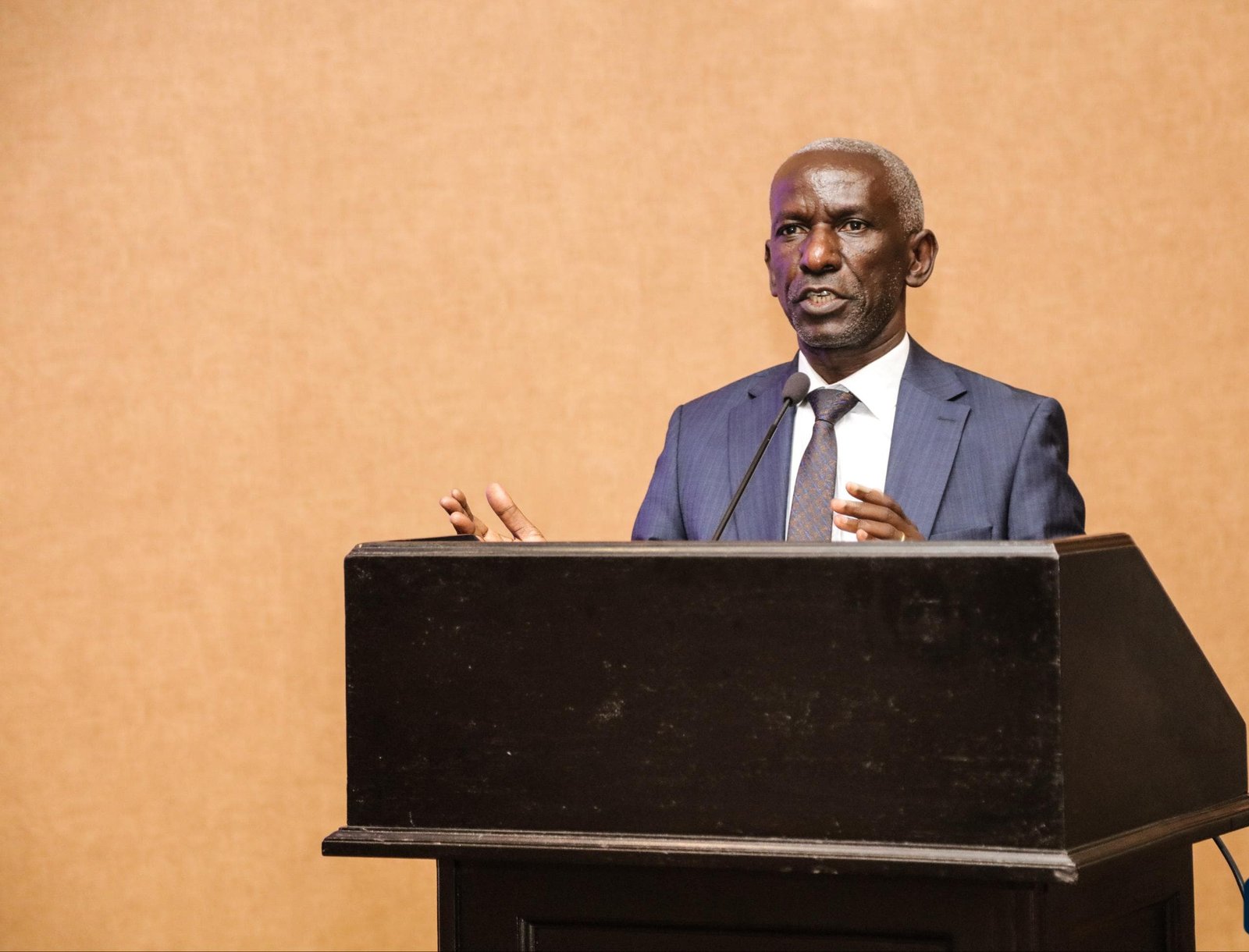
Speaking during a Top Policy Management meeting held on Wednesday at Speke Resort Munyonyo to review the PPP project concept notes and feasibility studies, NARO Director General, Dr. Yona Baguma, said the Organisation was seeking to maximise returns on its existing investments to generate additional resources for agricultural research and contribute to national revenue.
“NARO has several facilities whose capacity we need to harness to generate revenue for sustainable agricultural research and also make a contribution to the national coffers,” Dr. Baguma said.
Among the facilities identified for commercialisation are the Dairy Processing Plant and Livestock Feed Mill at the National Livestock Resources Research Institute (NaLIRRI), the Fish Feed Mill at the National Fisheries Resources Research Institute (NaFIRRI) in Kajjansi, the Feed Sorting Facility at Mbarara Zonal Agricultural Research and Development Institute (Mbarara ZARDI), and automotive garages at the National Semi-arid Resources Research Institute (NaSARRI), NaLIRRI and the National Crop Resources Research Instittue (NaCRRI).
The proposed opportunities also include hostel facilities at NaFIRRI in Jinja and Mukono Zonal Agricultural Research and Development Institute (MuZARDI).
Dr. Baguma noted that while Government remains NARO’s primary source of funding, as provided for under the law establishing the Organisation, there is a growing need to diversify funding sources, particularly as support from development partners continues to decline.
He commended Government for progressively increasing NARO’s annual budget from UGX 61 billion to UGX 223 billion over the last decade but emphasised that the Organisation must explore additional financing options to sustain its research mandate.
“Over the last 30 years, we have done a lot as NARO, but we must continue finding ways of securing resources for sustainable research. We need to add value to the facilities we have and make them work for us,” he said.
Dr. Baguma highlighted some of NARO’s existing revenue-generating initiatives, including licensing the production and sale of improved crop varieties to private seed companies, which now generates more than UGX 1 billion.
He also cited the establishment of seed hubs, particularly the coffee seed hub, which generated products valued at more than UGX 20 billion in the last financial year.
Additionally, investments in the anti-tick vaccine manufacturing facility have resulted in vaccine stock valued at more than UGX 20 billion, further demonstrating the commercial potential of NARO’s research investments.
“These investments are intended to make NARO more self-sustaining. We must invest our brains and make the right decisions,” Dr. Baguma said.
The Executive Director of the Public-Private Partnership Unit at the Ministry of Finance, Planning and Economic Development, Mr. Jim Mugunga, commended NARO for identifying opportunities within its existing infrastructure and positioning them for commercialisation through partnerships with the private sector.
He said the increasing demands on Government resources make it necessary for public institutions to explore alternative financing and investment models to supplement the national budget.
“No country can fund everything it needs to do entirely through its national budget. Government has therefore been encouraging institutions to identify opportunities where private sector partnerships can bring in the strength, technology, innovation and financial resources needed to expand service delivery,” Mr. Mugunga said.
He observed that NARO’s approach demonstrates how public institutions can transform existing research infrastructure and investments into commercially viable ventures without compromising their core mandates.
He cited the example of NARO’s feed processing facilities and improved pasture production, noting that where scientists may require only limited resources for research purposes, the additional capacity could be commercially exploited through private sector partnerships.
Mr. Mugunga further explained that commercial partnerships would enable NARO to maximise the utilisation of machinery and other infrastructure that may not need to operate continuously for research purposes but could be deployed more extensively under commercial arrangements.
He linked the initiative to Government’s broader economic transformation agenda, including the Tenfold Growth Strategy and the Parish Development Model (PDM), emphasising the importance of translating research innovations into products and services that reach farmers and stimulate economic activity.
He added that the PPP approach would complement Government’s efforts to strengthen domestic revenue mobilisation while ensuring that public investments deliver greater economic value.
Mr. Mugunga assured NARO of the PPP Unit’s support in working with relevant government institutions, including the Ministry of Finance, Planning and Economic Development, Operation Wealth Creation, and the Ministry of Agriculture, Animal Industry and Fisheries, to identify and develop viable partnership opportunities.