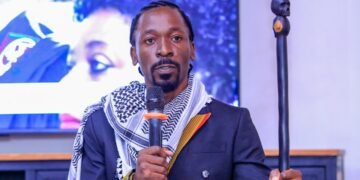

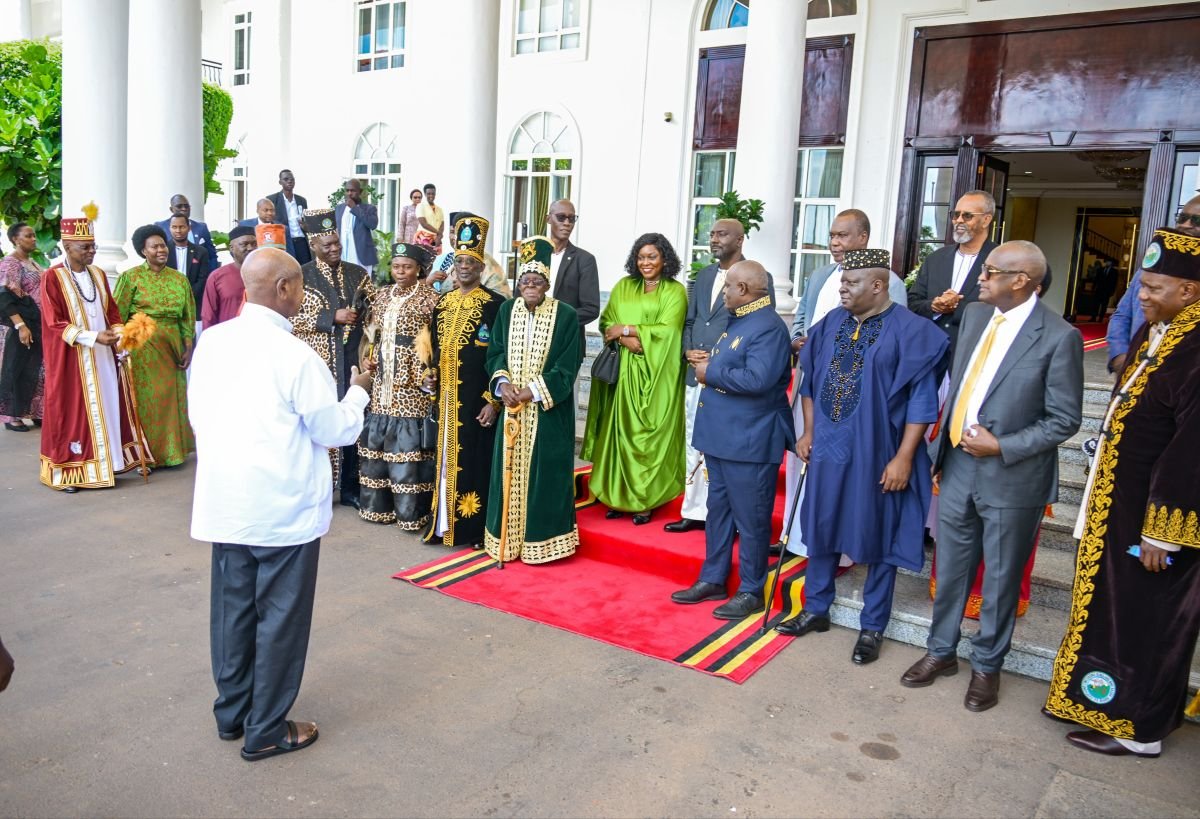
President Yoweri Kaguta Museveni has urged traditional and cultural leaders across Uganda to concentrate on preserving indigenous languages, cultures and traditional knowledge, warning against their involvement in politics and administration.
Museveni said cultural institutions have an important role in protecting Africa’s heritage but should leave political leadership and government administration to elected leaders.
In a statement issued after addressing traditional and cultural leaders, the President argued that Uganda’s indigenous societies had developed strong economic foundations built around agriculture, livestock keeping, crafts, traditional medicine and other specialised occupations collectively known as Emyooga.
He, however, said tribal chauvinism and failure to integrate weakened these traditional economic and social structures.
Museveni said this fragmentation made it difficult for communities to recognise their shared interests and benefit from broader economic opportunities.
He maintained that the National Resistance Movement (NRM) government promotes patriotism and Pan-Africanism as the foundations for overcoming ethnic divisions and strengthening economic cooperation.
“You need Uganda and Africa for your prosperity,” Museveni said, emphasising that Uganda’s development depended on national unity and closer integration with the rest of the continent.
Warns Against Colonial Mentality
The President also criticised what he described as a colonial mentality that causes Africans to look down upon their own cultural heritage and traditional knowledge.
He argued that indigenous languages, cultural practices and traditional expertise should be protected and promoted rather than abandoned in favour of foreign influences.
His remarks come amid renewed discussions about the place of traditional institutions in Uganda’s modern governance system and their contribution to national development.
The relationship between cultural institutions and elected government has historically been a subject of debate, particularly following the restoration of traditional kingdoms in 1993 after their abolition in 1967.
Uganda’s cultural institutions have no formal constitutional powers to govern the country, but continue to play influential roles in preserving heritage, guiding communities and promoting social cohesion.
Two-Day Cultural Leaders Conference
Museveni’s remarks were made during a two-day Cultural Leaders Conference at State House Entebbe, which brought together kings and other traditional leaders from different parts of Uganda.
The meeting is intended to explore how cultural institutions can contribute to national unity, heritage preservation and economic development.
Among those attending is Tooro’s new King, Edward Rukidi Nyabongo I, who made his first appearance at State House since his coronation on September 29, 2026.
Museveni said discussions with the cultural leaders would continue on Thursday, November 5, as the government and traditional institutions explore areas of cooperation.
The President has repeatedly called on cultural institutions to prioritise indigenous languages, traditional medicine and the preservation of African cultural identity.