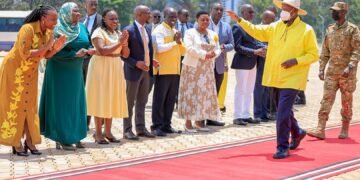

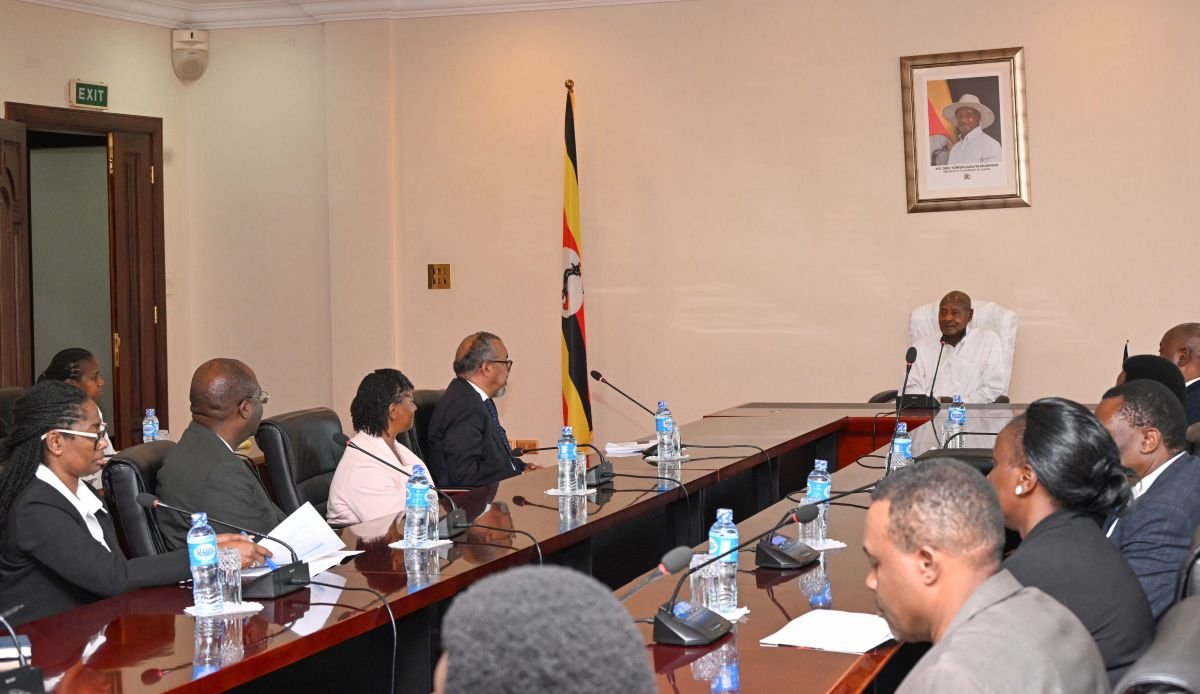
President Yoweri Museveni on Monday held a high-level meeting with World Health Organization (WHO) Director-General Dr. Tedros Adhanom Ghebreyesus at State House Entebbe, where the two leaders discussed ongoing efforts to combat Ebola and strengthen regional health security.
Dr. Tedros paid a courtesy call on the President amid continued concerns over Ebola outbreaks in parts of East Africa, with discussions focusing on prevention, preparedness, and coordinated response mechanisms across national borders.
According to President Museveni, the meeting emphasized the need for stronger community awareness campaigns, early disease detection systems, and enhanced cross-border collaboration to prevent the spread of infectious diseases.
“I stressed the importance of community awareness, early detection, and cross-border collaboration,” Museveni said after the meeting.
The President highlighted Uganda’s long-standing experience in mobilizing communities to tackle major public health challenges, drawing parallels with the country’s successful response to the HIV/AIDS epidemic in the 1980s and 1990s.
Uganda has earned international recognition for its community-based public health interventions, which have often been cited as a model for managing infectious disease outbreaks. The country has also faced multiple Ebola outbreaks over the years, developing robust surveillance and response systems that have helped contain the virus.
Museveni noted that science, political leadership, and strong partnerships remain critical pillars in the fight against emerging health threats.
“Through science, leadership, and cooperation with partners such as WHO, we can continue to protect our people and strengthen regional health security,” he said.
The meeting comes as countries in the region continue to invest in epidemic preparedness amid growing concerns over cross-border transmission of infectious diseases. Public health experts have repeatedly stressed that outbreaks such as Ebola require coordinated regional responses due to the movement of people and goods across borders.
Dr. Tedros has consistently praised Uganda’s capacity to respond to public health emergencies, particularly its disease surveillance systems and rapid deployment of health workers during outbreaks.
The discussions at State House are expected to reinforce collaboration between Uganda and the WHO in strengthening disease surveillance, emergency preparedness, laboratory capacity, and community engagement initiatives aimed at preventing future outbreaks.
Health officials say sustained investment in public awareness, timely reporting of suspected cases, and regional cooperation will remain key to safeguarding populations against Ebola and other emerging health threats.