
The African Export-Import Bank (Afreximbank) is preparing to establish a dedicated country programme for Uganda, signalling a deeper financing partnership as the government pushes an ambitious plan to transform the economy into a US$500 billion powerhouse.
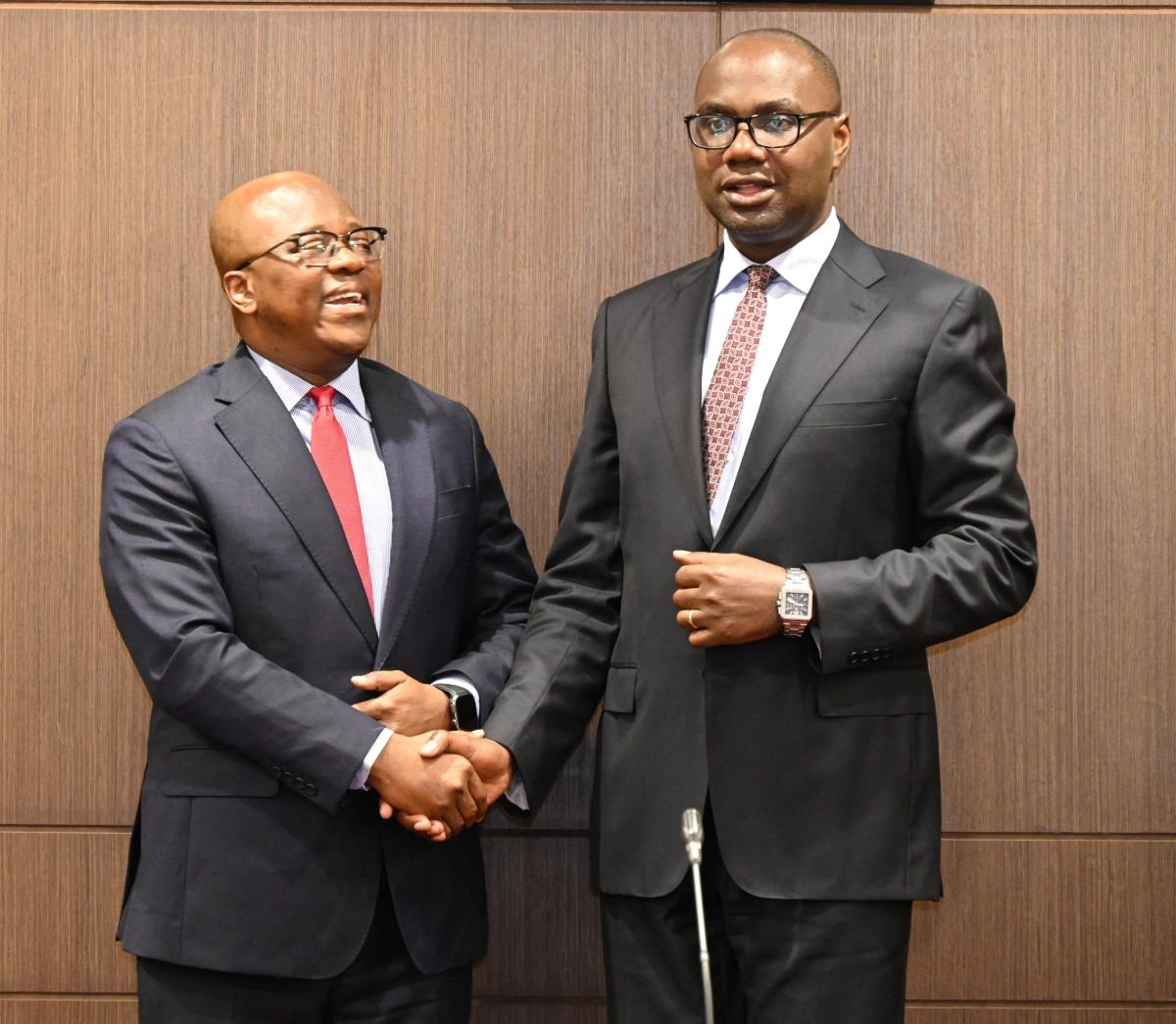
The development was announced after Finance Minister Henry Musasizi met Afreximbank’s new Regional Director for East Africa, Humphrey Nwugo, at the Ministry of Finance on Tuesday.
Musasizi welcomed the bank’s growing involvement in Uganda and said the government is ready to work with Afreximbank to ensure projects already in the pipeline move from plans to implementation.
The Minister thanked the continental lender for aligning its interventions with Uganda’s Tenfold Growth Strategy, the government’s long-term economic transformation agenda.
“Government is ready to work with the Bank to ensure that the projects in the pipeline are implemented,” the Ministry of Finance said in an update following the meeting.
The proposed country programme could provide a more structured framework for Afreximbank’s financing and technical support to Uganda, particularly in sectors identified by government as critical to accelerating economic growth.
Nwugo said Afreximbank is committed to supporting Uganda’s journey towards a US$500 billion economy, adding that the bank continues to expand its support across Africa.
Agro-industry, tourism and minerals in focus
Afreximbank has identified several sectors where it sees major opportunities for investment, including agro-industrialisation, tourism and mineral development.
The bank is also interested in the infrastructure and other economic enablers required to unlock these sectors.
The focus fits into Uganda’s broader push to move beyond exporting raw commodities and instead increase domestic processing, manufacturing and value addition.
Agriculture remains central to that strategy, with government seeking greater investment in agro-processing and industrial value chains that can create jobs, expand exports and increase household incomes.
The tourism sector is another major target, while Uganda’s substantial mineral deposits have increasingly attracted government attention as a potential source of foreign exchange, industrialisation and investment.
However, unlocking these opportunities will require major investment in roads, energy, water, ICT and other infrastructure — areas Afreximbank has also identified as priorities.
Deeper financing partnership
The proposed country programme comes as Uganda seeks to mobilise more financing for large-scale projects needed to drive economic transformation.
For government, the challenge is no longer simply attracting financing, but ensuring that available capital is channelled into productive projects capable of generating economic returns.
Afreximbank’s regional leadership has indicated that Uganda remains an important market in its East African operations, with the bank positioning itself as a partner in the country’s long-term development agenda.
Nwugo was accompanied by Farida Mukasa, Senior Specialist for Client Relations (East Africa), and Daniel Katumba, Manager for Client Relations (East Africa).
The engagement places Afreximbank at the centre of Uganda’s increasingly aggressive push to mobilise capital for industrialisation, infrastructure and export-led growth.
If translated into concrete financing commitments and successfully implemented projects, the proposed country programme could become an important pillar in Uganda’s attempt to turn its ambitious US$500 billion economic target from a political aspiration into an investable development programme.