
A fresh legal battle involving the State House Anti-Corruption Unit (SH-ACU) has moved to the High Court, where judges are expected to hear an application seeking the production of Sanyu Edisah, a woman whose lawyers and supporters claim has been held without being brought before court following her arrest earlier this month.
The case has also spilled into the political arena after a group calling itself the Concerned Citizens of Uganda petitioned President Yoweri Museveni, demanding an investigation into senior officials of the State House Anti-Corruption Unit and calling for what they describe as urgent intervention over Edisah’s continued detention and an underlying land dispute.
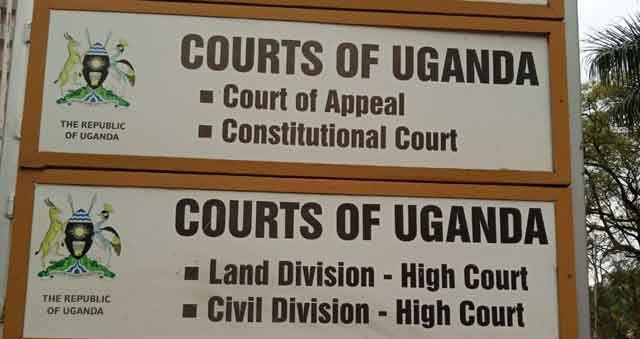
Court records seen by this publication show that a Miscellaneous Cause (HCT-00-CV-MC-0167-2026) has been filed before the High Court in Kampala, naming the Attorney General, Brig. Gen. Henry Isoke, the head of the State House Anti-Corruption Unit, and SH-ACU officer Kevin Kayaga as respondents.
The Judiciary has fixed the matter for hearing on Monday, June 29, 2026, at 9:30 a.m., when the respondents are expected to answer the application.
Lawyers Seek Court Order Requiring Edisah’s Production
At the heart of the case is an application for a writ of habeas corpus, one of the oldest legal remedies available under common law and Uganda’s Constitution for challenging unlawful detention.
A successful habeas corpus application compels the authority holding a person in custody to produce that individual before court and justify the legality of the detention.
According to the application filed on behalf of Edisah, she was arrested on June 16, 2026, by officers attached to the State House Anti-Corruption Unit.
Her lawyers contend that after the arrest, they were unable to establish her whereabouts despite making inquiries.
The application alleges that Edisah was initially held at Central Police Station before she was allegedly taken away by SH-ACU officer Kevin Kayaga and was not returned.
These claims have been presented before court but have not yet been tested through judicial proceedings.
The respondents have not yet publicly responded to the allegations contained in the court application.
A Land Dispute at the Centre of the Case
Although the habeas corpus proceedings focus on the legality of Edisah’s detention, the dispute appears to stem from a long-running contest over ownership of land located on Kyadondo Block 180 in Kitukutwe.
In a separate petition addressed to President Museveni and dated June 26, 2026, the Concerned Citizens of Uganda allege that Edisah is the sole beneficiary of the estate of the late Ssentamu Nasani and that several previous court decisions have already settled questions regarding the ownership of the disputed property.
The petitioners refer to previous judicial proceedings, including Miscellaneous Application No. 2997 of 2024, in which they say certain claimants were struck out for lack of legal standing, as well as a consent judgment in High Court Civil Suit No. 613 of 2018.
They further claim that correspondence from the Resident District Commissioner for Kira District, together with findings by police and the Office of the Director of Public Prosecutions, recognized Edisah as the lawful beneficiary of the estate.
These assertions, however, remain the position of the petitioners and have not been independently verified by this publication.
Citizens Turn to State House
Beyond the courtroom, the controversy has now become the subject of a public campaign.
The petition delivered to President Museveni accuses unnamed officials within the State House Anti-Corruption Unit of interfering in civil land disputes that the petitioners believe have already been determined by competent courts.
The petitioners argue that if state investigative agencies become involved in matters that have already been settled by the judiciary, it risks creating uncertainty over the finality of court judgments.
Among the issues raised is another land-related dispute involving Obatre Alex Lumumba, in which the petitioners allege that temporary court orders have not been respected.
Those allegations have not been tested before the courts in relation to the present habeas corpus proceedings.
Five Demands to the President
The Concerned Citizens of Uganda have asked President Museveni to take five major actions.
They want an independent investigation into the conduct of officials named in their petition, the immediate production of Edisah before court, investigations into alleged collaboration between public officials and private individuals in relation to disputed land, a directive requiring all government agencies to respect court orders, and broader institutional reforms within the State House Anti-Corruption Unit.
The petitioners also warn that if they do not receive what they consider a satisfactory response, they intend to organize a peaceful march to State House involving thousands of participants.
No date for such a demonstration has been announced.
Why Habeas Corpus Matters
The legal remedy now before the High Court is significant because it goes beyond determining ownership of land.
Instead, the court’s immediate concern will be whether Edisah is being lawfully detained and whether constitutional safeguards have been respected.
Under Article 23 of Uganda’s Constitution, every arrested person has the right to be informed immediately of the reasons for arrest and must ordinarily be brought before a competent court within forty-eight hours.
Where family members or lawyers believe those safeguards have not been followed, they may petition the High Court for a writ of habeas corpus.
The court does not determine guilt or innocence in such proceedings.
Instead, it determines whether the detention is lawful and whether the detaining authority can legally justify continued custody.
Legal experts often describe habeas corpus as one of the strongest protections against arbitrary detention because it places the burden on the detaining authority to explain why an individual should continue to be deprived of liberty.
State House Anti-Corruption Unit Under Scrutiny
The State House Anti-Corruption Unit was established to support investigations into corruption, abuse of office, procurement fraud and related offences across government institutions.
Working alongside agencies such as the Criminal Investigations Directorate, the Office of the Director of Public Prosecutions and the Inspectorate of Government, the unit has investigated numerous public officials over allegations of corruption and misuse of public resources.
However, its role in disputes involving private land ownership has occasionally generated debate, particularly where criminal investigations intersect with ongoing civil litigation.
The allegations raised in the present case are likely to renew discussion about the limits of investigative agencies when disputes have already been the subject of court proceedings.
Whether those allegations are supported by evidence will ultimately be determined through the judicial process.
High Court Hearing Expected
The hearing scheduled for June 29 is expected to provide the first opportunity for the respondents to formally answer the allegations made against them.
The Attorney General, Brig. Gen. Henry Isoke and Kevin Kayaga have all been listed as respondents in the case and have been notified of the hearing.
If the respondents appear, they may explain the circumstances surrounding Edisah’s arrest, whether she is currently in lawful custody, and the legal basis for any continued detention.
Alternatively, if the court is satisfied that there has been an unlawful deprivation of liberty, it has powers to make appropriate orders under the law.
Presumption of Innocence and Right of Reply
The allegations contained in both the habeas corpus application and the petition to President Museveni remain allegations.
They have not been determined by the High Court, and no judicial findings have yet been made against Brig. Gen. Henry Isoke, Kevin Kayaga, the Attorney General or the State House Anti-Corruption Unit.
This publication was unable to obtain immediate comment from the respondents before publication.
Their responses, if any, together with any evidence presented before the High Court, are expected to become central to the proceedings when the matter comes up for hearing on June 29.
For now, the case presents both a constitutional test of the right to personal liberty and another chapter in Uganda’s increasingly contentious disputes over land ownership and the role of state investigative agencies.
The outcome of the High Court proceedings is likely to determine not only whether Edisah’s detention was lawful but may also shape public debate on the relationship between criminal investigations, civil litigation and the constitutional protections afforded to every citizen under Ugandan law.