

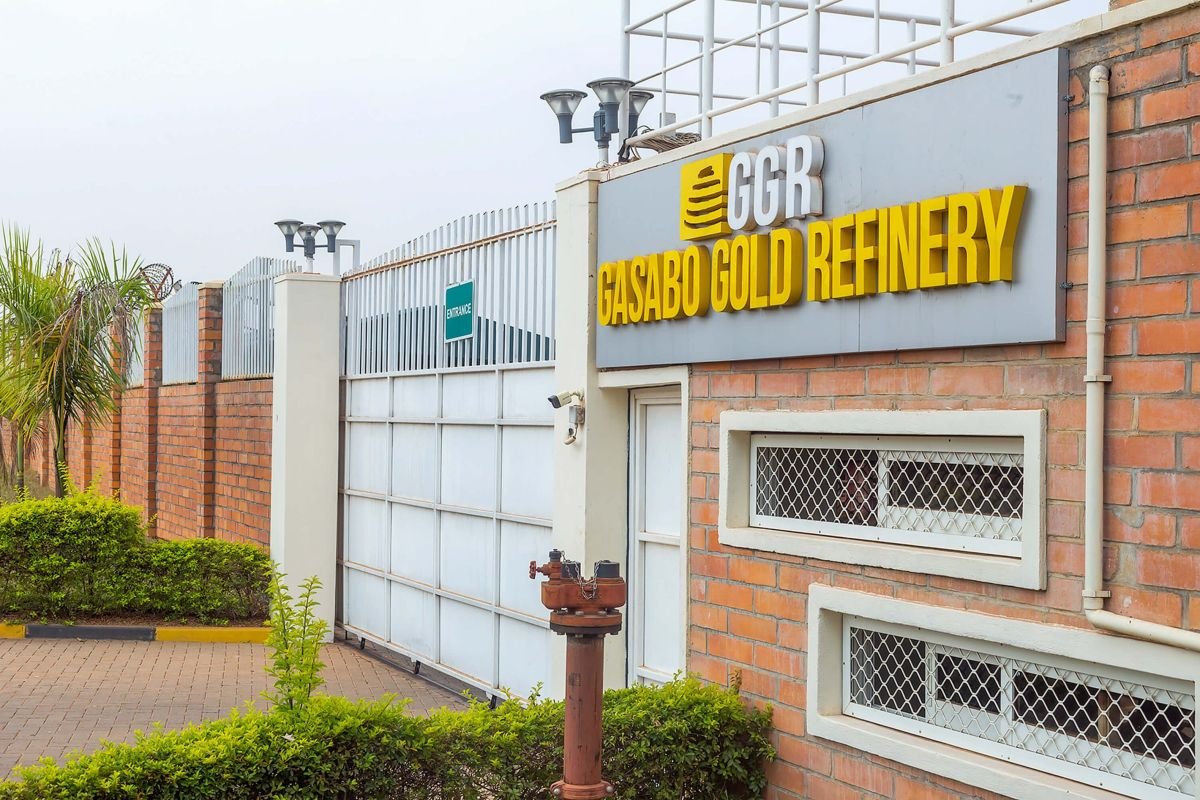
The United States has dramatically escalated pressure on Rwanda over the long-running conflict in eastern Democratic Republic of Congo (DRC), imposing sweeping sanctions on a Kigali-based gold refinery and an alleged network of mining companies accused of helping launder millions of dollars’ worth of conflict gold controlled by the M23 rebel movement.
The sanctions, announced Thursday by the U.S. Department of the Treasury’s Office of Foreign Assets Control (OFAC), target Gasabo Gold Refinery LTD, its chairman Jean Malic Kalima, general manager Bosco Kayobotsi, and three mining companies owned by Kalima.
Washington alleges that the refinery has served as a crucial conduit for gold illegally extracted from M23-controlled territory in eastern DRC before being refined and integrated into legitimate international markets.
The move marks one of the strongest financial actions taken by the United States against actors accused of profiting from the mineral-rich conflict zones of eastern Congo and signals Washington’s determination to enforce the peace commitments made under the U.S.-brokered Washington Accords.
US Accuses Rwanda-Linked Network of Financing War
In unusually direct language, the U.S. Treasury accused the sanctioned entities of enabling one of Africa’s most lucrative illicit mineral supply chains.
According to Treasury, once gold is extracted from mines located in territories occupied by M23 rebels in South Kivu Province, the precious metal is allegedly transported under the protection and supervision of the Rwanda Defence Force (RDF) before crossing into Rwanda.
The gold is then allegedly delivered to Gasabo Gold Refinery in Kigali, where it is refined and prepared for entry into international markets.
Treasury says the operation effectively launders conflict gold, disguising its origins and allowing armed groups to generate enormous revenues from minerals that legally belong to the Congolese state.
Officials estimate that during early 2026 alone, at least 60 kilograms of gold, worth several million U.S. dollars, were moved from eastern Congo to the refinery through the alleged smuggling network.
“The United States will not allow rogue groups to profit from the illicit mineral trade and destabilize the region,” U.S. Treasury Secretary Scott Bessent said while announcing the sanctions.
He added that the Democratic Republic of Congo’s vast mineral wealth “rightfully belongs to the Congolese people” and pledged continued action against individuals and companies accused of enabling violence and exploitation.
A Fresh Blow to Rwanda
The latest sanctions pile additional diplomatic pressure on Rwanda, which has repeatedly faced accusations from the United Nations, Western governments and Kinshasa of backing M23 rebels operating in eastern Congo.
Rwanda has consistently denied providing military support to M23, arguing instead that its security concerns stem from armed groups operating inside the DRC, particularly the Democratic Forces for the Liberation of Rwanda (FDLR).
However, Washington’s latest announcement leaves little ambiguity regarding its assessment.
Treasury states that M23 captured large portions of eastern DRC—including the provincial capitals of Goma and Bukavu—with “direct military, financial and logistical support” from the Rwanda Defence Force.
The sanctions also build upon previous U.S. measures.
In March this year, Washington imposed sanctions directly on the Rwanda Defence Force itself, accusing it of actively supporting and fighting alongside M23 forces.
Thursday’s action now extends that pressure into the commercial sector by targeting businesses allegedly benefiting from minerals extracted from rebel-controlled territory.
The Mineral Wealth at the Heart of the Conflict
Eastern Democratic Republic of Congo possesses some of the world’s richest deposits of strategic minerals, including gold, coltan, tin, tungsten and tantalum.
These minerals are indispensable for manufacturing smartphones, electric vehicles, military equipment, semiconductors and countless modern electronic devices.
For decades, control over these resources has fuelled armed conflicts involving rebel groups, militias and criminal networks.
According to U.S. authorities, M23 has exploited its military control over mining regions to generate revenue that is subsequently used to purchase weapons, pay fighters and sustain military operations.
Treasury argues that this illicit economy not only finances violence but also deprives the Congolese government of billions of dollars in legitimate mining revenues.
The illegal trade also undermines responsible investors seeking to develop lawful mining operations within the country.
Human Cost Beyond the Gold
Beyond financial crimes, Washington linked the illicit mineral trade directly to widespread human rights abuses.
The Treasury statement cites forced labour, child labour, sexual violence and dangerous working conditions in mines controlled by armed groups.
Among the incidents highlighted is the collapse of a mine shaft at the M23-controlled Rubaya coltan mine in March 2026.
The disaster reportedly killed more than 200 people, including children, underscoring what international observers describe as the devastating human consequences of unregulated conflict mining.
Human rights organisations have long warned that miners in eastern Congo often work under coercion, receive little or no pay and face constant threats from armed groups competing for control of lucrative mining areas.
How the Alleged Smuggling Network Worked
According to Treasury investigators, the alleged laundering scheme involved close coordination between M23 fighters, Rwanda Defence Force personnel and Gasabo Gold Refinery.
Officials say that after gold left mines located in occupied South Kivu, RDF personnel maintained strict oversight of shipments until they crossed into Rwanda.
Transport allegedly occurred either by road or by air through Rwanda’s Rusizi District, directly bordering Bukavu.
Upon arrival at Gasabo Gold in Kigali, refinery personnel allegedly received the gold and immediately began refining it.
By processing the gold inside Rwanda, investigators say the refinery effectively obscured its Congolese origins, enabling it to enter international supply chains with significantly reduced scrutiny.
The European Union had previously sanctioned Gasabo Gold over similar allegations involving illegally sourced Congolese gold.
Network of Companies Targeted
Besides Gasabo Gold, Treasury also sanctioned several mining companies allegedly controlled by chairman Jean Malic Kalima.
The companies include:
- Bugambira Mines LTD
- Wolfram Mining and Processing LTD
- Rwinkwavu Mining Corporation LTD
According to OFAC, these firms were designated because they are allegedly owned or controlled by Kalima, who himself was sanctioned for acting on behalf of Gasabo Gold.
General Manager Bosco Kayobotsi was similarly designated under U.S. sanctions regulations.
Under Executive Order 13413, the United States may sanction individuals and companies that materially support armed groups threatening peace and stability in the Democratic Republic of Congo or participate in the illicit exploitation of Congolese natural resources.
Part of Broader US Strategy
Thursday’s action is not an isolated sanctions package.
Rather, it forms part of a broader American strategy aimed at dismantling financial networks sustaining conflict in eastern Congo.
Since August 2025, Treasury has repeatedly targeted businesses and individuals accused of facilitating illegal mining activities.
Additional sanctions followed in March, April and June this year, each focusing on different actors allegedly supporting M23 or benefiting from conflict minerals.
The measures are closely linked to the Washington Accords for Peace and Prosperity signed in December 2025 between Rwanda and the Democratic Republic of Congo under U.S. mediation.
Those agreements committed both governments to improving regional security while creating transparent and lawful mineral supply chains capable of attracting international investment.
Treasury argues that dismantling conflict mineral networks is essential if those commitments are to succeed.
Officials say eliminating illegal trafficking will create conditions necessary for legitimate mining investment, economic development and long-term regional stability.
Why Global Companies Should Pay Attention
The sanctions also send a strong warning to international companies purchasing minerals from Central Africa.
Treasury urged businesses throughout global supply chains to strengthen due diligence and ensure their minerals do not originate from conflict-affected regions controlled by armed groups.
The United States warned that financial institutions, traders, logistics companies and foreign businesses could themselves face sanctions exposure if they knowingly conduct prohibited transactions involving designated individuals or entities.
Because minerals originating in eastern Congo frequently pass through Rwanda before reaching international refining hubs—including major processing centres in China—the sanctions could have implications extending well beyond Central Africa.
Companies sourcing gold or other strategic minerals from the region may now face increased scrutiny from regulators and investors concerned about supply chain transparency.
What the Sanctions Mean
The OFAC designations immediately freeze all property and financial interests of the sanctioned entities that fall within U.S. jurisdiction.
American citizens and companies are prohibited from conducting transactions with the designated persons unless specifically authorised by OFAC.
Any companies owned 50 percent or more by sanctioned individuals are likewise automatically blocked.
Treasury warned that violations of U.S. sanctions laws could lead to severe civil or criminal penalties for both American and foreign individuals.
The department also encouraged whistleblowers with information about sanctions violations to report them through the Financial Crimes Enforcement Network’s incentive programme, where successful enforcement actions resulting in penalties exceeding US$1 million may qualify informants for financial rewards.
Diplomatic Stakes Continue to Rise
The sanctions represent another major escalation in international efforts to disrupt financial lifelines sustaining one of Africa’s deadliest conflicts.
Eastern Democratic Republic of Congo has endured decades of violence involving dozens of armed groups competing for control over strategically important mineral deposits.
Despite repeated peace agreements, millions of civilians remain displaced while humanitarian agencies continue documenting widespread abuses.
By directly targeting companies allegedly involved in refining and commercialising conflict minerals, Washington appears intent on attacking the economic foundations of armed groups rather than focusing solely on battlefield actors.
Whether the sanctions significantly disrupt the illicit mineral trade remains uncertain.
However, they substantially raise the financial and reputational risks facing businesses operating within Central Africa’s mineral sector and reinforce growing international demands for transparent, conflict-free supply chains.
For Rwanda, already facing sustained international scrutiny over its alleged role in eastern Congo, the sanctions deepen diplomatic pressure at a time when regional peace efforts remain fragile.
For the Democratic Republic of Congo, the measures represent another attempt by Washington to ensure that one of the world’s richest deposits of critical minerals benefits the Congolese people rather than financing armed conflict that has destabilised the country’s east for decades.