
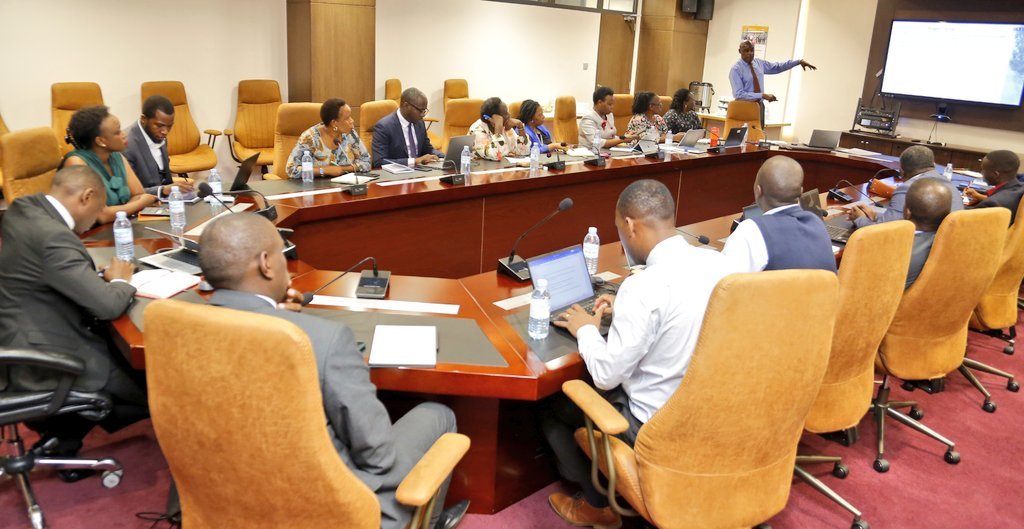
The World Bank, in partnership with Uganda’s Ministry of Finance, Planning and Economic Development, has conducted a training session on Inclusion and Non-Discrimination (IND) for technical officers implementing the Public Investment Management PLUS (PIM PLUS) programme, in a move aimed at promoting equitable and inclusive development across government projects.
The training brought together officials from various agencies implementing the PIM PLUS operation, a flagship reform under Uganda’s Public Finance Management Reform Strategy (PFMRS), which seeks to strengthen public investment and asset management across the country.
PIM PLUS is currently supporting the implementation of the Fourth National Development Plan (NDP IV) and the government’s Tenfold Growth Strategy by improving project preparation, budgeting, execution, and maintenance of public assets.
Speaking during the training, Gertrude Basiima, Acting Assistant Commissioner in the Projects Analysis and Public Investment Department at the Ministry of Finance, emphasized that inclusion and non-discrimination are central to the success of development initiatives.
“Inclusion is not merely a policy requirement by the World Bank, but it is a fundamental human rights principle in all operations. All projects must be inclusive. Every individual, regardless of gender, age, disability, ethnicity, religion, or socio-economic status, deserves equal opportunity and dignity in the share of project outcomes, goals, and objectives,” Basiima said.
She noted that inclusion and non-discrimination are critical pillars of effective service delivery and sustainable development, urging all implementing partners under the PIM PLUS programme to foster safe and respectful environments where diversity is valued and vulnerable groups are protected from marginalization.
The training highlighted Uganda’s commitment to international human rights standards and treaties that promote equal access to opportunities and services for all citizens.
Participants were urged to mainstream inclusion and non-discrimination principles throughout the project cycle, from planning and implementation to monitoring and evaluation.
The World Bank training team also called on implementing agencies to cascade the knowledge gained during the workshop to frontline staff, contractors, and other stakeholders involved in project delivery.
In addition, participants were encouraged to strengthen project-level Grievance Redress Mechanisms (GRMs) to ensure complaints and concerns from affected communities are addressed promptly and effectively.
The team emphasized the importance of maintaining active and responsive Grievance Redress Committees as part of promoting accountability and transparency.
Officials were further reminded to integrate inclusion and non-discrimination clauses into project documentation, including contracts, Terms of Reference, and other communication materials, to ensure the principles are embedded across all project activities.
The training forms part of broader efforts under the PIM PLUS programme to improve public investment outcomes while ensuring that development benefits reach all segments of society without discrimination.
As Uganda accelerates implementation of major public investments under NDP IV and the Tenfold Growth Strategy, government and development partners say strengthening inclusion safeguards will be key to ensuring that economic growth translates into equitable and sustainable development for all citizens.