
President Yoweri Museveni has pledged to push for the revival of the East African Community’s regional security summit, which has not been convened since 2014, as Uganda seeks to strengthen collective responses to security and humanitarian challenges facing the region.
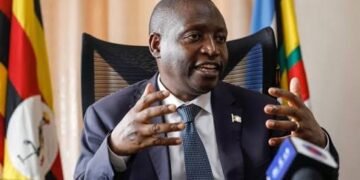
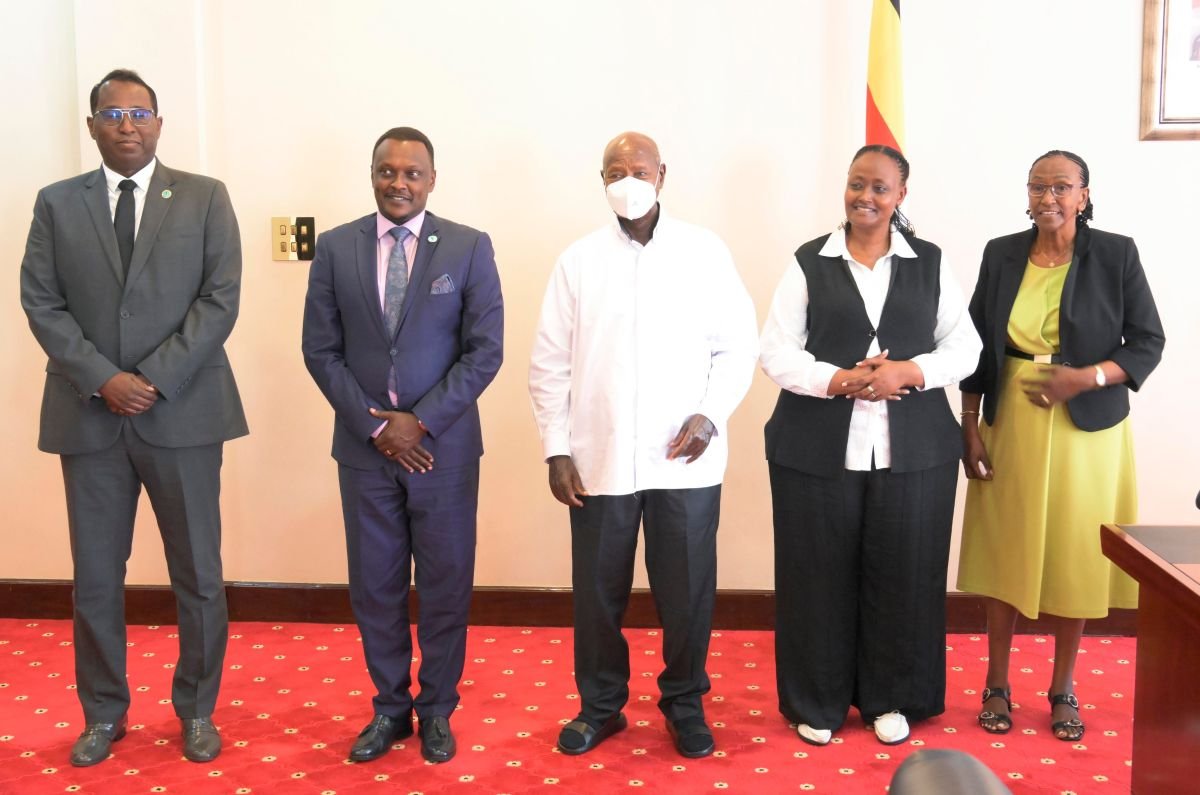
Museveni made the commitment after meeting Brig. Gen. Ronald Rwivanga, Director of the Eastern Africa Standby Force (EASF), at State House, Entebbe, where he received a briefing on the force’s activities and efforts to reinforce East Africa’s peace and security architecture.
The President said his position as Chairperson of the East African Community (EAC) gives him an opportunity to rally fellow regional leaders behind efforts to strengthen the EASF and improve its capacity to respond to crises.
“As Chairperson of the EAC, I will engage my fellow Heads of State to strengthen the EASF, including convening its Summit, which has not met since 2014,” Museveni said.
He added that he would also push for the force to receive adequate support to enable it to respond effectively to regional security and humanitarian emergencies.
The remarks signal a renewed attempt to place regional security cooperation higher on the EAC agenda at a time when East Africa continues to grapple with armed conflicts, terrorism, political instability, displacement and humanitarian emergencies.
The EASF is one of Africa’s regional standby arrangements established to provide a framework through which countries can collectively respond to peace-support operations and other security emergencies.
Museveni’s intervention comes amid persistent security challenges across the wider East African region, including instability in parts of the Horn of Africa and the Great Lakes region.
The region has also faced the consequences of armed conflicts that have generated large numbers of refugees and internally displaced people, placing additional pressure on neighbouring countries and humanitarian systems.
Uganda itself has repeatedly participated in regional security initiatives and military operations, including efforts aimed at combating armed groups and stabilising conflict-affected areas.
The President’s comments suggest that Kampala sees a stronger EASF as an important component of the region’s broader security architecture rather than relying solely on individual countries to respond to crises.
A major issue, however, will be whether member states can translate political commitments into sustained financial, logistical and operational support for the force.
Museveni specifically emphasised the need to ensure that the EASF is “adequately supported,” pointing to the importance of resources in turning the regional standby arrangement into an effective crisis-response mechanism.
The proposed revival of the EASF Summit could therefore provide an opportunity for East African leaders to review the force’s mandate, operational readiness, financing and deployment mechanisms.
It could also allow member states to address institutional gaps that have limited the effectiveness of regional security mechanisms over the years.
The fact that the summit has not met since 2014 highlights the long-running gap in high-level political engagement around the force.
For Museveni, who has been a prominent advocate of regional integration and collective security, the EASF could become another platform for strengthening cooperation among East African states.
His intervention also comes as the EAC continues to expand its role beyond economic integration into wider political, security and humanitarian matters.
The regional bloc has increasingly had to confront security questions because instability in one member state can quickly spill across borders through refugee flows, arms trafficking, organised crime and disruptions to trade.
A functioning regional standby force could provide member states with an additional mechanism for responding collectively before crises escalate.
However, rebuilding momentum around the EASF will require more than a summit. Member states would need to commit funding, equipment, personnel and political support while ensuring that deployment decisions can be made quickly when emergencies arise.
Museveni’s meeting with Rwivanga therefore places the question of regional preparedness firmly back on the political agenda.
The President said his discussions with fellow Heads of State would focus on strengthening the force and ensuring that it can respond to both security and humanitarian challenges.
The proposed summit could consequently become a critical test of the EAC’s willingness to deepen collective security cooperation and move from declarations of regional solidarity to practical mechanisms capable of responding to crises.
For Uganda, the initiative would further reinforce Kampala’s long-standing position that East African countries must take greater responsibility for addressing threats to regional peace and stability.
The immediate focus will now be on whether Museveni can secure agreement from fellow EAC leaders to convene the long-delayed summit and, more importantly, whether the meeting can produce concrete commitments to rebuild and adequately resource the EASF.