

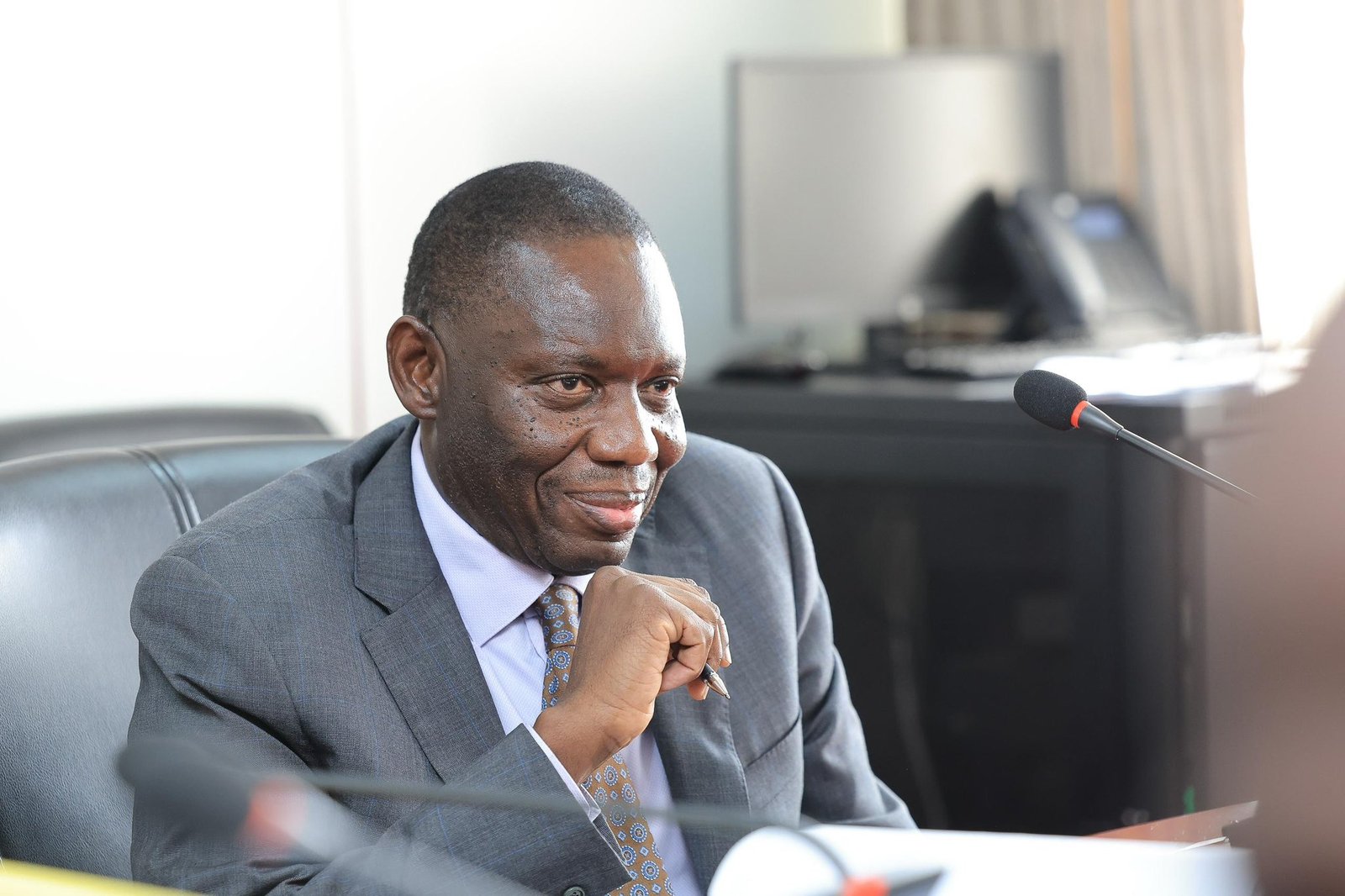
Uganda’s economic stability is facing one of its most serious warnings in recent years after Michael Atingi-Ego, the Governor of the Bank of Uganda (BoU), issued a stark and deeply technical rebuke of the controversial Protection of Sovereignty Bill 2026 — cautioning that its passage in the current form could trigger currency depreciation, runaway inflation, capital flight, and a dangerous erosion of the country’s foreign reserves.
In a charged appearance before Parliament, the usually measured central banker delivered what observers described as a rare and unusually blunt intervention, effectively warning lawmakers that the proposed legislation could undermine the very foundations of Uganda’s economic sovereignty.
“A country without reserves is not sovereign,” Atingi-Ego told legislators. “The moment you tamper with these inflows, we risk running down our reserves — and that is economic disaster for a country.”
His remarks have sent shockwaves through political, financial, and civil society circles — transforming what had largely been framed as a political and national security debate into a high-stakes economic showdown.
The Economic Backbone Now Under Threat
At the heart of the Governor’s warning is a simple but critical reality: Uganda’s economic stability is heavily dependent on consistent inflows of foreign exchange.
These inflows come from multiple sources:
- Foreign direct investment (FDI)
- International aid and development financing
- Remittances from Ugandans in the diaspora
- Export earnings and cross-border financial flows
According to Atingi-Ego, these inflows helped Uganda record a balance of payments surplus of USD 1.5 billion in the last financial year, allowing the central bank to boost its foreign exchange reserves to nearly USD 6 billion.
These reserves are not just numbers on a balance sheet — they are the country’s financial shock absorbers.
They:
- Stabilize the Ugandan shilling
- Enable the country to pay for imports like fuel, medicine, and machinery
- Provide confidence to investors and lenders
- Protect the economy during global downturns
But the Sovereignty Bill, he warned, could directly disrupt these inflows.
How the Bill Could Trigger a Financial Chain Reaction
The Protection of Sovereignty Bill 2026 proposes sweeping restrictions on foreign influence, including strict controls on foreign funding and mandatory registration of individuals and organizations deemed to be acting on behalf of external interests.
Backed by leaders within the ruling National Resistance Movement, the Bill is intended to shield Uganda from external political and economic interference.
However, economists say its broad and ambiguous provisions risk capturing legitimate financial flows — effectively scaring away the very capital the economy depends on.
Atingi-Ego laid out a clear and troubling sequence of events if the Bill disrupts inflows:
- Foreign inflows decline
Investors hesitate, donors reconsider, and diaspora remittances slow down. - Foreign reserves begin to fall
With fewer dollars entering the system, the central bank’s reserve buffers shrink. - The Ugandan shilling depreciates
Reduced dollar supply pushes down the value of the local currency. - Imported goods become more expensive
Uganda imports a large share of essential goods, including fuel and industrial inputs. - Inflation rises sharply
Higher import costs translate directly into higher prices for consumers.
“The pass-through of imported items into domestic prices is going to raise prices significantly,” the Governor warned.
Inflation: From Stability to Surge?
Uganda has, in recent months, enjoyed relatively low and stable inflation — hovering around 3%, below the central bank’s target of 5%.
This has been a key achievement for BoU, allowing for moderate interest rates and improved business conditions.
But Atingi-Ego warned that this progress could quickly unravel.
A weakening shilling would make imports more expensive, triggering cost-push inflation — a scenario where rising input costs drive up overall prices.
The central bank would then face a difficult policy dilemma:
- Tighten monetary policy (raise interest rates) to curb inflation
→ This would make loans more expensive, slow business expansion, and dampen economic growth - Allow inflation to rise above target
→ This would erode purchasing power and increase the cost of living for ordinary Ugandans
“That’s what we will have to grapple with,” he said, signaling the severity of the trade-offs ahead.
The Bill: Sovereignty or Economic Self-Sabotage?
The Protection of Sovereignty Bill has been promoted by government officials as a necessary step to defend Uganda against foreign interference in its political, economic, and social systems.
Supporters argue that:
- Foreign funding can be used to influence domestic politics
- External actors may undermine national interests
- Uganda must assert control over its internal affairs
The Bill proposes:
- Mandatory registration of “foreign agents”
- Strict oversight of foreign funding
- Severe penalties, including long prison sentences and heavy fines
- Expanded government powers to regulate international engagements
However, critics argue that the Bill’s definitions are overly broad, potentially sweeping in:
- NGOs and civil society organizations
- Businesses with international partners
- Academic institutions and researchers
- Ugandans receiving money from relatives abroad
A Rare Coalition of Opposition
What makes the backlash against the Bill particularly striking is its breadth.
Opposition has come from:
- Economists and financial experts
- Commercial banks and investors
- Civil society organizations
- Religious leaders
- Opposition politicians
Joel Ssenyonyi, the Leader of the Opposition, has been among the most vocal critics, dismissing the Bill as unnecessary and potentially harmful.
He argues that Uganda already has sufficient laws to deal with:
- Treason
- Illicit financial flows
- National security threats
For him and other critics, the Bill risks creating more problems than it solves.
Investor Confidence on the Line
One of the most immediate concerns raised by analysts is the potential impact on investor confidence.
Uganda has spent years positioning itself as a stable and attractive destination for investment in East Africa.
Key factors supporting this reputation include:
- Macroeconomic stability
- Predictable monetary policy
- Openness to international capital
The Sovereignty Bill, however, could send a conflicting signal.
On one hand, Uganda says it welcomes investment.
On the other, it introduces restrictions that could make investors feel unwelcome or unsafe.
In global markets, perception matters.
Even the fear of regulatory uncertainty can:
- Delay investment decisions
- Increase the cost of borrowing
- Trigger capital outflows
The Diaspora Dilemma
Perhaps the most politically sensitive issue is the potential impact on Uganda’s diaspora.
Millions of Ugandans living abroad send money home regularly — supporting families, paying school fees, and investing in property and businesses.
These remittances form a crucial part of Uganda’s foreign exchange inflows.
Critics warn that if diaspora transactions are caught up in the Bill’s regulations, the consequences could be immediate:
- Reduced remittance flows
- Financial hardship for households
- Increased pressure on the domestic economy
There are also concerns that some provisions could blur the line between foreign and local actors, raising constitutional questions.
Financial Sector Braces for Impact
The banking sector has also raised red flags.
Financial institutions fear that the Bill could:
- Complicate compliance requirements
- Slow down international transactions
- Increase the risk of penalties for routine operations
This could lead to a more cautious banking environment, where institutions:
- Limit cross-border transactions
- Tighten lending
- Avoid potentially risky clients
The result could be reduced economic activity and slower growth.
A Turning Point for Uganda’s Economic Policy
Atingi-Ego’s intervention marks a critical moment in Uganda’s policy debate.
By linking the Bill directly to:
- Foreign reserves
- Exchange rates
- Inflation
- Interest rates
he has reframed the discussion from ideology to economic survival.
His warning suggests that sovereignty cannot be pursued in isolation from economic realities.
In today’s interconnected world, he implied, financial openness and stability are part of sovereignty — not a threat to it.
What Lies Ahead
Parliament is now under intense pressure as it continues to review the Bill.
With the ruling party holding a majority, the legislation could still pass — but not without consequences.
Lawmakers face a difficult choice:
- Proceed with the Bill and risk economic disruption
- Amend it to address concerns
- Or delay it amid growing opposition
What is clear is that the stakes extend far beyond politics.
This is about:
- The strength of the Ugandan shilling
- The cost of living
- The availability of jobs and investment
- The country’s position in the global economy
A Defining Moment
Uganda now stands at a crossroads — one path leading toward tighter control and political assertion, the other toward economic caution and stability.
The Sovereignty Bill was intended to protect the nation.
But as Michael Atingi-Ego has warned, it could instead expose it to serious financial risk.
In the end, the question confronting lawmakers is no longer just about sovereignty.
It is about whether Uganda can afford the economic cost of defining it this way.