

Uganda’s newly signed Protection of Sovereignty Act, 2026, which government officials have marketed as a shield against foreign interference, could ironically become one of the most powerful legal weapons ever turned against the very political class that championed it.
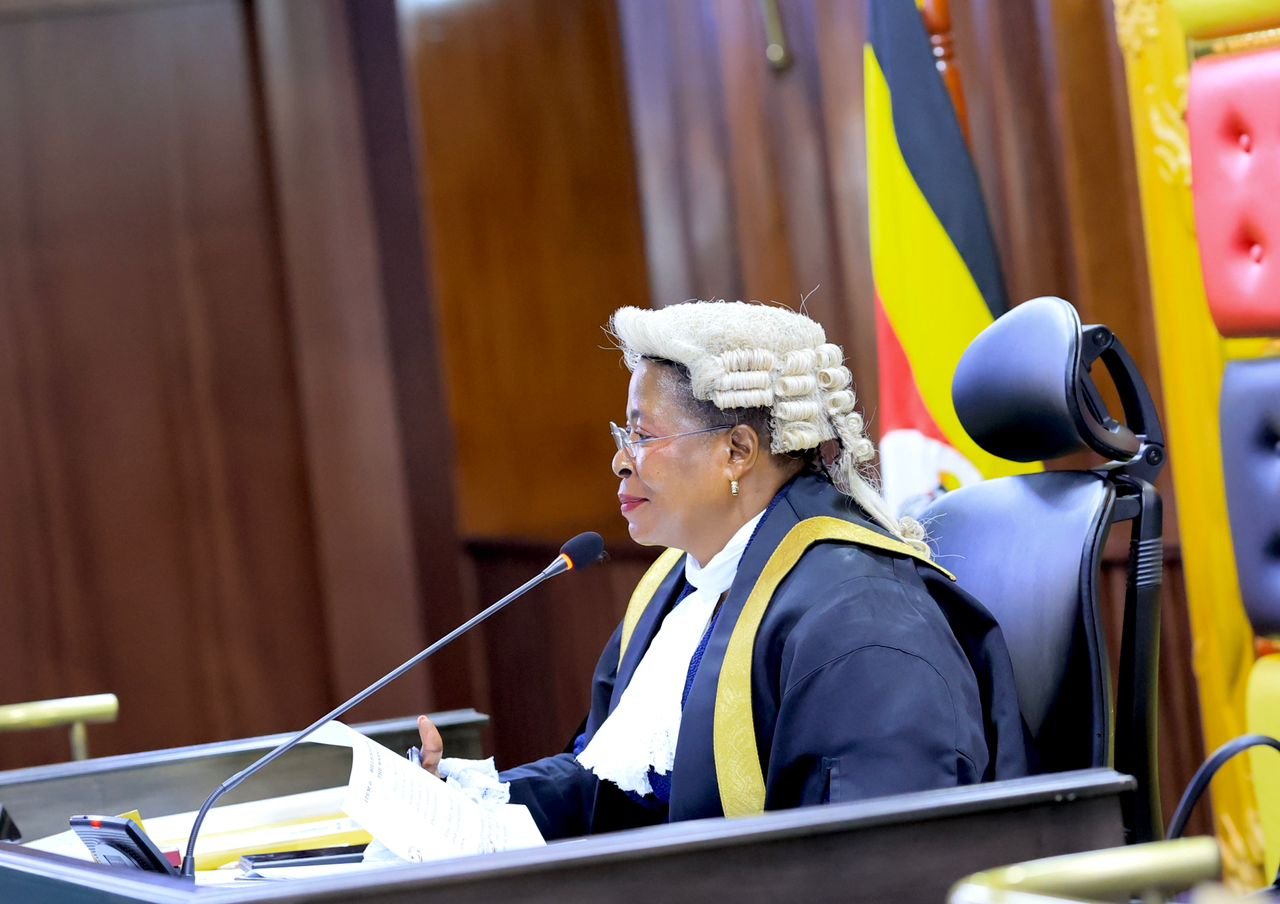
At the center of that storm is Anita Among — the Speaker of Parliament who aggressively steered the controversial law through the House, only to now find herself facing growing scrutiny over alleged corruption, illicit enrichment and money laundering investigations reportedly involving security agencies, financial intelligence operatives and the CID.
President Yoweri Kaguta Museveni officially assented to the Protection of Sovereignty Act on May 17, 2026, declaring that the law would strengthen Uganda’s independence in national decision-making and protect the country from foreign influence.
But legal analysts and political observers are already pointing to a chilling possibility: if investigators establish links between foreign financial flows, unexplained wealth, offshore dealings, foreign lobbying networks or suspicious international transactions connected to politically exposed persons, the same law could potentially be invoked against high-ranking government officials — including those who voted for it.
And if that happens, the implications could be explosive.
A Law Built Around Foreign Influence and Money Flows
The Protection of Sovereignty Act is sweeping in scope.
The law creates criminal liability for anyone deemed to be promoting foreign interests against Uganda’s interests, interfering with government operations, influencing government policy using foreign backing, receiving foreign funding without approval, or engaging in activities categorized as “economic sabotage.”
Its memorandum openly states that the law was created to stop foreign actors from influencing Uganda’s political, social and economic landscape.
The Act also gives enormous power to the internal security apparatus to investigate, monitor and regulate individuals or entities suspected of acting as “agents of foreigners.”
Under the law, an “agent of a foreigner” is defined extremely broadly. It includes anyone directly or indirectly financed, supervised, subsidized or controlled by foreigners.
The definition goes even further by including foreign companies, international organizations, NGOs, embassies and even Ugandan citizens living abroad.
Critics immediately warned that the legislation was dangerously vague and could be weaponized politically.
Now, with corruption allegations swirling around senior political figures, the focus has shifted dramatically.
Because the law is no longer just about activists, NGOs or opposition groups.
It could also apply to the powerful.
The Money Trail Problem
One of the most dangerous sections for any public official under investigation is Part IV of the Act — the section dealing with foreign funding, declarations of funds and suspicious transactions.
The law requires any person receiving funding from a foreigner to declare the source of those funds to the Minister.
It also makes it illegal for a person to directly or indirectly obtain financial support, donations, loans or assistance from foreigners above a certain threshold within twelve months without ministerial approval.
The penalties are staggering.
An individual convicted under the provision faces up to 20 years in prison, massive fines and forfeiture of the funds to the State.
For investigators probing alleged illicit enrichment, this provision could become highly significant.
If prosecutors were to establish that suspicious wealth, luxury property acquisitions, offshore transfers or politically connected financial movements involved undeclared foreign assistance, the Sovereignty Act could theoretically be layered on top of existing anti-money laundering laws.
That would dramatically widen prosecutorial options.
The “Agent of a Foreigner” Clause Could Become a Legal Earthquake
Perhaps the most controversial aspect of the law is how expansively it defines foreign influence.
The Act states that a person may qualify as an agent of a foreigner if they solicit money, represent foreign interests, influence government policy, recruit others or promote interests linked to foreign actors.
In practical terms, investigators could examine:
- International business dealings
- Foreign bank accounts
- Offshore companies
- Cross-border transactions
- Lobbying relationships
- Foreign property ownership
- International consultancy arrangements
- Foreign donations routed through proxies
- International contracts tied to government influence
If any of these are tied to attempts to influence state policy or government operations, prosecutors could argue that such conduct falls within the scope of the Act.
And because the law gives security agencies sweeping inspection and inquiry powers, authorities may gain broader access to records, premises, funding declarations and financial documents.
This is where the political irony becomes impossible to ignore.
The same Parliament leadership that sold the law as a patriotic shield against external interference may now face questions over whether politically connected wealth itself had foreign fingerprints.
Economic Sabotage: The Clause That Has Everyone Nervous
One of the harshest and most feared sections is the provision on “economic sabotage.”
The law criminalizes publishing information or participating in any activity that weakens the country’s economic system or causes economic instability.
Critics initially feared this clause would mainly target journalists, activists and whistleblowers exposing corruption scandals.
But legal experts say prosecutors could also attempt to interpret large-scale corruption itself as a form of economic sabotage — especially where public funds are allegedly siphoned, laundered abroad or used in schemes that damage public finances.
If investigators argue that illicit enrichment weakened state institutions, distorted public spending or undermined investor confidence, prosecutors may attempt to build broader national security-style arguments around corruption.
That would mark a dramatic shift in Uganda’s anti-corruption enforcement landscape.
Instead of corruption being treated merely as theft of public resources, it could increasingly be framed as a sovereignty threat.
Why the Timing Matters
The timing of the President’s assent is politically explosive.
The law was signed amid growing public debate around corruption allegations targeting powerful political figures, including scrutiny surrounding parliamentary expenditure, procurement controversies and unexplained wealth allegations.
At the same time, reports have emerged of intensified security investigations involving CID operatives and financial intelligence teams.
That creates a powerful perception problem.
Because many Ugandans are now asking a dangerous question:
Was the law designed solely to target opposition actors and NGOs — or can it genuinely be used against politically connected elites too?
If the state aggressively applies the law against activists while shielding ruling elites, accusations of selective justice will intensify.
But if investigators genuinely pursue politically exposed persons using the same law, it could trigger unprecedented political shockwaves within the establishment itself.
The Anti-Money Laundering Link
The Sovereignty Act explicitly references the Anti-Money Laundering framework.
That connection is critical.
Uganda’s financial intelligence systems have increasingly monitored suspicious transactions involving politically exposed persons, offshore structures and large unexplained movements of money.
If authorities combine anti-money laundering provisions with the Sovereignty Act’s foreign funding restrictions, prosecutors could potentially argue that certain financial flows were not merely suspicious — but threats to national sovereignty.
That would elevate corruption investigations from ordinary criminal matters into national security territory.
And once a case enters that territory, security agencies typically gain much wider operational latitude.
The Registration Trap
The law also creates criminal liability for anyone acting as an “agent of a foreigner” without registration.
If investigators interpret certain lobbying, consultancy or financial relationships as acting on behalf of foreign interests, failure to register could itself become an offence punishable by up to ten years in prison.
This is especially sensitive in cases involving:
- International contractors
- Foreign-funded projects
- Cross-border consultancy arrangements
- Foreign-linked business networks
- Offshore political financing allegations
The law’s wording is so broad that even indirect foreign financial support could trigger scrutiny.
That has already alarmed legal experts who argue that the Act grants enormous discretionary power to the executive and security agencies.
The Most Dangerous Clause for Political Elites
Another provision may ultimately become the most politically devastating section in the law.
It allows authorities to suspend or revoke registration certificates if holders are found to have:
- Given misleading information
- Committed offences under the Act
- Become security threats
- Engaged in disruptive activities
Combined with the law’s vague definitions, critics fear that political and financial investigations could easily evolve into broader state security cases.
And in Uganda’s political environment, once security framing enters a case, the stakes change completely.
A Law That Could Reshape Uganda’s Political Battlefield
The Protection of Sovereignty Act may end up becoming one of the most consequential political laws Uganda has passed in years.
Government says it is necessary to protect national independence and stop foreign manipulation.
Opponents say it resembles a sweeping security law capable of criminalizing dissent, activism, foreign partnerships and independent civic activity.
But beyond the NGO debate lies another possibility that is now impossible to ignore:
The law may ultimately be used not only against critics of the state — but against insiders within the state itself.
And that is where the Anita Among situation becomes politically combustible.
Because if investigators establish links between alleged illicit enrichment and undeclared foreign financial relationships, the Sovereignty Act could become more than just a symbolic law.
It could become a prosecutorial hammer.
The deeper irony is brutal.
A law sold to Ugandans as a patriotic defense of sovereignty may now hover over the very architects of its passage.
And if the state chooses to fully unleash it, Uganda could witness something extraordinary:
A political elite trapped inside its own legislation.