
The Bank of Uganda (BoU) has intensified efforts to digitise payments as a key strategy to accelerate the growth of youth-led small and medium enterprises (SMEs), unveiling new measures aimed at lowering transaction costs and improving interoperability across mobile money platforms.
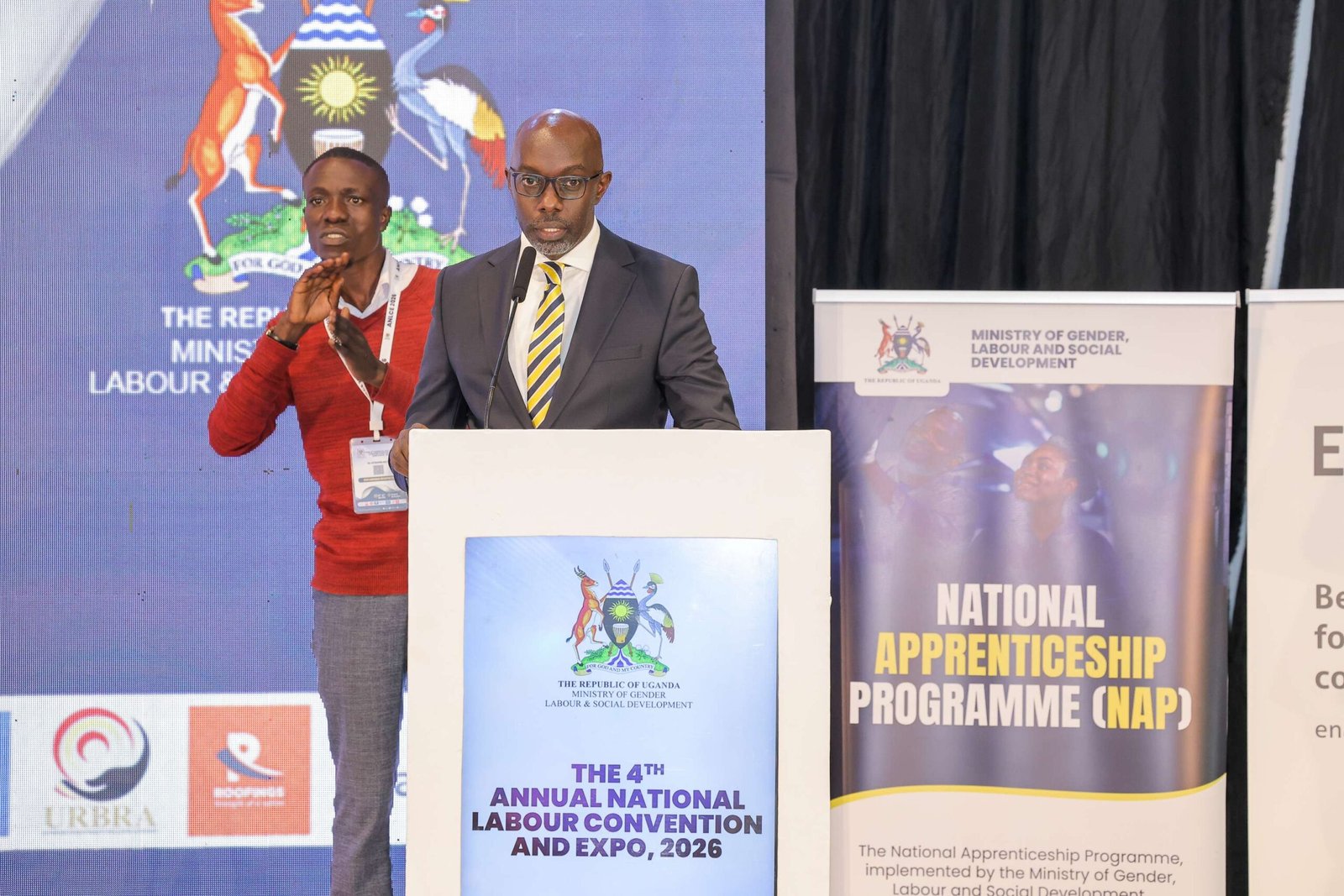
Speaking at the 4th Annual National Labour Convention and Expo convened by the Ministry of Gender, Labour and Social Development, the Deputy Governor—represented by Arnold Bagubwagye, Acting Director for National Payment Systems—said the country’s shift from cash-based transactions to digital payments is critical for empowering young entrepreneurs.
Bagubwagye highlighted that while young people are increasingly driving Uganda’s SME sector, high transaction costs remain a major barrier to adopting digital financial services.
“The most critical pathway to accelerating youth-led SMEs is the transition from cash-based to digital payment systems, but young people often struggle with high transaction costs,” he said.
To address this, BoU is implementing the Digital Drive Project, an initiative designed to streamline and reduce the cost of digital transactions. A key feature of the project is enhanced interoperability between mobile money platforms, allowing seamless transfers across different networks.
Under the new system, merchant codes will be usable across platforms, enabling transactions between telecom providers such as Airtel and MTN.
This means that customers will be able to make payments regardless of their mobile network, eliminating current barriers that limit cross-platform transactions.
Additionally, the system introduces dedicated merchant wallets, separating business transactions from personal mobile money accounts. This is expected to improve financial management for SMEs and enhance transparency.
Bagubwagye also revealed that BoU is working on a national framework for QR code standardisation, a move aimed at further simplifying digital payments.
“Businesses will be able to have a QR code that is linked to all wallets and banks to facilitate smooth payments,” he explained.
The proposed QR code system would allow customers to make payments across multiple platforms using a single code, reducing friction in everyday transactions and boosting efficiency for businesses.
The Digital Drive Project is part of broader efforts by BoU to modernise Uganda’s financial ecosystem, promote financial inclusion, and support innovation in the digital economy.
Stakeholders at the convention welcomed the initiative, noting that improved digital infrastructure could significantly lower the cost of doing business and enhance access to financial services, particularly for young entrepreneurs who form the backbone of Uganda’s informal and SME sectors.
As Uganda continues to embrace digital transformation, the central bank’s latest push signals a decisive step toward a more integrated, accessible, and youth-friendly financial system.