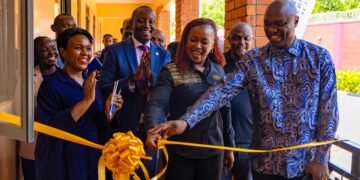

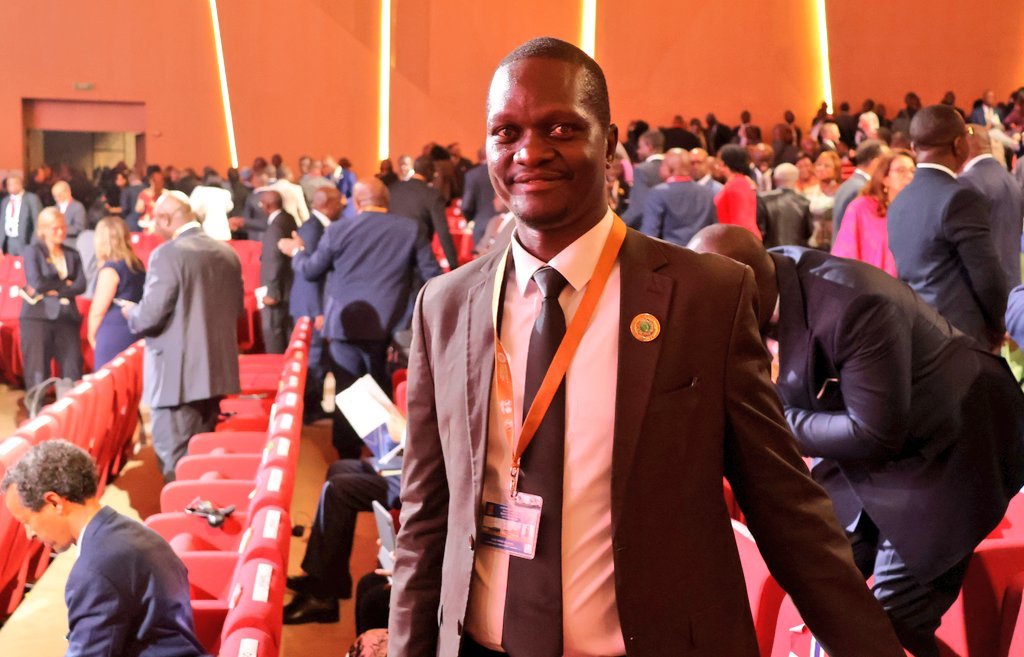
The 2026 Annual Meetings of the African Development Bank Group officially opened in Brazzaville with a strong call for Africa to mobilize its own financial resources to drive economic transformation amid growing global uncertainty.
Opening the high-level gathering, Denis Sassou-Nguesso said Africa continues to face enormous financing gaps despite possessing vast economic and natural resource potential.
Held under the theme “Mobilizing Africa’s Development Financing at Scale in a Fragmented World,” the meetings have drawn finance ministers, central bankers, development experts and policymakers from across the continent to discuss Africa’s economic future and financing priorities.
President Sassou-Nguesso emphasized the urgent need for African countries to scale up the mobilization of domestic savings and strengthen continental financial institutions capable of funding long-term development.
He urged the African Development Bank Group to remain committed to its core mandate of spearheading Africa’s transformation at a time when geopolitical tensions, rising debt burdens and global supply chain disruptions are placing increasing pressure on developing economies.
In a major announcement during the opening ceremony, the Congolese leader revealed that the Republic of Congo will waive visa requirements for all African nationals beginning January 2027, a move widely viewed as a significant boost to continental integration, trade and movement of people across Africa.
Uganda is participating in the meetings through a delegation led by Mustapha Achidri, the Temporary Governor to the AfDB and Assistant Commissioner at the Ministry of Finance, Planning and Economic Development.
Uganda remains one of the beneficiaries of AfDB financing on the continent. As of April 2026, the bank and Uganda had 19 active public sector operations valued at approximately USD 2.2 billion.
Some of the key projects financed by the bank in Uganda include the Uganda Rural Electricity Access Project, Kampala City Rehabilitation Road Project, Road Sector Support Project V, and the Busega-Mpigi Express Highway together with the Kampala-Malaba Meter Gauge Railway Rehabilitation Project.
Meanwhile, the President of the African Development Bank Group, Sidi Ould Tah, called for stronger African institutions and deeper continental integration to enable Africa withstand growing global economic shocks.
He stressed the need for African countries to develop confidence in their own capacity to shape the continent’s future through homegrown financial systems and coordinated economic strategies.
The meetings also saw the launch of the 2026 African Economic Outlook Report, which projects Africa’s economy to grow by 4.2 percent in 2026, slightly lower than the 4.4 percent recorded in 2025, before recovering again to 4.4 percent in 2027.
According to the report, at least 22 African economies recorded growth rates above 5 percent in 2025, supported by stronger agricultural production, improved macroeconomic management, higher commodity prices and continued structural reforms.
y=4.2
East Africa is expected to remain Africa’s fastest-growing region, although growth is forecast to slow from 6.6 percent in 2025 to 5.9 percent in 2026 due to rising energy prices and increased import costs linked to disruptions in the Middle East. The region is however projected to rebound to 6.4 percent in 2027.
The report further called for accelerated reforms aimed at strengthening Africa’s financial architecture through integrated capital markets, pan-African banking systems and innovative financing instruments including climate finance and Islamic finance.
It also highlighted the newly launched African Credit Rating Agency, unveiled in January 2026, as a strategic tool intended to counter what many African policymakers have described as unfair sovereign risk assessments by international credit rating agencies.