
On January 26 this year, President Yoweri Kaguta Museveni told a National Resistance Movement party gathering also attended by senior government officials gathered at Kololo Ceremonial grounds to mark 36 years ever since his party came to power, that Uganda will attain the lower middle-income status by 2026 after it failed to meet this milestone in 2020.
The National Development Plan II had targeted 2020 as the year for Uganda to attain this coveted position. In a press statement issued by the presidential press unit under the headline, ‘Middle income will be achieved by 2026, – President Museveni,’ the president said the economy will be 44 billion dollars in July this year compared to 1.5 billion dollars when NRM/NRA came into power in 1986.
“This means that the economy has grown 29 times since that time in size. And in July, the GDP Per capita will be about $ 980. That is very near to the Middle-Income status which is 1039 dollars,” Museveni said adding that Uganda would have achieved the Middle-income status if it hadn’t been for Covid-19.
Less than six months later, President Museveni was on Tuesday at the same Kololo Ceremonial grounds, addressing almost a similar gathering during the annual State of National Address and declared that after all Uganda had already hit the target.
“Remember, the locusts, the rising waters of the Lakes, the floating islands, the landslides, the terrorist bombs, the Covid-19 and now the rising commodity prices artificially caused by the Ukrainian war, in spite of all these, the Ugandan economy, by the budget time in the next few days, will be standing at US$ 45.7billion by the exchange rate method and at USD 131.6 billion by the PPP (Purchasing Power Parity) method. This means that the GDP per capita is now $1046,” Museveni said. “You remember, the entrance point for the lower middle-income status, is USD 1036. We have now passed that figure,” Museveni said.
This declaration stunned a number of people who questioned the figures that the president presented. Many took to social media to cast doubt on the presidential figures especially coming at the time when commodity prices are shooting through the roof and the shilling is not doing well against the dollar either.
We dig a little deeper in the numbers. In January the president forecast of the economy showed that it will be $44 billion by July and therefore resulting into $980 per capita.
What happened between then and now that it grew by almost another $2billion yet because of Covid-19, the country’s economy was projected by Bank of Uganda in January to grow by 3.5-3.8% in the financial year 2021/22 before rebounding to 5.5-6.0% in financial year 2022/23, the same level before the onset of Covid-19?
In an interview, Zaid Kasujja an economist asked how the country could have attained middle income status at a time when the economy is yet to recover fully from the devastating impact of Covid-19!
“How could we have attained middle income status when people’s lives and livelihoods seem to have deteriorated since the last presidential comment on the middle status due to the ongoing global crises that the president himself alluded to?” Kasujja wondered.
“What magic wand did we use to summersault our way to the middle income at such a supersonic speed?”
What’s Middle Income?
According to the World Bank, lower middle-income countries are those with a Gross National Income [GNI] per capita which is between $1,036 and $4,045 and upper middle-income countries are those with a GNI per capita which is between $4,046 and $12,535.
Gross National Income is arrived at after adding the incomes of all Ugandans at home and abroad. It is different from Gross Domestic Product which includes all economic activities for all Ugandans and non-Ugandans living in Uganda but excludes Ugandans living abroad.
On the other hand, the per capita income is obtained by dividing the GNI among the country’s population. Going by the president’s speech, Uganda uses GDP instead of GNI to arrive at the per capita income.
Failed Target
The main focus of the National Development Plan II-NDPII a policy document in which the government detailed its development agenda for five years between 2015/16-2019/20 was to achieve a lower middle-income status with a per capita income of $1,039 by 2020.
To achieve this, NDPII said there was need to strengthen Uganda’s competitiveness for sustainable wealth creation, increased exports, reduced poverty; increased employment levels, and improved social indicators in health and education.
In a policy paper prepared by the National Development Authority, the agency charged with designing the country’s development agenda titled, “The process of attaining middle income status. What does this mean for Uganda?” noted that attaining lower middle-income status alone may not necessarily reflect improvements in the citizens’ welfare.
Therefore, what Uganda would describe as real middle income is when there is actual improvement in the lives of the people.
“NDPII middle income target is much broader than the international definition of middle income,” says the policy paper.
“While the international middle income definition is limited to increasing per capita incomes, this may not necessarily reflect improvements in the citizens’ welfare.
“Uganda’s development approach of attaining middle income status is much broader, focusing on improving general socio welfare and socioeconomic indicators.
“The development focus for Uganda targets a lower middle income status that comes along with improvements in socioeconomic welfare for all Ugandans.
“In addition to targeting a per capita income of $1,039, it also targets socio-economic indicators. It targets a reduction in poverty levels from 19.7% to 14%, increasing the percentage of national labour-force in employment to 79%, increasing access to electricity from 14% to 30%, increasing life expectancy to 60 years, reducing infant mortality rate from 54 to 44 per 1000 live births, reducing under five mortality from 90 to 51 per 1,000 live births and maternal mortality from 438 to 320 per 100,000, increasing safe water coverage from 71% to 90% among others.”
The paper also notes that for Uganda to achieve middle income status, the economy must grow at an average of about 6% from 2015 onwards.
They explained that this is because countries such as Kenya, Vietnam, Bangladesh, Tanzania among others that have recently attained lower middle-income status, sustained their economic growth at an average of about 6% for over five years.
So, if that was the target of the government in regards to middle-income status and it admitted that in 2020 it failed to hit the target as stated in NDP11, has there been an improvement in those areas that are listed as crucial to propel the country into the realm of middle-income status countries?
The numbers from the Uganda National Bureau of Statistics-Ubos definitely suggest otherwise. In fact, if anything, from 2020 when the country failed to achieve the middle-income status and now when the president is saying it was achieved, the general welfare of the country seems to have regressed.
Therefore, the president’s declaration runs contrary to the aspirations listed in his government’s documents.
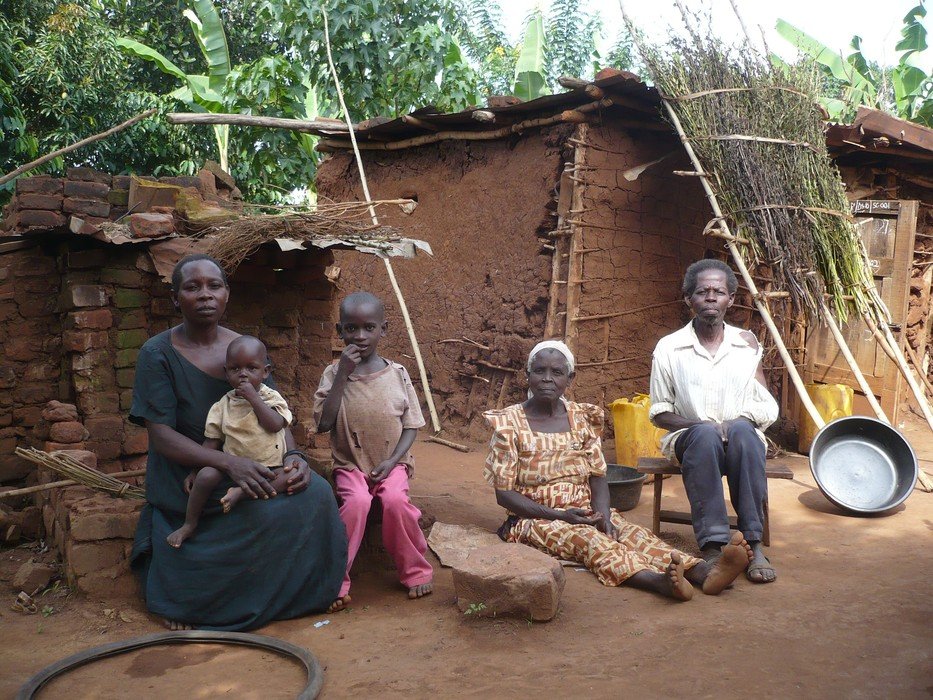
According to the latest Uganda National Housing Survey 2019/2020, the number of people living in absolute poverty increased from 8million to 8.3million between 2016/17 and 2019/20 when the survey was done.
This was mainly due to the Covid-19 pandemic that had a devastating impact on the economy.
“Based on the new poverty line of $1.77 per person per day, the share of Ugandans living in poverty stood at 30.1 percent, representing 12.3 million poor persons in 2019/20. Thus, using the upper poverty line increases the number of poor persons by 4 million from that estimated using the existing poverty line of $1.0 of 8.3 million,” the report reads in part.
However, it adds that using $1.9 per person per day based on the 2011 Purchasing Power Parity international comparisons, the poverty levels in Uganda increases to 41.1 percent which in absolute terms, results into 16.9 million poor people. Contrary to government target of having 30 per cent Ugandans have access to electricity, Ubos found that only, 19 percent Ugandans used grid electricity. Contrary to government target of having 90 percent Ugandans have access to safe drinking water, Ubos found that only 79 had access to improved sources of drinking water. This, according to Ubos, leads to one conclusion, at least in as far as welfare is concerned, Covid-19 left a trail of destruction in its wake.
Unstable Middle Class
In both his address and the foreword he wrote in NDPII, President Museveni said that to achieve middle-income status, there is need to have a sustained growth of the economy at least by 6 percent per year.
The growth of the economy effectively translates into the growth in incomes of the people who make up the middle class.
However, according to a report by the Makerere University based Economic Policy Research Centre, Uganda’s middle class is largely made up of floating middle class which is susceptible to slipping back into poverty with just a slight interruption.
“The available evidence suggests that Uganda’s middle class is not strong enough and thus, incapable of driving the economy to achieve and sustain the middle-income status aspiration even at the lower end,” reads the report in part.
“The floating class is highly vulnerable or susceptible to any economic shock, and can quickly descend into poverty. It is an unstable sub-group of the middle class that cannot be relied upon for attaining and sustaining the middle-income status, as well as economic growth and development…This evidence suggests that the quality of Uganda’s middle class is wanting. It is fragile and highly unstable.”
According to the report, which based on the population estimates of 2016/17, 57percent of Ugandans belong to the middle class. This currently represents 25million people although majority of them are in the floating middle income.
So, with an economy that is growing by half of its pre-covid rate, with the global economic crisis that has pushed the prices of essential commodities hence diminishing the people’s purchasing power, with the shillings trailing the dollar, is it possible that the economy defied these odds and moved up hence propelling the country to the top?
Ddungu Adrian an economist and tax expert at Daws Company Consult Limited doesn’t think so. He says it is a laughable that anybody can claim that Uganda has attained a middle-income status at a time when many Ugandans are just recovering from the vagaries of Covid-19 inspired lockdowns.
“We are no longer in bad situation; we are in a worse situation as a country in the last two years,” Ddungu said. “We have a global crisis but unlike other countries that have done something for their people, for us we are doing nothing. It is true that the figures might suggest that we have attained the middle income but that has not been translated into improved people’s welfare.”
The economist adds that even the income inequality in Uganda blunts the impact of growth in GDP as most of the income belongs to a few people.
“Government institutions such as NSSF, Bank of Uganda, Ubos are releasing figures that show how poverty stricken we are and then the president is telling us we are a middle income; they don’t tally up,” says Ddungu.
“By the way, even if the figures are indeed correct and that we are a middle income status, remember our debt is almost 50 percent of the GDP it means that half of the economy belongs to somebody else.”