

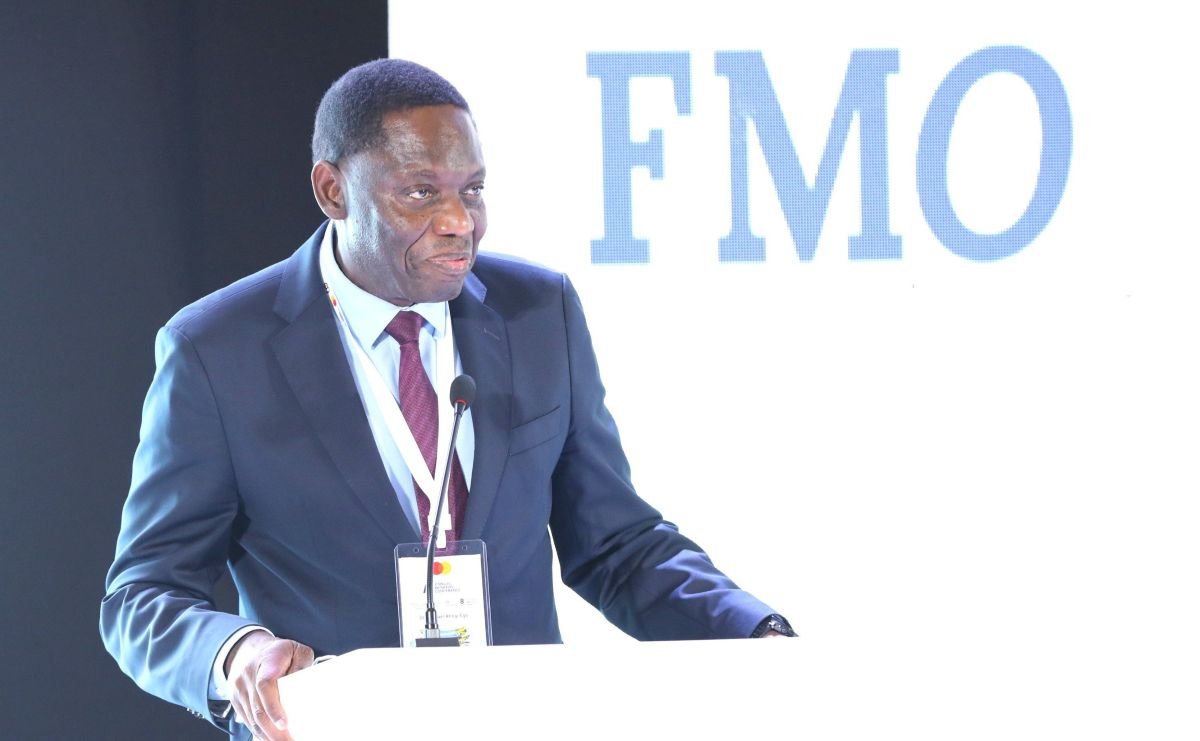
Bank of Uganda Governor Michael Atingi-Ego has moved to calm growing concerns over the sharp depreciation of the Uganda Shilling, assuring banks, businesses and investors that the central bank has the capacity to contain the latest exchange-rate pressures.
Speaking Friday at the 9th Annual Bankers Conference at Kampala Marriott Hotel, Nsambya, Atingi-Ego acknowledged that the shilling had come under significant pressure in recent days, with the US dollar trading at around Shs3,930.
The Governor attributed the latest movement largely to developments in the global oil market, which have increased demand for dollars as Uganda meets the rising cost of imported petroleum products.
“Towards the end of last week the currency began to depreciate quite significantly. You all know what’s happening in the global oil prices, and our currency is a market-determined currency,” Atingi-Ego told financial-sector players.
The latest slide has marked a sharp reversal from the relative stability enjoyed by the shilling through much of 2026. The currency traded at a median of about Shs3,740 in August before weakening beyond Shs3,900 in September.
‘We Have Been Here Before’
Atingi-Ego sought to put the current depreciation into perspective, pointing to previous episodes when the shilling came under severe pressure but subsequently stabilised.
He cited July-August 2022, when aggressive interest-rate increases by advanced-economy central banks triggered capital outflows from emerging and frontier markets.
During that period, the shilling weakened from about Shs3,650 to the dollar in February 2022 to nearly Shs3,900, before eventually stabilising.
The Governor also recalled the pressure experienced in August 2023, after the World Bank announced that it would not disburse new financing to Uganda. The shilling approached the Shs4,000-per-dollar level during that period.
Another episode came in February 2024, when developments in a neighbouring country’s bond market contributed to renewed pressure on the Ugandan currency, which again approached Shs4,000 to the dollar.
Atingi-Ego said the latest movement should therefore be viewed against the background of the central bank’s previous experience managing external shocks.
“In September 2026, because of global oil developments, the currency is trading at about Shs3,930 right now,” he said.
Oil Shock Drives Dollar Demand
The latest pressure has coincided with a dramatic surge in international oil prices.
Brent crude has risen above $100 per barrel, with Middle East tensions and disruptions to oil infrastructure contributing to higher prices. Uganda, which imports almost all of its petroleum products, is particularly exposed to such movements because fuel importers require dollars to pay for supplies.
The weakening shilling consequently raises the local-currency cost of imported fuel, with potential knock-on effects on transport, manufacturing, agriculture and consumer prices.
The pressure is also being reinforced by increased dollar demand from manufacturers and energy companies, while uncertainty surrounding the Middle East conflict has encouraged some market participants to secure dollars in advance.
Reuters reported this week that traders expected continued pressure on the shilling and that the currency could potentially test the Shs4,000-per-dollar level if the pressure persisted.
BoU Moves to Tighten Liquidity
While Atingi-Ego sought to reassure the market, the central bank has also been taking measures to manage monetary and exchange-rate pressures.
According to recent reporting, BoU has been tightening liquidity in the financial system, including raising the cash reserve requirement from 9 percent to 11.5 percent in August and to 13.5 percent effective September 24. The Central Bank Rate has remained at 9.75 percent.
BoU’s official exchange-rate platform publishes daily indicative rates to track movements in the foreign-exchange market.
The central bank has, however, indicated that it does not intend to simply exhaust foreign-exchange reserves defending a particular exchange-rate level when market fundamentals are pushing the currency in another direction.
‘Be Still, All Will Be Fine’
Despite the renewed volatility, Atingi-Ego urged the financial sector and the wider economy not to panic.
His message was blunt: the central bank has dealt with major exchange-rate shocks before and possesses the tools to respond to the current episode.
“Why am I bringing all this? I am bringing all this to say Bank of Uganda has what it takes to stabilize this exchange rate. So, be still. All will be fine,” the Governor said.
The comments come as businesses closely watch the shilling’s next movements, with a prolonged depreciation carrying implications for import costs, fuel prices, inflation and private-sector financing.
For now, the central bank’s position is that the latest pressure is a shock Uganda can manage—and that the country’s monetary authorities remain equipped to intervene where necessary.