

Uganda’s motor vehicle trade is once again facing mounting pressure over persistent delays in the issuance of digital number plates, with traders warning Parliament that the company contracted to manufacture the plates may not have the production capacity or material stocks needed to meet demand.
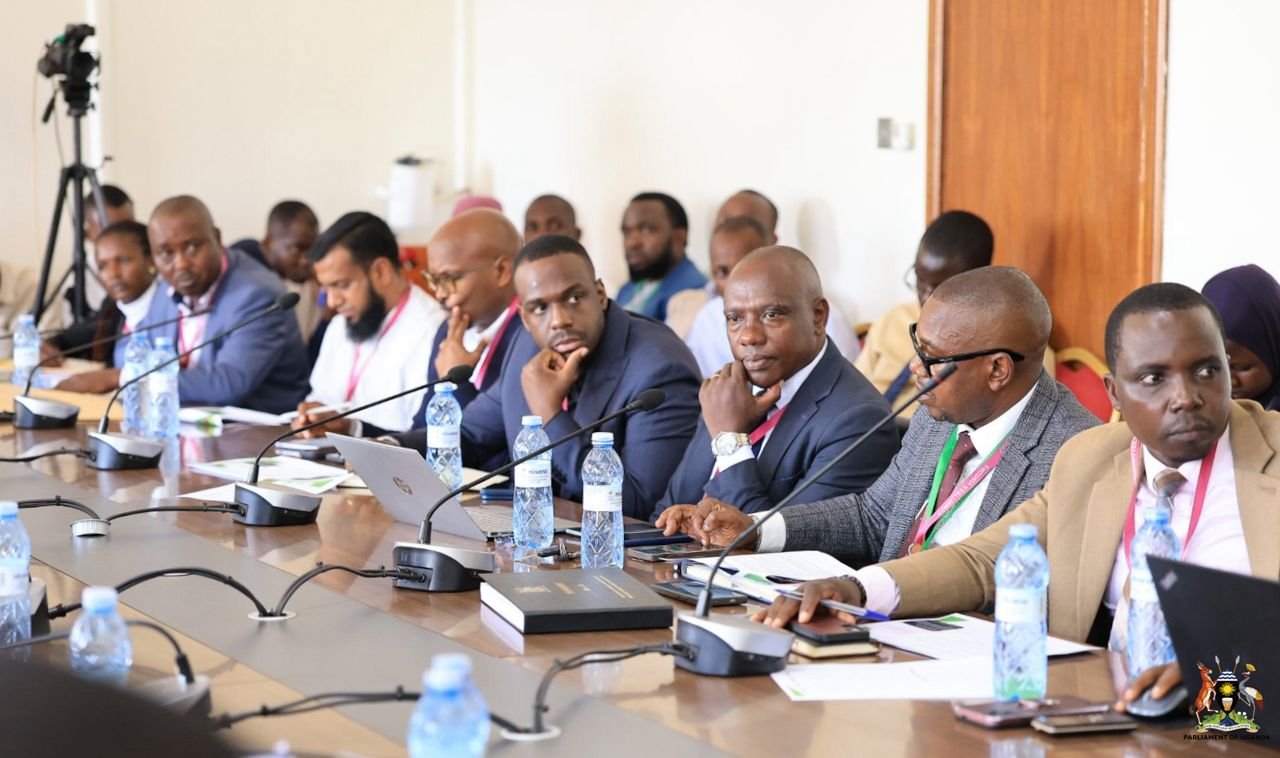
Representatives of motor vehicle dealers under the Kampala City Traders Association (KACITA) raised the concerns while appearing before Parliament’s Committee on Physical Infrastructure, chaired by Mwine Mpaka, saying recurring shortages have disrupted business and damaged the confidence of customers dealing with vehicle dealerships.
The traders told the committee that their biggest concern is not merely the delay in individual orders, but the apparent inability of the current service provider to maintain adequate stocks of both finished number plates and the raw materials required to manufacture them.
They warned that unless the government urgently addresses the production and supply bottlenecks, dealers could continue suffering financial losses as vehicles remain grounded or stuck in bonded facilities waiting for registration plates.
Dealers question contractor’s capacity
The latest concerns add to a growing dispute over Uganda’s digital number plate programme, which has been plagued by complaints about delays, shortages, fitting arrangements and the cost of registration.
The Ministry of Works and Transport acknowledged in July that production capacity and supply problems had become a major issue. Following stakeholder complaints, the Ministry held a meeting with vehicle dealers, motorcycle importers, clearing and forwarding agents and other industry players to discuss the delays.
The Ministry said stakeholders had specifically raised concerns about production capacity, communication gaps, transparency, accountability and delays affecting businesses and vehicle owners. It subsequently committed to conducting a comprehensive audit of the contractor’s capacity and assessing the possibility of bringing in additional service providers.
This means the concerns now being raised before Parliament come against the backdrop of an already acknowledged capacity problem within the digital number plate system.
Customers losing confidence in dealers
According to the traders, the delays are no longer an administrative inconvenience but a direct threat to businesses.
Dealerships often complete sales or registration-related transactions with customers expecting vehicles to be processed and released within reasonable periods. But when number plates are unavailable, dealers are left unable to complete the process, creating disputes with customers who may not distinguish between delays caused by the government system and those caused by the dealership.
The traders told MPs that some customers have consequently begun losing confidence in dealerships because dealers are unable to fulfil their obligations on time.
The impact can be particularly severe where imported vehicles are held in bonded facilities. In July, motor dealers publicly complained that some vehicles and motorcycles had remained in bonds for months because registration plates were unavailable.
One dealer told the media that a motorcycle company with about 1,000 motorcycles in 20 containers was unable to move the units because of the lack of number plates. The dealer said some businesses had waited for more than three months after paying for the plates.
Such delays can expose businesses to additional storage and financing costs while tying up capital in vehicles that cannot be released to customers.
Shs714,300 plate cost under fire
The traders also questioned the financial burden imposed by the digital registration system, particularly the Shs714,300 charge for a new registration plate.
They argue that the cost is excessive and ultimately burdens both motor dealers and motorists.
The Shs714,300 figure has previously come under intense scrutiny from KACITA and other industry stakeholders. In January 2025, KACITA criticised the digital number plate programme, arguing that the cost of first-time registration was significantly higher than comparable charges in neighbouring countries.
KACITA at the time said new registration in Uganda cost Shs714,300, while it cited Kenya’s charge at approximately Shs80,000 for vehicles and Shs40,000 for motorcycles. The business association also complained about additional charges for replacement of existing plates.
The traders’ renewed criticism therefore places the cost of the plates alongside supply reliability as two major concerns surrounding the system.
A troubled rollout
Uganda’s digital number plate programme is part of the Intelligent Transport Monitoring System (ITMS), a system intended to strengthen vehicle identification, tracking and security through electronically enabled registration plates.
The government signed an agreement with Joint Stock Company Global Security to establish the ITMS, with the rollout initially facing delays and logistical challenges.
According to the Ministry of Works and Transport, the issuance of digital registration plates to private and public motor vehicles began in January 2025, following earlier phases involving government vehicles and motorcycles.
But the rollout has repeatedly encountered resistance and operational difficulties.
KACITA had already petitioned government and Parliament before the wider rollout, raising concerns over preparedness, sensitisation, system integration, capacity, costs and the ability of the service provider to maintain adequate supplies.
The association said in January 2025 that integration problems were causing payment and reconciliation delays and that customers could wait several days for plates to be fitted. It also raised concerns over insufficient stocks of plate materials.
Government ordered contractor to fix production problems
The complaints reached a new peak in July 2026 when motor vehicle and motorcycle dealers protested over the shortages and called for government to reconsider its relationship with the contractor.
Following the outcry, Works and Transport Minister Fred Byamukama inspected the contractor’s facility at Kyambogo and directed it to address outstanding production capacity problems.
The Ministry subsequently said registration and issuance of digital plates had not been suspended, despite reports circulating on social media suggesting otherwise. It acknowledged the shortage and said the contractor had been directed to resolve production capacity challenges by the end of August.
The Ministry later said it was implementing measures to restore efficiency and clear delays affecting new registrations, transfers and replacements.
The government also agreed to audit the contractor’s capacity, investigate cases where motorists had paid but waited for plates, examine registration procedures and consider options for additional service providers.
Contractor says production has improved
The contractor’s side has maintained that efforts were being made to restore normal operations.
In July, ITMS said the arrival of critical electronic components had allowed production to accelerate, with the company claiming that its factory was operating at full capacity and that its backlog was steadily declining.
ITMS said it was targeting full stabilisation of first-time registration and post-registration services by August 30, 2026.
Uganda Radio Network also reported in July that ITMS had cleared a backlog of about 6,000 digital motor vehicle registration plates, following increased production after the Minister’s intervention.
However, the fresh concerns from KACITA suggest that questions about the system’s ability to sustain adequate production and maintain reliable stocks have not disappeared.
Parliament now faces a bigger question
For MPs, the issue goes beyond whether individual motorists eventually receive their plates.
The fundamental question is whether the current arrangement gives Uganda a sufficiently reliable registration system capable of supporting the country’s rapidly growing motor vehicle market without disrupting legitimate businesses.
If a vehicle has been paid for, taxes settled and registration requirements completed, traders argue that the absence of a number plate should not leave the vehicle immobilised for months.
The situation also raises questions about value for money.
The government is relying on the ITMS to provide a critical public service involving vehicle registration, identification and security. Yet dealers say they are paying a substantial fee for a service that has repeatedly been affected by supply constraints.
The Ministry’s decision to audit the contractor’s capacity and consider additional service providers could therefore become an important test of whether the current arrangement is sustainable.
For KACITA and motor dealers, the demand is straightforward: number plates must be available when motorists pay for them, and the cost must be reasonable enough not to undermine the motor trade.
With Parliament now scrutinising the matter, the pressure is likely to shift from motorists and dealers directly affected by the delays to the government and the contractor responsible for ensuring that Uganda’s digital registration system actually works at the scale required.