
Uganda’s Leonard Chemonges produced the defining performance of the fifth Tusker Lite Rwenzori Marathon, winning the men’s 42.2-kilometre race in 2:13:25 and setting a new course record.
The victory came as the Kasese marathon made its debut as a World Athletics Label Road Race, giving Chemonges the distinction of becoming the first men’s champion of the internationally recognised edition.
World Athletics officially recorded Chemonges’ winning time at 2:13:25.
Ugandan compatriot Alex Mutai finished second in 2:13:36, only 11 seconds behind the winner, while Fred Cherotwo completed the podium in 2:13:49.
The closeness of the result underlined the strength of the men’s field.
Chemonges did not win by a large margin.
Instead, he had to maintain his pace through a demanding route that begins around the Equator before passing through Kasese and heading towards the Rwenzori foothills.
The course includes significant elevation changes, with the Kilembe section providing one of the biggest challenges.
The official route has a maximum elevation of 1,200 metres above sea level and an overall elevation gain of approximately 410 metres.
That combination of distance and elevation makes the Rwenzori Marathon different from a flat city marathon.
Runners must manage their energy carefully from the opening kilometres because the most demanding section comes later in the race.
Chemonges’ ability to maintain a winning pace through those conditions made his performance particularly notable.
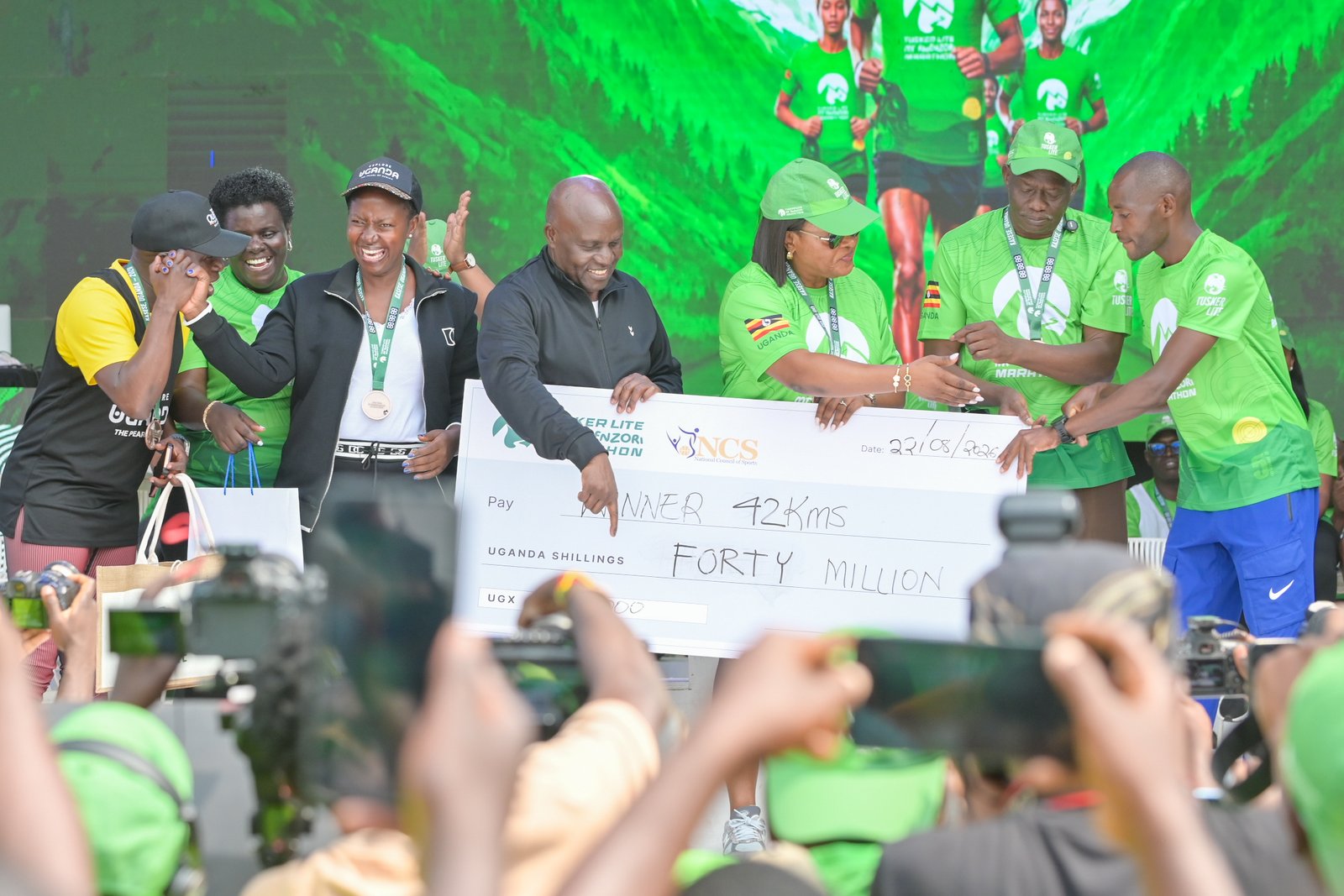
His victory also came with a substantial financial reward.
The 2026 edition featured a total prize purse of Shs252 million, with the men’s and women’s full marathon winners each receiving Shs40 million.
The first prize represented a major increase from the previous edition and was part of the organisers’ strategy to attract stronger elite fields.
For Chemonges, the victory therefore represented both sporting achievement and an important financial reward.
The World Athletics status of the race added another dimension.
The course had undergone official measurement before the event, while race organisers reviewed infrastructure, hydration stations, marshal positions, transport and other operational requirements.
This meant Chemonges’ performance was recorded on a course that met international requirements.
The result also strengthened Uganda’s reputation in distance running.
Uganda has produced several internationally successful long-distance runners, and the presence of a high-quality marathon on home soil provides local athletes with another platform to compete.
Instead of travelling abroad to find internationally recognised road races, Ugandan athletes can now compete in a World Athletics Label event in Kasese.
Chemonges was not the only Ugandan athlete to shine.
Mutai and Cherotwo completed an all-Ugandan men’s podium, while four of the top five men’s finishers were Ugandan.
Martin Chemusto finished fourth in 2:14:42, followed by Anthony Ayeko in 2:14:45.
The result demonstrated the depth of Uganda’s marathon talent.
It also gave the home crowd plenty to celebrate.
For spectators in Kasese, seeing a Ugandan athlete win the inaugural World Athletics-labelled edition added a strong national dimension to the event.
Chemonges’ victory also contributed to the wider tourism story.
The marathon was designed not only to identify and support athletes but also to showcase Kasese and the wider Rwenzori region.
The race route passes through landscapes that include the Equator, Queen Elizabeth National Park and the Rwenzori foothills.
The Ministry of Tourism has described the event as a platform for tourism promotion and enterprise development.
That combination of elite sport and tourism is becoming increasingly important for the marathon.
Chemonges’ record run gave the 2026 event a headline sporting moment.
The international status gave it credibility.
The Rwenzori landscape gave it a distinctive identity.
And the thousands of runners and visitors gave it a broader social and economic impact.
By the time Chemonges crossed the finish line, he had done more than win a race.
He had become the headline athlete of an edition that marked a new chapter in Ugandan road running.
The 2:13:25 performance will now stand as the benchmark for future men’s competitors seeking to conquer the Rwenzori Marathon course.