
President Yoweri Kaguta Museveni has ordered a sweeping crackdown at the Ministry of Works and Transport, suspending three senior government engineers and sending Permanent Secretary Waiswa Bageya on forced leave over what could become one of Uganda’s biggest infrastructure corruption scandals in recent years.
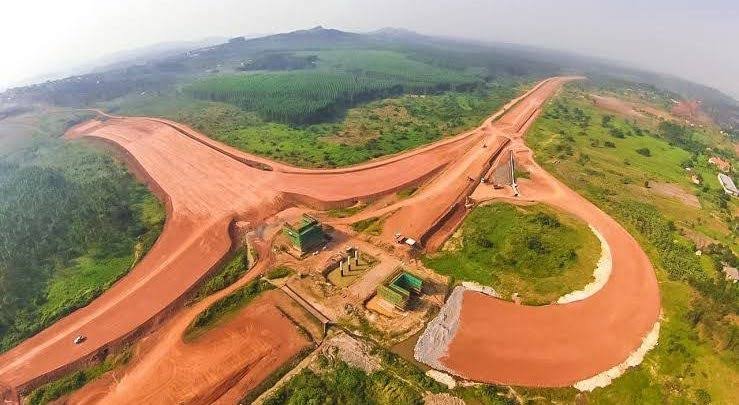
At the centre of the storm is the Busega–Mpigi Expressway, a flagship road project whose cost has ballooned from about Shs600 billion to nearly Shs1.3 trillion, despite only about 40 percent of the works reportedly being completed.
In a strongly worded June 26 directive addressed to Aisha Naluzze Batoro, Museveni accused officials of manipulating the road alignment to benefit private interests, ordering immediate investigations into what he described as outright theft of public funds.
“The government borrowed Shs600 billion from ADB to do the Expressway 100%. As of now only 40% of the work has been done but all the money was paid. What happened?” Museveni wrote.
His answer was even more explosive.
“The corrupt engineers altered the route of the road and avoided the route that was already compensated for and charted a new route going through their own lands that needed fresh compensation. A road that was supposed to cost Shs600 billion is now being put at Shs1.3 trillion. These thieves must be destroyed.”
The President immediately suspended senior engineers Edwin Raymond Kiyaga, Dickens Ahimbisibwe, and Patrick Muleme, while directing that Bageya step aside pending investigations.
Under Secretary Barbara Namugambe has since been appointed Acting Permanent Secretary.
A Road Project Now Under Criminal Investigation
Museveni has instructed the Inspectorate of Government to spearhead investigations alongside State House Auditor General John Tumwiine.
The inquiry is expected to focus on several critical questions:
- Why Shs600 billion was exhausted before even half of the road was completed.
- Whether officials deliberately abandoned the original surveyed alignment.
- Whether compensation was fraudulently paid twice.
- Whether public officers personally benefited from the altered route.
- Whether procurement procedures were manipulated to justify additional financing.
If the President’s allegations are confirmed, investigators could be dealing with not merely project mismanagement but a sophisticated land-compensation scheme involving abuse of office, conflict of interest and possible fraud.
A Stunning U-Turn by the Inspectorate
Museveni’s intervention dramatically reverses the position taken by the Inspectorate only weeks earlier.
In May, Deputy Inspector General of Government Anna Twinomugisha Muhairwe visited the expressway following mounting public concern over delayed works, alleged contractor inactivity and questions about value for money.
After touring the project with officials from the Ministry of Works, Muhairwe said the Inspectorate was “almost convinced” by explanations given by engineers regarding project delays.
However, she acknowledged concerns surrounding illegal developments within the road corridor and possible manipulation of compensation claims.
Museveni’s latest directive suggests State House has reached a very different conclusion.
The Route That Allegedly Changed Everything
According to the President, the expressway had already been fully designed, surveyed and compensation undertaken along its original alignment.
Instead, some engineers allegedly altered the route so that it passed through land in which they allegedly had personal interests.
That single decision, Museveni says, triggered an entirely new round of land acquisition and compensation.
If established, investigators will likely examine:
- Who approved the alignment changes.
- Which landowners benefited.
- Whether those beneficiaries were connected to public officials.
- How much additional compensation was paid.
- Whether engineering justifications genuinely existed.
Government reports have for years acknowledged that route realignments significantly increased project costs. A Ministry of Finance public debt report noted that revised alignments expanded the project’s scope and required additional funding while compensation challenges continued delaying implementation.
From Shs547 Billion to Over Shs1.3 Trillion
The Busega-Mpigi Expressway has experienced repeated cost escalations since construction commenced.
Originally estimated at roughly Shs547-600 billion, Parliament in late 2025 approved additional financing after government sought fresh borrowing from the African Development Bank and the African Development Fund.
Lawmakers were informed that the revised project cost had climbed to approximately Shs1.35 trillion, largely due to expanded works, revised engineering designs and additional compensation obligations.
Officials from the Ministry of Works have consistently defended the increased budget.
Assistant Commissioner for Roads Eng. Godfrey Bihemaiso previously explained that the African Development Bank approved an additional 217 million euros in December 2025 after funding shortages had stalled construction.
The Ministry has argued that additional financing became necessary because of revised project scope and implementation delays.
Museveni’s latest accusations now cast doubt on whether all those additional costs were legitimate.
The Sacred “Witchdoctor Tree” That Became National News
Long before allegations of route manipulation emerged, the Busega-Mpigi Expressway had already become famous for another unusual compensation dispute—a spiritually significant tree that delayed construction for months.
Known as Nabukalu, the tree stood on land belonging to members of the Lugave (Pangolin) Clan in Mpigi District.
Its caretakers insisted it was a sacred cultural site associated with ancestral spirits and demanded Shs500 million before allowing it to be removed.
The compensation claim quickly attracted national attention, with some reports referring to it as Uganda’s “witchdoctor tree” because of its alleged spiritual significance.
Government valuers, however, assessed compensation at only Shs4.6 million.
In March 2022, the High Court in Mpigi ruled in favour of government, rejecting the Shs500 million demand and ordering compensation based on the Chief Government Valuer’s assessment. The tree was subsequently felled to allow construction to proceed.
The dispute illustrated just how costly land acquisition can become during major infrastructure projects.
Ironically, while the public focused on the controversial “witchdoctor tree,” investigators are now examining allegations that far larger sums may have been lost through allegedly manipulated route changes and compensation claims.
A Strategic Highway
The Busega-Mpigi Expressway is among Uganda’s most strategically important transport investments.
The project includes:
- A 23.7-kilometre four-lane dual carriageway.
- More than 20 kilometres of access roads.
- Four major interchanges.
- Multiple bridges.
- Tolling infrastructure.
Once completed, the road will form part of the Northern Corridor linking Kampala with western Uganda, Rwanda and the Democratic Republic of the Congo, significantly reducing travel times for cargo moving toward regional markets.
The corridor is also expected to integrate with Uganda’s future expressway network and the planned Standard Gauge Railway.
A Test for Uganda’s Anti-Corruption Credentials
The investigation comes at a critical moment.
Uganda is aggressively seeking billions of shillings in external financing for large infrastructure programmes.
Only weeks ago, government secured major financing commitments for the Standard Gauge Railway, while the African Development Bank continues financing numerous transport and energy projects across the country.
As of April 2026, AfDB had approximately 19 active public sector operations worth about US$2.2 billion in Uganda, including road infrastructure, electricity access and railway rehabilitation. These investments depend heavily on confidence that borrowed funds are managed transparently.
International lenders will be watching closely.
Should investigators establish that road alignments were deliberately altered for private enrichment, the scandal could become one of Uganda’s most significant cases involving infrastructure governance and misuse of externally financed development funds.
For now, the suspensions mark only the beginning.
The Inspectorate of Government, supported by State House auditors, now faces the formidable task of determining whether Uganda’s most expensive road cost escalation was driven by genuine engineering challenges—or by an elaborate compensation scheme that transformed a Shs600 billion expressway into a Shs1.3 trillion project.