
Uganda has called for stronger regional cooperation, coordinated border management and sustainable financing for African-led peace and security operations as the continent grapples with growing threats from terrorism and violent extremism.
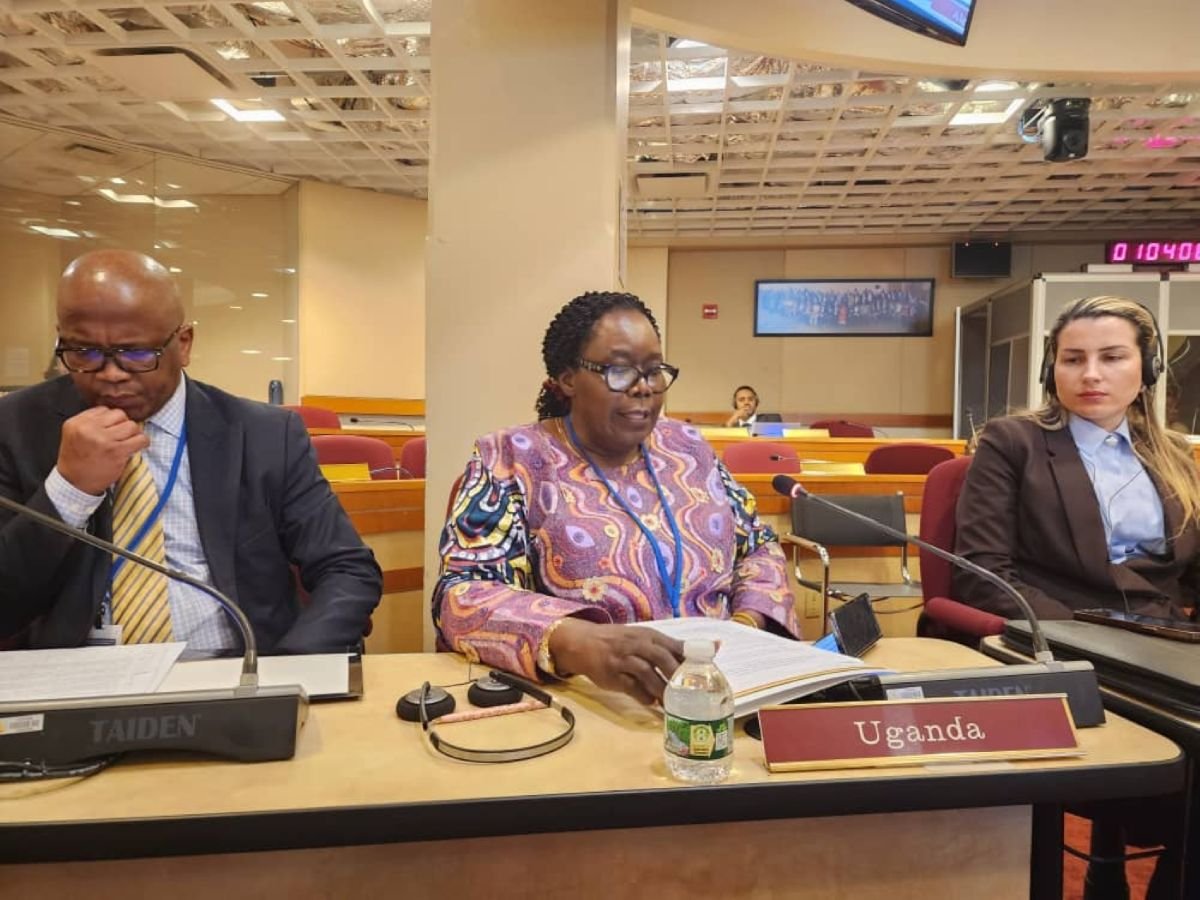
Uganda made the call on September 23, 2026, during the 1369th Ministerial Meeting of the African Union Peace and Security Council held on the sidelines of the 81st United Nations General Assembly in New York.
The meeting, held at the UN Observer Mission Offices under the theme “Good Neighbourliness and Regional Responses to Security and Terrorism Challenges in Africa,” brought together African Union member states to discuss ways of strengthening cooperation among neighbouring countries in confronting emerging security threats.
Representing Uganda, the country’s Permanent Representative to the African Union and the UN Economic Commission for Africa, Ambassador Rebecca Amuge Otengo, warned that terrorism and violent extremism cannot be effectively tackled through isolated national responses.
“Terrorism and violent extremism do not respect borders,” Otengo said.
She said terrorist organisations continue to exploit ungoverned spaces, local grievances, weak border controls, illicit financial flows and transnational criminal networks.
“No Member State can defeat a cross-border threat through national action alone,” she said.
Uganda pushes intelligence sharing
Uganda urged African countries to strengthen intelligence-sharing mechanisms, conduct joint threat assessments and deepen cooperation among security and law-enforcement agencies.
Otengo also called for adequate resources for the African Union Counter-Terrorism Centre to improve coordination between national and regional counter-terrorism institutions, facilitate intelligence fusion and strengthen institutional capacity.
Uganda further stressed the need for integrated border governance through the African Union Border Programme and implementation of the Niamey Convention.
According to the Ugandan delegation, border communities should be treated as key partners in preventing insecurity rather than merely as populations to be policed.
Otengo linked border security to economic development, calling for greater investment in public services, livelihoods and legitimate cross-border trade.
She argued that properly developed border areas can become “corridors of peace and prosperity” rather than spaces exploited by armed and criminal groups.
Uganda calls for operational African Standby Force
Uganda also renewed its call for the African Standby Force and its regional components to become fully operational, with the ability to deploy troops in a timely manner when crises emerge.
The country called for sustainable logistics and predictable financing while ensuring that deployments respect the sovereignty of member states and international law.
Beyond military and security responses, Uganda identified several underlying factors that can contribute to terrorism, including exclusion, youth unemployment, radicalisation, disinformation, arms trafficking and terrorism financing.
The delegation said women, young people, traditional leaders, civil society organisations and the private sector should play a greater role in preventing violent extremism and strengthening community resilience.
Focus on AU-UN cooperation and financing
Uganda also called for closer coordination between the African Union, Regional Economic Communities and Regional Mechanisms to ensure clearer responsibilities and reduce duplication in peace and security interventions.
Otengo placed particular emphasis on sustainable financing for African-led peace and security initiatives.
She cited the importance of implementing UN Security Council Resolution 2719, which provides a framework for financing African Union-led peace support operations and strengthening cooperation between the United Nations and African Union.
Uganda said predictable financing remains critical if African institutions are to respond effectively and rapidly to security crises on the continent.
‘Africa’s borders should unite security efforts’
Concluding Uganda’s intervention, Otengo said African countries must move beyond fragmented responses and build greater trust and shared responsibility in confronting terrorism.
“Africa’s borders should unite rather than divide security efforts,” she said, calling for decisive regional action to deny terrorist groups operating space, protect communities and advance the objectives of Agenda 2063 for a peaceful and secure Africa.
Uganda’s intervention placed regional cooperation, good neighbourliness, stronger continental institutions and sustainable financing at the centre of its proposed response to terrorism and violent extremism.
The approach also linked security to development, arguing that stronger communities, legitimate economic opportunities and regional integration are essential components of Africa’s long-term effort to counter violent extremism.