

The National Water and Sewerage Corporation (NWSC) has expanded from a relatively small urban utility serving a limited number of towns into one of Uganda’s largest public service institutions, with more than one million water connections, a vastly expanded distribution network and services reaching millions of people across the country.
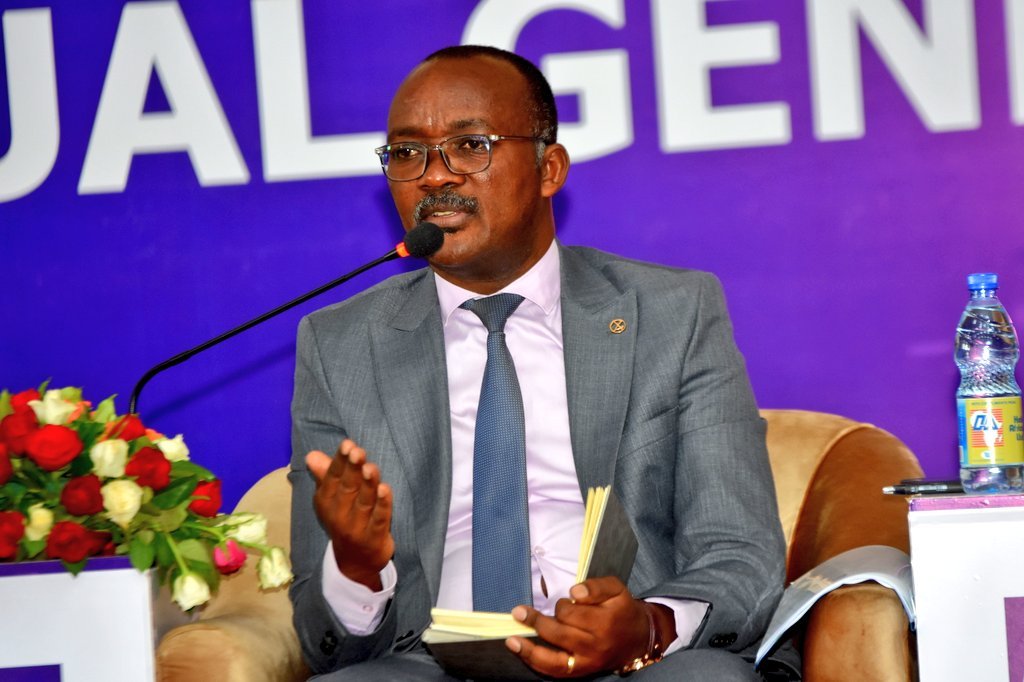
In a wide-ranging interview, NWSC Managing Director Dr. Eng. Silver Mugisha presented the growth of the corporation over roughly the past decade as a story of aggressive expansion, infrastructure investment and institutional transformation, while also responding to a series of allegations that have recently circulated on social media.
The figures presented by the NWSC management point to an institution that has undergone a dramatic change in scale.
According to the interview, water connections have risen from approximately 300,000 to more than one million, while the corporation’s water network has expanded several-fold. The population receiving services has also grown from about 4.5 million people to roughly 22 million, with the number of towns served increasing from just 23 to about 290.
At the same time, NWSC says the value of assets under its management has risen from approximately Shs580 billion to about Shs5 trillion.
The expansion has fundamentally altered the geographical reach of the corporation, taking water services beyond the traditional urban centres and increasingly into peri-urban and rapidly growing communities.
The supplied interview attributes the growth to sustained investment in infrastructure and an effort to reach more Ugandans with reliable access to safe water.
From 300,000 connections to more than one million
One of the clearest indicators of NWSC’s growth is the increase in customer connections.
The corporation says it has moved from approximately 300,000 connections at the beginning of the period under review to more than one million today.
That expansion represents more than simply connecting additional customers to pipes. It has required the construction and extension of treatment facilities, reservoirs, transmission systems and distribution networks capable of supporting a much larger customer base.
The expansion has also come as Uganda’s towns have grown rapidly, creating increasing demand for water and sanitation services.
NWSC’s own figures indicate that the total water network has expanded from thousands of kilometres to tens of thousands of kilometres. The interview puts the current network at approximately 25,000 kilometres, compared with about 8,000 kilometres at the beginning of the decade.
That infrastructure expansion has enabled the corporation to push further into peri-urban communities where populations have traditionally depended on alternative water sources.
The impact is particularly visible in the number of towns now served by NWSC.
The corporation says it has increased its coverage from about 23 towns to approximately 290 towns, while the population receiving its services has increased from 4.5 million to about 22 million.
In practical terms, that means the corporation is now operating on a vastly different scale from the institution that existed a decade ago.
Assets rise to Shs5 trillion
The growth has also been reflected on NWSC’s balance sheet.
According to the figures presented by Mugisha, assets under the corporation’s management have grown from approximately Shs580 billion to around Shs5 trillion.
That increase is significant because it illustrates the amount of infrastructure and investment that has been brought under the corporation’s management as it has expanded.
The corporation also reported growth in its operating surplus before depreciation, from about Shs40 billion to approximately Shs197 billion, subject to confirmation by the ongoing external audit.
The financial numbers, therefore, form another part of NWSC’s argument that its expansion has not simply been about geographical reach but also about building an institution capable of managing a substantially larger asset base and customer population.
Katosi procurement allegations
But the expansion has not been without controversy.
Among the issues addressed by Mugisha were allegations concerning procurement of the Katosi Water Works project and aspects of the ongoing Kampala water distribution system.
The Katosi project has historically attracted intense scrutiny, particularly because of allegations surrounding procurement and the selection of contractors.
Mugisha told the interview that procurement processes for Katosi Water Works and the Kampala distribution projects were transparent and followed statutory requirements.
He said the processes complied with international donor procurement guidelines and the Public Procurement and Disposal of Public Assets (PPDA) framework.
According to the NWSC explanation, the procurement involved an official valuation by the Chief Government Valuer as well as formal approval from the Solicitor General.
Mugisha further said earlier allegations concerning procurement breaches at Katosi had been investigated by the Inspectorate of Government and PPDA, with no wrongdoing established in the investigations cited by the corporation.
He added that international development partners involved in the projects also conducted independent reviews and cleared the procurement processes.
The response is significant because Katosi remains one of the projects that has periodically resurfaced in public debate over public procurement, particularly whenever questions are raised about large infrastructure contracts.
NWSC’s position is that the procurement should be judged against the formal investigations and reviews that were conducted rather than against allegations circulating on social media.
The prepaid meter controversy
Mugisha also addressed claims surrounding prepaid water meters.
He said the matter was thoroughly investigated by PPDA during the 2020/2021 period.
According to the explanation given, PPDA issued a number of recommendations following its review, and NWSC management implemented corrective measures intended to protect the corporation from potential financial losses.
The corporation says that after a comprehensive review of the corrective measures, PPDA officially closed the matter in 2021.
The explanation seeks to draw a distinction between an investigation that identifies weaknesses or makes recommendations and an allegation that an institution or individual committed criminal wrongdoing.
For NWSC, the important point is that the matter was subjected to the appropriate procurement oversight process and that recommendations arising from that process were acted upon.
The 2023 cyberattack
Another major issue addressed in the interview was a computer hacking incident that affected NWSC systems in 2023.
Mugisha said management responded by immediately engaging an independent team of cybersecurity experts to conduct a forensic investigation.
The investigation, he said, produced recommendations and identified leads concerning potential perpetrators. This was followed by disciplinary action and the implementation of measures aimed at strengthening NWSC’s cybersecurity governance.
The Office of the Auditor General subsequently conducted additional inquiries into the corporation’s information technology systems, according to Mugisha.
He said the corporation had since implemented the recommendations arising from those reviews and strengthened its cybersecurity arrangements.
The incident is particularly important because NWSC’s expansion increasingly depends on digital systems.
With more than one million connections and a huge geographical footprint, the corporation handles large volumes of customer, billing, payment and operational data. A cyber incident therefore has implications extending beyond computers and servers to the continuity of an essential public service.
Why NWSC acquired the Bushenyi hotel
The acquisition of the former Crane Hotel in Bushenyi was another issue Mugisha addressed.
He said the hotel was acquired through an open and transparent bidding process and argued that the acquisition was consistent with NWSC’s broader corporate strategy.
Rather than presenting the property as a conventional commercial hotel investment, the corporation says it forms part of a plan to establish regional training hubs.
The Bushenyi facility is now being used as a training centre for staff from western and southwestern Uganda, alongside the corporation’s central training facility at Gaba Water Works.
NWSC is also developing another regional hub in Kachung, Lira, which would serve the northern part of the country.
Mugisha said the procurement of the Bushenyi facility followed statutory procedures, including an official valuation by the Chief Government Valuer and formal approval from the Solicitor General.
The argument from management is that the investment should therefore be viewed within the context of institutional capacity building rather than simply as the purchase of a hotel.
Insurance scheme: from risk transfer to risk retention
The managing director also defended changes to NWSC’s insurance arrangements.
He explained that the corporation moved away from a traditional risk-transfer insurance arrangement after determining that the model had become too expensive to sustain as the corporation’s asset base grew.
Instead, NWSC adopted a risk-retention approach managed through professional risk-management structures.
Mugisha said the new strategy was informed by probability theory, historical performance and value-for-money principles.
According to the corporation, the approach has generated savings of more than Shs10 billion, with the money saved being redirected into core infrastructure.
NWSC is also developing an independent risk-managed fund intended to provide protection against future risks.
The shift reflects a broader challenge facing large public utilities: as the value of infrastructure increases, conventional insurance premiums can become increasingly expensive, forcing institutions to reconsider how they manage risk.
Staff retention beyond retirement age
The issue of staff retained beyond the statutory retirement age of 60 also featured prominently in the interview.
Mugisha said employees who have crossed the age of 60 are not automatically retained.
Instead, he said, the board only approves continued service where an individual possesses highly specialised and mission-critical skills that are difficult to replace.
The corporation describes the arrangement as temporary and aimed at preserving institutional knowledge while building internal capacity and ensuring continuity.
The policy, according to Mugisha, is particularly important for a technically complex utility where certain skills and experience may not be immediately available in the labour market.
He rejected suggestions that the arrangement is simply a mechanism for rewarding individuals with additional employment after retirement.
Part-time employment policy
Mugisha also defended NWSC’s part-time employment arrangement, amid allegations of malpractice.
He said the scheme was formally approved by the board following research and a situational analysis of staff productivity.
The objective, he explained, was to create a transparent framework for managing employees working part-time while preventing situations where individuals could receive full-time compensation without delivering full-time hours.
In management’s view, the policy is therefore intended to improve accountability and ensure that staffing arrangements correspond with actual workloads and institutional needs.
A utility under intense scrutiny
The broader picture emerging from Mugisha’s interview is of an institution that has expanded rapidly while simultaneously becoming a much more visible target for public scrutiny.
NWSC now manages a substantially larger infrastructure network, serves millions more people and operates across hundreds of towns.
That scale inevitably brings greater exposure to questions concerning procurement, finances, staffing, cybersecurity, investments and governance.
Mugisha, however, argues that some of the allegations currently circulating online risk obscuring the corporation’s broader performance.
He described the recent social media claims as a distraction from the work being undertaken by the management and staff, arguing that some allegations are politically motivated or driven by personal interests.
The corporation’s position is that allegations concerning public institutions should be tested through evidence, formal investigations and established oversight mechanisms rather than social media campaigns.
That defence does not remove the need for continued scrutiny. If anything, NWSC’s enormous growth makes rigorous oversight more important.
An institution managing assets worth about Shs5 trillion, serving approximately 22 million people and operating thousands of kilometres of water infrastructure carries a significant public responsibility.
Its expansion is therefore both an achievement and a reason for heightened accountability.
For NWSC, the decade has been defined by an extraordinary increase in scale — from approximately 300,000 connections to more than one million, from a few dozen towns to hundreds, and from hundreds of billions of shillings in assets to trillions.
The challenge now is to ensure that the institution’s governance, transparency and accountability systems grow at the same pace as its physical footprint.
For Mugisha and his management team, the record of expansion is evidence that NWSC has delivered substantially on its mandate.
For the public, the next test will be whether that growth continues to translate into reliable, affordable and accountable water services — while every major procurement, investment and management decision remains open to legitimate scrutiny.