

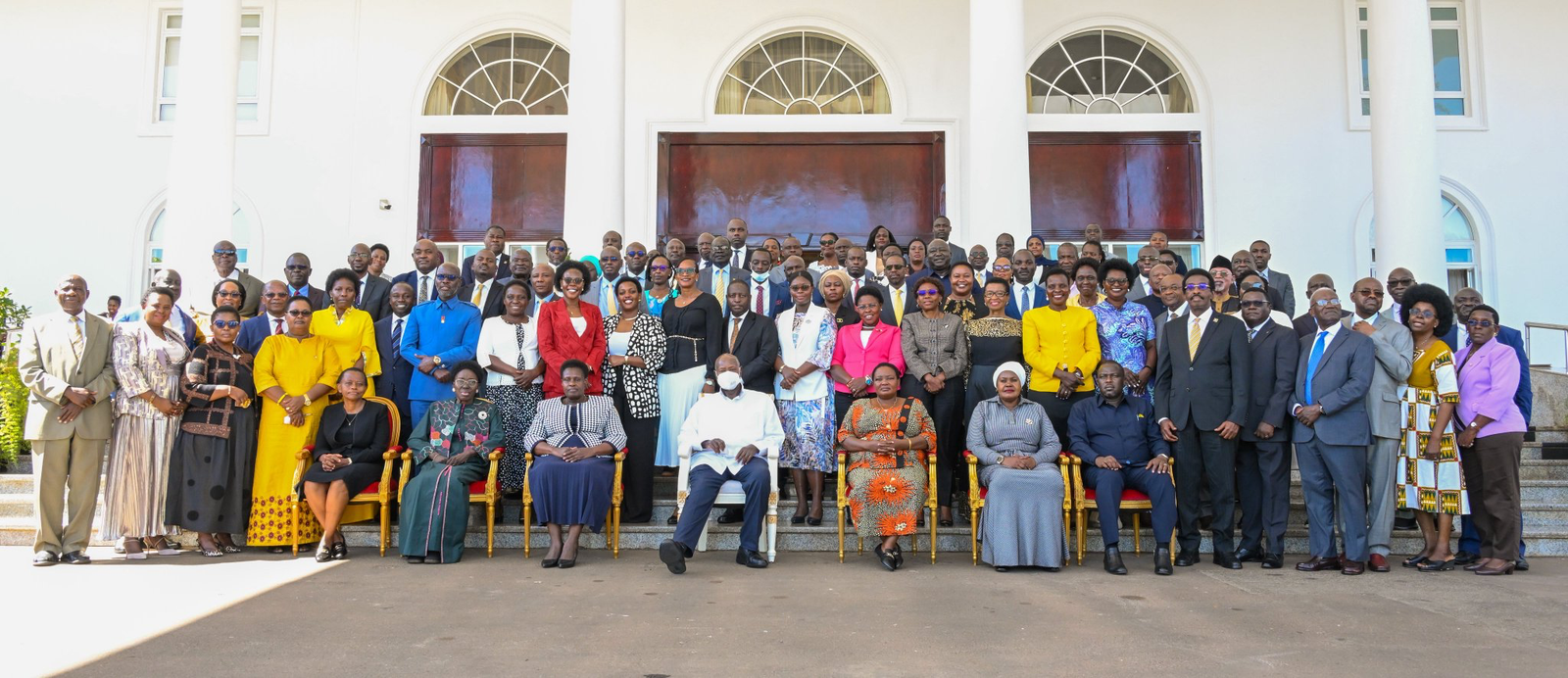
President Yoweri Kaguta Museveni has bid an emotional farewell to his outgoing Cabinet, praising ministers for what he described as a historic contribution to Uganda’s economic transformation and governance.
Chairing what he called the final Cabinet meeting of the current administration, Museveni later hosted ministers to a luncheon at State House in a gesture of appreciation for their service. The meeting marked the formal winding down of a Cabinet that has steered government business through a critical period in the country’s development.
In a brief but symbolic message shared after the meeting, Museveni credited the team with helping Uganda attain middle-income status—an economic milestone the government has long pursued under its national development agenda.
“This is the Cabinet that ushered Uganda into middle-income status,” Museveni said, underscoring the administration’s focus on wealth creation, infrastructure expansion, and industrialization.
Uganda’s transition toward middle-income status has been a central pillar of the government’s policy direction, often linked to large-scale public investments in roads, energy, and agriculture, as well as efforts to boost household incomes. While debate persists among economists and policy analysts about the depth and inclusiveness of this progress, the President’s remarks signal confidence in his administration’s economic legacy.
Museveni also singled out the Cabinet Secretariat for its role in coordinating government business, describing its work as essential to the smooth functioning of Cabinet processes. The Secretariat, often operating behind the scenes, is responsible for organizing meetings, documenting decisions, and ensuring follow-through on policy directives.
“I thank everyone who contributed to this achievement, including the Cabinet Secretariat for effectively managing the business of Cabinet,” he said.
The farewell luncheon provided a rare moment of reflection for ministers who have served in various portfolios, some for several years, during a period marked by both progress and challenges. The outgoing Cabinet has overseen key national programs, including infrastructure upgrades, digital transformation efforts, and responses to global economic shocks.
However, its tenure has not been without criticism. Concerns over public debt levels, service delivery gaps, and governance issues have occasionally dominated public discourse. Critics have also questioned whether the benefits of economic growth have been evenly distributed across the population.
Despite these concerns, the President struck a tone of gratitude and closure, thanking ministers for their “dedicated service” and wishing them well in their future endeavors.
“I thank them all and wish them good luck,” Museveni said, signaling the end of an era for the current team.
The farewell comes at a time when attention is shifting toward the formation of a new Cabinet, expected to reflect the administration’s next phase of priorities. Political observers say the composition of the incoming team will be closely watched for signals on policy direction, generational change, and the balance between continuity and reform.
As the outgoing ministers take their leave, the spotlight now turns to what comes next—and whether the gains highlighted by the President can be sustained and expanded in the years ahead.