
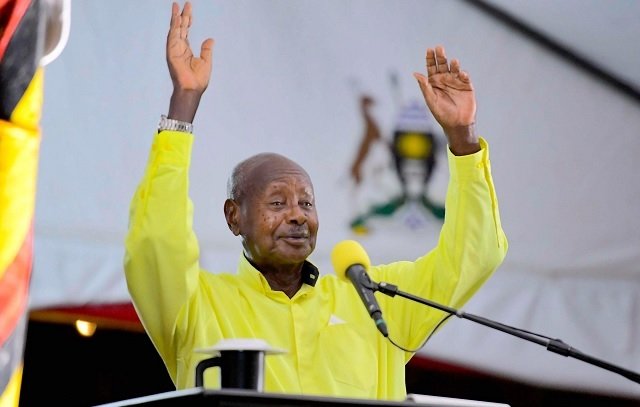
President Yoweri Kaguta Museveni has distanced himself from the controversial Sovereignty Bill fueling public anxiety, insisting that the version drawing outrage is not the one he initiated.
In a pointed clarification, Museveni said the ongoing uproar — which claims the Bill would block foreign investment, remittances, and external support to religious institutions — is based on a “mischaracterization” of his original proposal.
“The Bill they are making noise about is not the one I initiated,” he said, pushing back against what he described as widespread misinformation shaping the national debate.
‘Wrong Bill, Wrong Narrative’
For days, sections of the public and commentators have warned that the proposed law could isolate Uganda economically by restricting the inflow and outflow of money. But Museveni rejected those claims outright, arguing they stem from either confusion or deliberate distortion.
According to the President, his proposal does not touch Uganda’s open economic system and does not seek to interfere with private financial flows.
Uganda, he stressed, will continue to allow free movement of legally earned money, foreign investments, and diaspora remittances — pillars he described as essential to the country’s economic resilience.
What Museveni Says He Actually Proposed
Museveni framed his version of the Sovereignty Bill as a safeguard against external interference in Uganda’s internal decision-making — not a tool to control money or economic activity.
He said the intention was to protect Uganda’s independence in shaping its own policies across key areas such as politics, social values, economic direction, and foreign relations.
At the heart of the proposal, he explained, is a simple principle: Uganda must make its own choices without outside pressure, influence, or funding aimed at swaying national decisions.
Government Moves to Rein In the Bill
In a significant revelation, Museveni disclosed that he has already engaged government officials and parliamentary leaders to realign the Bill with its original purpose.
He directed that the legislation be confined strictly to issues of policy sovereignty and avoid straying into areas such as private business transactions, remittances, or religious funding — the very provisions that have triggered public alarm.
This intervention suggests that the draft currently in circulation may have expanded beyond his initial concept, creating a gap between the President’s intent and public perception.
Rising Tension, Lingering Doubts
Despite the clarification, skepticism remains high. Critics argue that even a narrowly defined sovereignty law could be used to justify limiting civic space or targeting groups perceived to be influenced by foreign actors.
But Museveni maintained that Uganda’s economic openness is not up for negotiation, describing it as a critical buffer against inefficiencies within the state and a driver of long-term growth.
A Debate Far From Over
The President’s remarks attempt to draw a clear line between his original proposal and the version now under scrutiny. However, they also expose deeper tensions over governance, foreign influence, and the balance between sovereignty and openness.
As Parliament continues to handle the Bill, the central question lingers: if the controversial provisions were not part of Museveni’s plan, how did they find their way into the national conversation — and will they survive the legislative process?