
Kampala, Uganda — Three of Uganda’s key accountability institutions have unveiled a joint five-year anti-corruption strategy aimed at tightening oversight, boosting transparency, and restoring public trust in government systems.
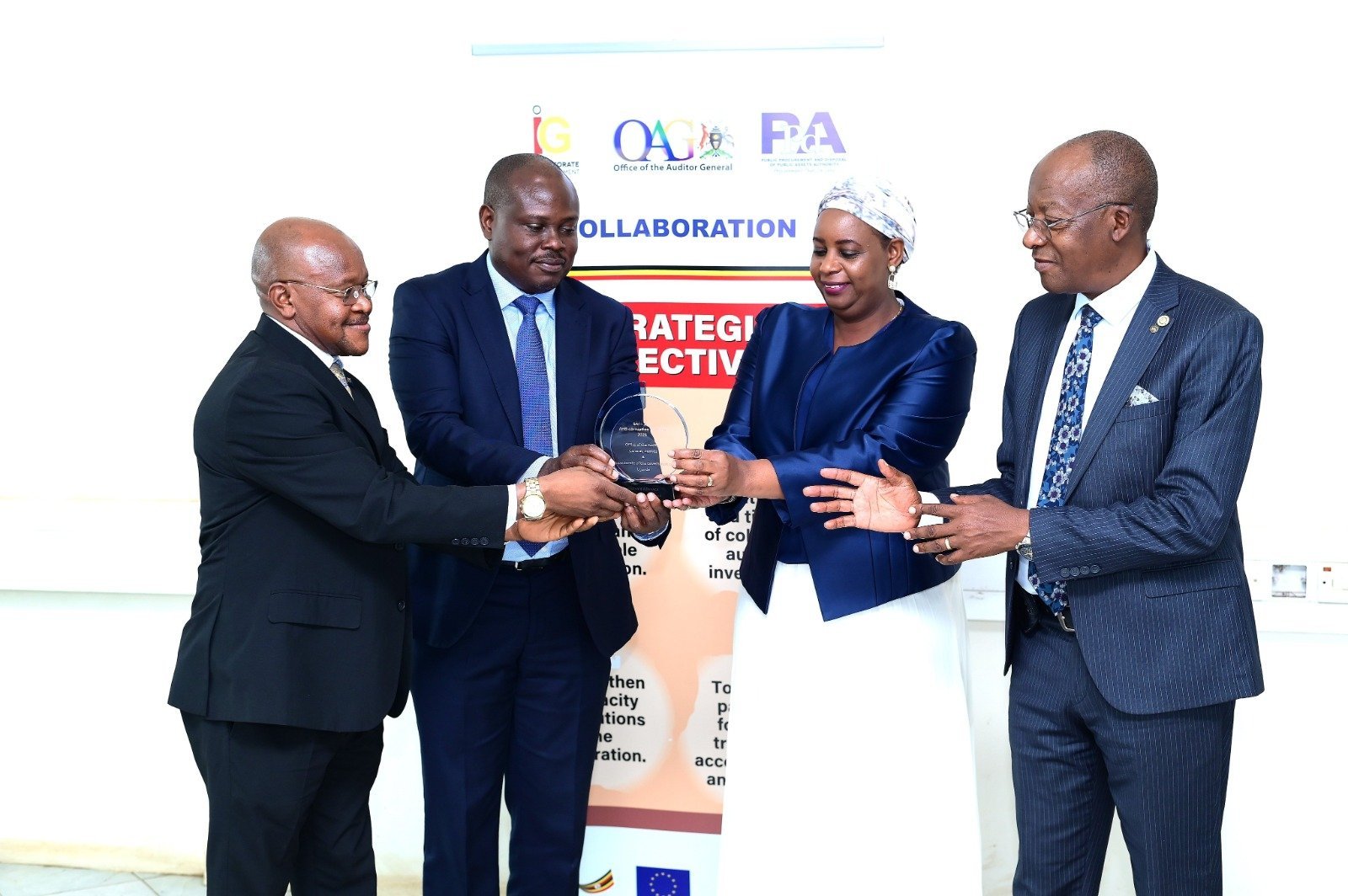
The Inspectorate of Government, Office of the Auditor General, and Public Procurement and Disposal of Public Assets Authority announced the ambitious Anti-Corruption Campaign (ACC) following a high-level meeting of heads of institutions held at the IG headquarters in Kampala.
The joint approval signals a renewed and coordinated push by the three watchdog bodies to combat corruption, marking a shift from fragmented efforts to a unified, results-driven national campaign.
Inspector General of Government, Naluzze Aisha Batala, described the plan as “bold” and expressed confidence that it would significantly strengthen Uganda’s fight against graft.
“It is a very bold plan and I have no doubt it will strengthen our effort in the elimination of corruption,” Batala said, commending technical teams from the three institutions for developing what she called a clear and purposeful roadmap.
The strategy outlines several key priorities, including strengthening legal and institutional frameworks through advocacy for new laws on asset recovery and witness protection, as well as enforcing existing anti-corruption provisions more consistently.
It also seeks to deepen citizen participation by empowering youth, women, civil society organisations, and local communities to play an active role in promoting accountability.
Another major focus is on education, with plans to integrate integrity and anti-corruption awareness into school and university curricula, targeting long-term behavioral change.
The campaign further emphasizes improved monitoring and evaluation mechanisms. These include the introduction of performance scorecards, regular progress assessments, and the publication of reports to enhance transparency and rebuild public confidence.
By 2030, the institutions expect the initiative to deliver measurable outcomes such as reduced financial losses due to corruption, increased transparency in public service delivery, and stronger enforcement of anti-corruption laws, including visible sanctions and recovery of stolen assets.
Auditor General Edward Akol welcomed the collaboration, calling it a significant milestone in promoting accountability.
“This anti-corruption plan is timely and will enhance our efforts in pursuit of an accountable public service,” Akol said.
Similarly, Benson Turamye, Executive Director of PPDA, noted that the partnership marks a departure from isolated institutional efforts.
“Before this collaboration, institutions used to work independently and we didn’t know each other. But we have achieved a lot and this anti-corruption plan is one of the many achievements that we are celebrating,” he said.
The meeting was also attended by Deputy IGG Anne Twinomugisha Muhairwe, alongside senior officials and technical staff from the three institutions.
Officials said the coordinated approach is expected to not only improve Uganda’s performance on global governance indicators such as the Corruption Perceptions Index, but also reshape public attitudes towards accountability and promote a culture of transparency in the use of public resources.
The initiative underscores a growing recognition that institutional alignment and collective action are critical in tackling entrenched corruption and rebuilding citizen trust in government systems.