
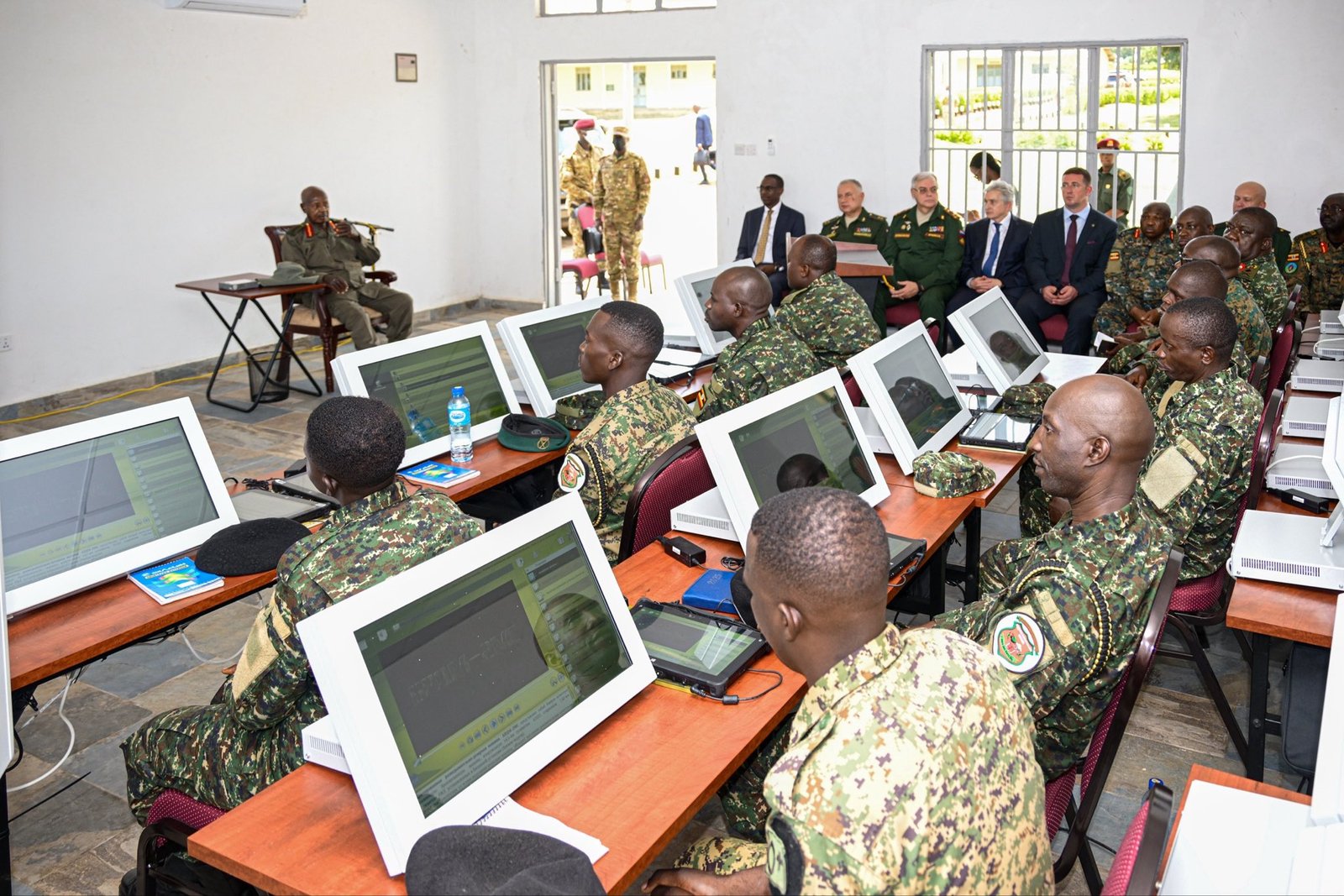
President Yoweri Kaguta Museveni has announced the commissioning of military facilities and equipment at four locations across Uganda under the country’s defence cooperation with Russia, including a mechanised repair facility valued at $53 million at Magamaga.
Museveni said the facilities were commissioned this week at Kalama, Entebbe, Kalangalo and Magamaga as Uganda seeks to strengthen its military capabilities and build local expertise in maintaining, repairing and eventually manufacturing defence equipment.
In an update posted on his official X account, the President thanked Russian President Vladimir Putin and the Russian people for their support, describing the cooperation as part of Uganda’s broader effort to strengthen its defence capabilities and safeguard national sovereignty.
“I thank President Putin and the Russian people for this support, including the $53 million mechanised repair facility at Magamaga,” Museveni said.
The announcement highlights the government’s emphasis on developing domestic military maintenance capacity, reducing dependence on external technical support and equipping Uganda’s armed forces with the skills required to manage increasingly sophisticated military systems.
$53 MILLION FACILITY AT MAGAMAGA
The mechanised repair facility at Magamaga is one of the key installations highlighted by Museveni in his announcement.
The President said Uganda must look beyond purchasing military hardware and develop the technical expertise needed to maintain and repair the equipment after it has been acquired.
He also outlined a longer-term ambition for the country to develop the capacity to manufacture military equipment locally.
“We must not only acquire good equipment but also learn to maintain, repair and eventually manufacture it here,” Museveni said.
The statement points to a strategy that places industrial and technical capacity alongside military procurement, with the government seeking to develop the personnel, infrastructure and expertise required to support defence equipment throughout its operational life.
The $53 million figure disclosed by the President provides a financial indication of the scale of the Magamaga installation. However, his announcement did not provide a detailed breakdown of the project’s expenditure, the specific equipment it will service, its operational capacity or the number of personnel expected to work at the facility.
MUSEVENI CALLS FOR MILITARY TO EMBRACE AI AND AUTOMATION
Beyond the commissioning of the facilities, Museveni called on the military to embrace science and technology, specifically identifying artificial intelligence (AI) and automation as areas that could strengthen Uganda’s defence capabilities.
The President’s remarks suggest that the government wants technological development to become a central component of military modernisation, alongside the acquisition of equipment and the construction of supporting infrastructure.
AI and automation are increasingly relevant to defence operations, including equipment maintenance, logistics, surveillance, data analysis and the management of complex systems. Their practical application, however, depends on investment in technical skills, infrastructure, cybersecurity and appropriate operational safeguards.
Museveni did not specify which AI or automation systems the military intends to deploy, nor did he announce a timeline or budget for their implementation.
His statement nevertheless signals an intention to encourage the armed forces to develop greater technological competence rather than rely exclusively on imported equipment and foreign technical expertise.
RUSSIA-UGANDA DEFENCE COOPERATION
Uganda’s latest announcement places Russia at the centre of the military infrastructure and equipment support acknowledged by the President.
Museveni expressed gratitude to Putin and the Russian people for their contribution, particularly the Magamaga repair facility, but did not provide further details about the agreements governing the cooperation.
The announcement also did not disclose the total value of the facilities and equipment commissioned across the four locations or specify whether the projects were financed through grants, loans, direct government expenditure or other arrangements.
The distinction is significant because the overall cost, financing terms and long-term maintenance obligations associated with defence cooperation can affect the resources available for other public priorities.
For now, the $53 million Magamaga facility is the only specific project value disclosed in the President’s update.
The government has not, in the announcement, provided further details on the nature of the equipment commissioned at Kalama, Entebbe and Kalangalo.
FOCUS SHIFTS TO LOCAL CAPACITY AND SOVEREIGNTY
Museveni framed the cooperation with Russia as a means of strengthening Uganda’s ability to defend itself while developing domestic technical capacity.
He said the partnership should help Uganda build local expertise, protect its sovereignty and improve its ability to defend the country.
The emphasis on local capacity raises important questions about how Uganda intends to translate the newly commissioned infrastructure into sustained domestic industrial development.
A repair facility can help keep military equipment operational, but developing a manufacturing industry requires additional capabilities, including engineering education, specialised production equipment, access to components, quality-control systems and long-term investment in research and development.
The extent to which the new installations will support those broader ambitions will depend on their operational capacity, the skills transferred to Ugandan personnel and the government’s plans for future domestic production.
Museveni’s announcement did not indicate when Uganda expects to begin manufacturing military equipment locally or identify the first products that could be manufactured.
The commissioning of the facilities nevertheless marks a development in the government’s stated approach to defence cooperation: combining the acquisition of military equipment with efforts to establish the technical foundation for maintaining, repairing and potentially producing equipment within Uganda.
As the country pursues that objective, further details about the facilities’ capabilities, the terms of the Russian partnership and the implementation of the President’s technology agenda will be important in assessing the scale and long-term impact of the initiative.