

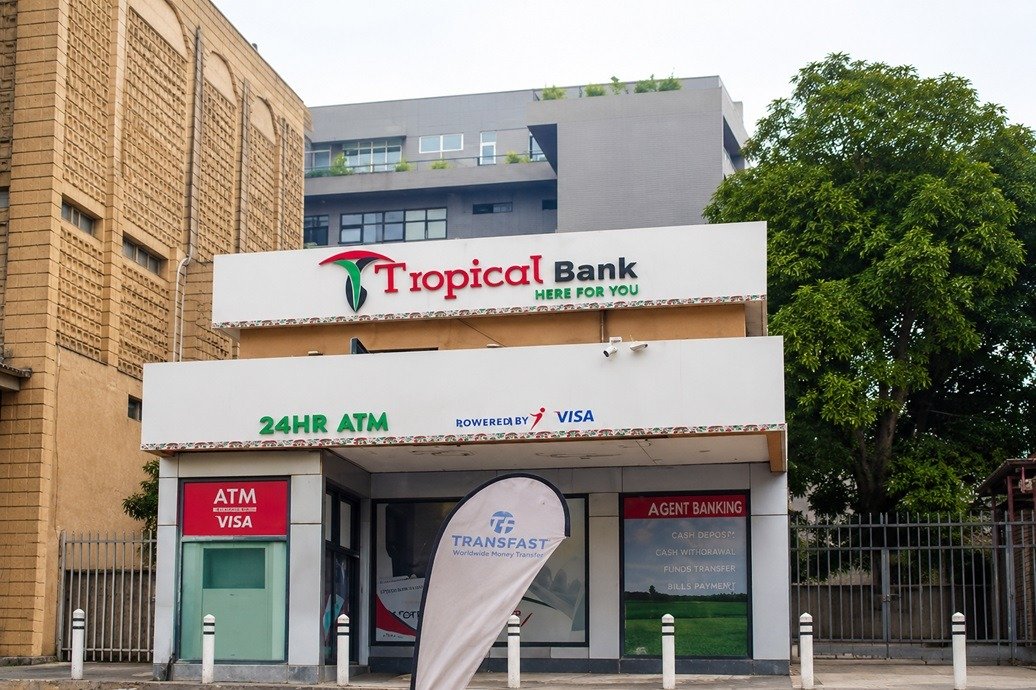
Uganda’s High Court has dealt a major blow to Tropical Africa Bank Ltd, nullifying its disputed mortgage over eight acres of land in Jungo-Sagala, Wakiso District, after finding that the bank failed to prove the underlying loan and relied on a power of attorney allegedly issued by a man who had died 12 years earlier.
In a strongly worded judgment delivered on October 22, 2026, Commercial Division Judge Stephen Mubiru ruled in favour of Joseph Nsamba and Ronald Sseguya, beneficiaries of the estate of the late Yozefu Katoto, who purchased the land in 1976 and whose family had occupied it for decades.
The bank had sought to recover an alleged outstanding loan of Shs11,126,230 through the sale of the land, claiming that Janet L. Chota borrowed Shs5 million in 1996 using the property as security.
But the court found that Tropical Africa Bank had failed to produce critical records proving the loan, including the loan application, offer letter, mortgage deed, loan agreement or documentary evidence showing that the money was actually disbursed.
The judge also found that the bank had failed to establish the authenticity of a power of attorney dated October 14, 1993, purportedly granted by Edward Solomon Mbuku Luwagga Baliruno, whose death in 1981 was supported by documentary evidence.
The judgment exposes serious failures in the bank’s handling of the disputed security and reinforces the legal duty of financial institutions to verify land ownership, investigate powers of attorney and establish the existence of a debt before placing property at risk of foreclosure.
Bank’s 24-year silence proves costly
One of the most damning aspects of the ruling was the bank’s failure to explain why it waited nearly 24 years before taking meaningful steps to recover the alleged debt.
According to the judgment, Tropical Africa Bank lodged a caveat against the land on November 20, 1996, but the evidence showed that it did not issue a default notice until July 18, 2020.
By then, the bank claimed the original Shs5 million loan had grown to Shs11.1 million.
Justice Mubiru found that the bank’s recovery claim was filed far outside the statutory 12-year limitation period. The court held that the limitation period had expired in 2008 and dismissed the bank’s counterclaim as time-barred.
The judge further faulted the bank for failing to produce the records it claimed existed, including a disbursement book that its own witness said was still available at the institution.
The bank’s recovery officer, Stella Nansamba, could not explain the loan’s repayment terms and admitted that key documents were missing from the file she reviewed.
The court ruled that the burden of proving the loan rested with the bank, not the family challenging its claim.
‘Dead man’ power of attorney raises serious questions
The dispute centred on a power of attorney dated October 14, 1993, which purportedly authorised Janet L. Chota to use the land as security for borrowing.
However, evidence presented in court showed that the registered proprietor, Edward Solomon Mbuku Luwagga Baliruno, had died in 1981.
The plaintiffs produced a death certificate and a grant of probate issued on August 31, 1981. The bank challenged the authenticity of the death records, but the judge found that it had produced no evidence showing that Baliruno was alive when the power of attorney was allegedly executed.
The court also noted that the document identified the purported donor as “Edward Baliruno”, rather than the registered proprietor’s full name, and that the bank had failed to prove the power of attorney was registered as required by law.
Justice Mubiru concluded that the power of attorney could not have been validly executed by a person who had already died.
The judge emphasised that a document merely appearing in a bank’s loan file does not establish its authenticity or legal validity.
Bank faulted for failing to inspect the land
The court also took issue with the bank’s handling of the land before accepting it as security.
The family maintained that their father had purchased the eight acres in 1976 and that they had remained in possession for decades. The court found that the bank failed to demonstrate that it had adequately investigated who occupied the property before accepting the title as security.
Justice Mubiru held that financial institutions have a duty to conduct land registry searches, verify powers of attorney and physically inspect property intended to secure loans.
The judge found that the bank failed to verify the purported donor’s identity and whether he was alive, establish the authenticity of his signature, or demonstrate that the power of attorney had been registered.
The ruling further found that the bank had failed to produce a mortgage deed, loan agreement or documentary proof of the alleged loan disbursement.
The court concluded that the bank had no established legal or equitable interest capable of supporting the disputed mortgage.
Bank ordered to surrender title within 30 days
In its final orders, the High Court declared the mortgage invalid and directed the removal of the bank’s caveat, which had been lodged against the land in November 1996.
The Commissioner for Land Registration was ordered to vacate the caveat registered under Instrument No. KLA184441 against Busiro Block 532 Plot 33 at Jungo and Sagala.
The bank was further ordered to surrender the certificate of title to the Commissioner for Land Registration at the Wakiso District Land Registry within 30 days of the judgment. The Registrar is then to release the title to Nsamba and Sseguya so they can conclude the pending transaction with the estate of the late Baliruno.
The court also awarded the plaintiffs Shs40 million in general damages for the wrongful caveat and interference with their possession of the land.
In assessing the damages, the judge considered the decades-long encumbrance, the threat of eviction, the family’s inability to freely develop or use the land, and the bank’s failure to carry out due diligence.
However, the court declined to award exemplary or punitive damages, finding that the high legal threshold for that exceptional remedy had not been met.
Family’s 1976 purchase upheld
The court also rejected the bank’s argument that the family were trespassers because their father had allegedly failed to complete payment for the land by the agreed deadline.
The original purchase price was Shs4,000. Evidence showed that Yozefu Katoto paid Shs3,900, leaving a balance of just Shs100.
Although the final payment was late, the judge found that the seller had accepted overdue instalments without invoking the forfeiture clause or demanding that the purchaser vacate the land.
The court ruled that the seller’s acceptance of late payments waived the right to declare forfeiture on account of the earlier delays. It also found no evidence that the seller had terminated the agreement or reclaimed the land before his death.
The family’s long occupation, the purchase agreement and testimony from a son of the original seller supported their claim to an equitable interest in the property.
The judgment therefore protects the family’s interest against the bank’s disputed mortgage, although the title must still pass through the pending transaction with the registered proprietor’s estate.
The decision in Nsamba Joseph and Another v Tropical Africa Bank Ltd, Civil Suit No. 0001 of 2021, was delivered by Justice Stephen Mubiru on October 22, 2026.