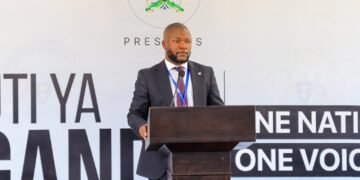


President Yoweri Kaguta Museveni has stirred fresh public debate after declaring that denying one’s spouse sex was traditionally regarded as an offence under indigenous justice systems, as he sought to defend his philosophy of accountability and the rule of law.
In his national address on Saturday, Museveni argued that African traditional justice placed greater emphasis on restoring harmony within families and communities than the inherited colonial legal system.
While listing what he described as offences under traditional justice, the President said mistreating one’s spouse included refusing to have sexual relations with them.
He cited what he called “kuguunga”—defined as denying a spouse sex—and “kwitsa enjara”, or failing to feed one’s partner properly, as examples of conduct that attracted punishment in traditional society.
The comments immediately stood out in the President’s hour-long address, quickly drawing attention because of their unusual nature amid a speech otherwise dominated by security operations, corruption and governance.
Museveni explained that indigenous communities recognised two broad categories of wrongdoing.
The first category, which he referred to as “ebichumuro,” covered offences that fell short of murder but nevertheless disrupted family and community life.
These included insulting others, mistreating spouses, refusing hospitality to stranded travellers, allowing livestock to destroy another person’s crops and denying water to animals belonging to other people.
According to Museveni, such disputes were traditionally handled by clan leaders, elders or local tribunals, who ordered offenders to compensate victims through fines, often in the form of livestock.
The President contrasted this with modern legal systems, which he criticised for focusing on courtroom technicalities rather than establishing the truth.
He argued that traditional justice sought reconciliation and accountability instead of creating endless legal contests between prosecution and defence lawyers.
Museveni’s remarks formed part of a broader defence of his government’s recent security operations following concerns raised by religious leaders over alleged human rights violations and illegal detentions.
The President insisted that Uganda’s legal and governance systems should borrow more from indigenous concepts of justice that emphasise responsibility and repairing harm done to victims.
Although Museveni did not suggest that denying a spouse sex constitutes a criminal offence under Uganda’s current laws, his reference was made in the context of explaining how traditional African societies dealt with domestic disputes.
Uganda’s existing legal framework does not criminalise spouses for refusing sexual relations, although the law provides remedies for domestic violence and other forms of abuse within marriage under statutes such as the Domestic Violence Act.
Legal experts generally distinguish between customary practices discussed by Museveni and Uganda’s modern statutory legal system, which governs criminal offences and civil disputes today.
The President also outlined how more serious offences, particularly murder, were historically handled through either revenge or negotiated compensation between clans in a process he called “okukaraba,” involving substantial reparations and reconciliation rituals to end cycles of violence.
His latest remarks are likely to ignite discussion about the place of customary values in modern governance, particularly after he used traditional justice principles to defend his administration’s broader campaign against what he described as corruption, impunity and abuse of legal processes.
While much of the address focused on politics and national security, it was Museveni’s unexpected assertion that refusing one’s partner sex was regarded as an offence in traditional society that quickly became one of the speech’s most talked-about moments.