

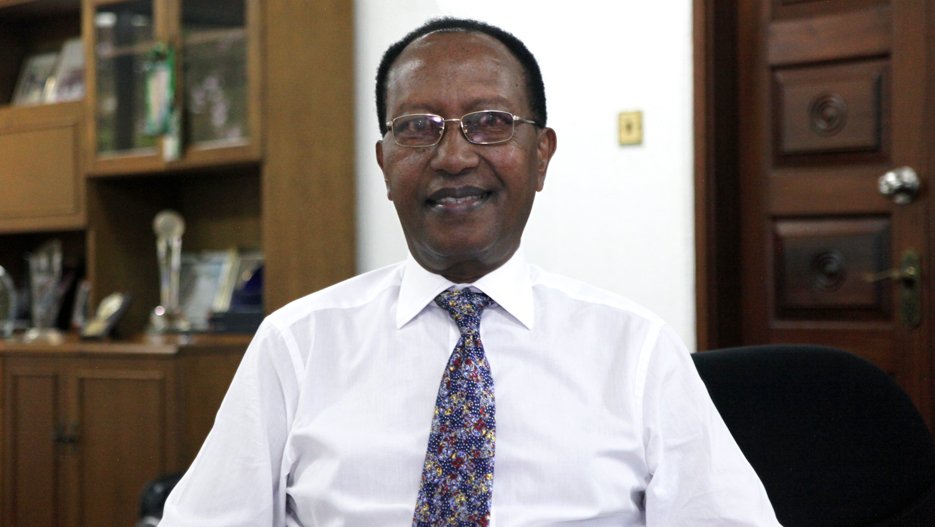
The nearly two-decade-old controversy surrounding the National Social Security Fund’s (NSSF) Temangalo land has taken a fresh turn, with Parliament moving to summon businessman Amos Nzeyi to explain why he has allegedly failed to hand over 55 acres of land sold to the Fund in 2008.
Members of Parliament on the Committee on Commissions, Statutory Authorities and State Enterprises (COSASE) reached the decision after inspecting the disputed property in Temangalo, Wakiso District, where they found that the contested section remains occupied and inaccessible to NSSF.
The committee now wants Nzeyi to appear before it next week and explain why he has allegedly continued occupying part of the property despite NSSF maintaining that it acquired the land and obtained the relevant titles.
The development effectively reopens one of Uganda’s most controversial public-sector land transactions, a deal that has survived parliamentary investigations, procurement questions, land claims and court proceedings since it was concluded in 2008.
MPs confront an 18-year-old problem
The latest dispute concerns 55 acres of the approximately 463.87 acres that NSSF says it acquired in Temangalo.
During their inspection, MPs found the disputed portion fenced off and occupied by animals, farm structures and a residential house.
COSASE Chairperson Muwada Nkunyingi said the committee was concerned that even NSSF officials could not access the land that the Fund says belongs to it.
The committee subsequently resolved to summon Nzeyi to explain his continued occupation of the property.
The development follows NSSF’s attempt to secure vacant possession of the land.
According to NSSF Senior Manager for Enforcement and Litigation Isaac Ogwang, the Fund issued Nzeyi a notice on June 15, 2026, requiring him to vacate by the end of June.
The deadline passed without the disputed section being handed over, prompting NSSF to begin the process of obtaining a court order to evict the occupants.
NSSF Managing Director Patrick Michael Ayota has previously explained that the Fund’s failure to take full physical control of the property was partly linked to litigation surrounding the land.
The Fund says it is pursuing the matter through legal channels rather than attempting to forcibly take possession.
The Shs11 billion deal
The Temangalo controversy dates back to March 2008, when NSSF purchased about 463.87 acres of private mailo land in six parcels from two vendors—Amos Nzeyi and Arma Limited, a company associated with former Prime Minister Amama Mbabazi.
Historical records put the value of the transaction at approximately Shs11 billion.
NSSF has consistently maintained that the acquisition was legitimate and that it obtained titles for the property.
In 2018, then NSSF Managing Director Richard Byarugaba told the Commission of Inquiry into Land Matters that the Fund had purchased the 463.87 acres on two titles in the names of Nzeyi and AMA Limited.
NSSF said it paid about Shs24 million per acre after receiving titles that it believed were genuine.
The transaction, however, generated controversy almost immediately.
Parliament questioned the procurement process used to acquire the land, while the Public Procurement and Disposal of Public Assets Authority (PPDA) also investigated the deal.
PPDA officials argued at the time that the acquisition should have been subjected to the applicable public procurement procedures, including an open bidding process, because it exceeded the threshold for direct acquisition.
Questions over the acreage
The original Temangalo controversy was not limited to the price paid for the land.
Parliamentary investigators also questioned discrepancies in the acreage involved in the transaction.
A 2008 parliamentary inquiry reported that land titles and valuation documents appeared to account for about 411.61 acres, rather than the 463.87 acres approved by the NSSF board—a discrepancy of more than 52 acres.
Other records from the investigations showed that the sale agreements referred to approximately 365 acres from Nzeyi and about 99.22 acres from Arma Limited.
The acreage questions contributed to the intense scrutiny surrounding the transaction and raised questions about exactly what NSSF had purchased.
The latest 55-acre dispute gives those old acreage and possession questions a new lease of life.
Nzeyi’s earlier testimony
Nzeyi himself previously appeared before parliamentary investigators over the transaction.
In September 2008, he told MPs that he had handed over several titles covering a much larger area to NSSF and that the Fund was expected to select the acreage it was purchasing.
During that appearance, investigators also questioned why some transfer documents had not been properly executed.
Nzeyi acknowledged that one section, including land on which his house and farming activities were located, remained an issue despite the broader transaction.
Historical records show that questions surrounding the exact land transferred by Nzeyi have therefore existed since the original investigation.
A politically explosive transaction
The Temangalo deal became particularly sensitive because of the relationship between Nzeyi and Mbabazi, who was then a senior government official.
Parliament investigated whether political influence had played a role in the acquisition and whether NSSF had paid a fair price.
The deal also drew scrutiny over the involvement of then Finance Minister Ezra Suruma, whose ministry exercised oversight over NSSF.
Parliamentary investigations produced competing conclusions about the transaction and the conduct of individuals associated with it.
The controversy was later taken before the Commission of Inquiry into Land Matters, which examined competing claims over the Temangalo property.
The 366-acre ownership claim
Another major chapter emerged when the family of the late Muhammad Hassanali Moosa claimed ownership of approximately 366 acres of the Temangalo property.
The family argued that the land was associated with Temangalo Tea Estate Limited and challenged the ownership of portions of the property sold to NSSF.
The matter eventually reached the courts.
The ownership dispute was one of several legal battles that complicated NSSF’s efforts to develop the property and establish uncontested control over the entire acreage.
The broader history also explains why NSSF officials have pointed to litigation when questioned about the delay in taking complete possession.
NSSF’s Temangalo plans
Despite the controversy, NSSF has continued treating Temangalo as one of its major real-estate investments.
The Fund’s own real-estate portfolio describes the Temangalo Housing Project as a mixed-use affordable housing development on 463.87 acres, approximately 17 kilometres from Kampala city centre.
NSSF’s 2024 integrated report said the project was planned to include thousands of houses, retail and commercial facilities, schools, health and social facilities, green spaces and supporting infrastructure.
Parts of the property are now being developed, meaning the unresolved 55 acres are no longer simply an old land dispute sitting on paper.
They potentially affect NSSF’s ability to exercise complete control over an investment intended to generate returns for its members.
Parliament now wants answers
For COSASE, the central question is increasingly straightforward: if NSSF paid for the land and obtained titles, why has it been unable to secure physical possession of all of it 18 years later?
The committee’s decision to summon Nzeyi is intended to put that question directly to one of the original sellers.
MPs are expected to seek clarification on the circumstances under which the 55 acres remained occupied, whether Nzeyi disputes NSSF’s ownership, what agreements governed the handover of the property and why the land has not been surrendered.
The committee will also have to reconcile the historical records with NSSF’s current position that it has legal ownership of the property.
The summons could therefore bring back several of the unresolved questions that surrounded the original transaction: how much land was actually sold, what was transferred, whether all the land was lawfully acquired, why possession was delayed and who ultimately bears responsibility for the prolonged dispute.
Nearly 18 years after NSSF paid billions of shillings for the Temangalo property, Parliament is once again examining the deal.
This time, however, the immediate issue is not simply the price NSSF paid in 2008.
It is why 55 acres of land that the Fund says it owns remain outside its physical control—and why that situation has persisted for almost two decades.