

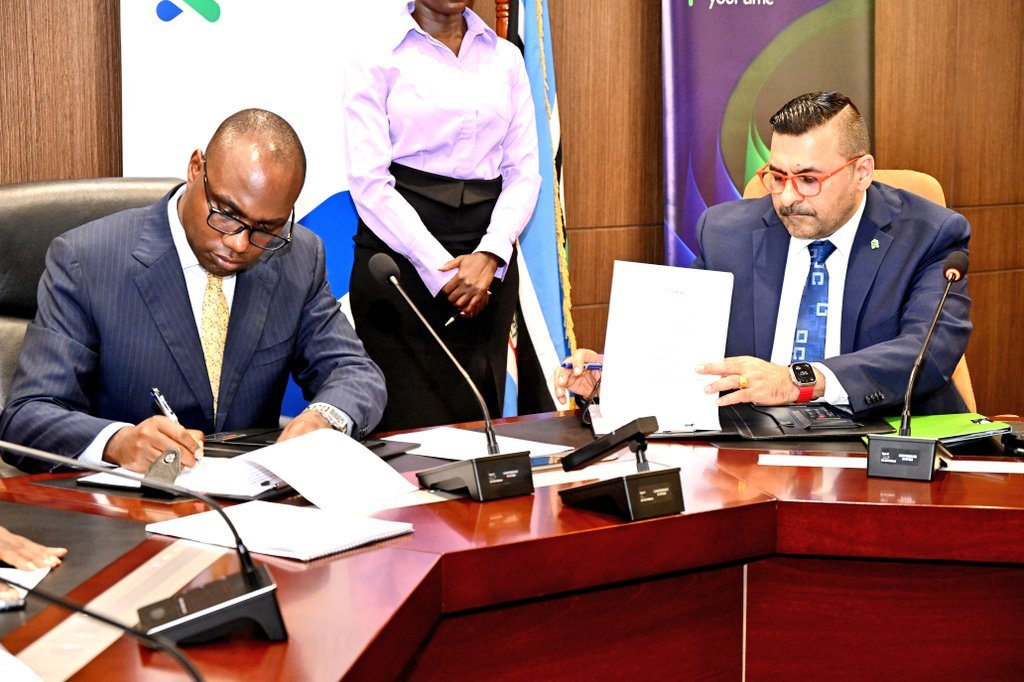
The government has secured €110.5 million (approximately Shs481 billion) in financing for the long-awaited Kitgum–Kidepo Road, a major infrastructure project expected to transform transport, tourism, trade and industrial development across Northern Uganda and the Karamoja sub-region.
The financing agreement was signed on Monday by Finance Minister Henry Musasizi and Sanjay Rughani, marking a significant milestone in government’s efforts to improve road infrastructure in one of Uganda’s least connected regions.
The 115.8-kilometre Kitgum–Kidepo Road is expected to improve connectivity between Northern Uganda and Karamoja, reduce transport costs, facilitate regional trade and enhance access to key tourism and industrial destinations.
Speaking during the signing ceremony, Musasizi described the financing package as a demonstration of the shared commitment between government and its financial partners to unlock the economic potential of Northern Uganda and the Karamoja sub-region through strategic infrastructure investments.
According to the minister, the road will significantly reduce travel times, lower the cost of doing business and provide a critical transport corridor that supports Uganda’s broader economic transformation agenda.
He noted that the project will also contribute to the implementation of the African Transport Market Strategy (ATMS) by improving regional connectivity and facilitating the movement of goods and people.
Boost to major investments
Musasizi said the new road is expected to support several large-scale investments already underway or planned in the region.
Among the most significant is the Yaobai Cement and Clinker Factory in Moroto, a project valued at more than US$300 million, which is expected to become one of the country’s largest industrial investments.
Improved road infrastructure is expected to ease the transportation of raw materials and finished products, making the investment more competitive while stimulating economic activity across the surrounding districts.
The minister also said the road will enhance access to Kidepo Valley National Park, one of Uganda’s premier wildlife destinations renowned for its unique landscapes and rich biodiversity.
Government believes easier access to the park will boost domestic and international tourism, increase visitor numbers and generate more income for communities surrounding the protected area.
The project is also expected to complement the development of the US$72 million Kidepo International Airport, another strategic government investment intended to strengthen tourism and improve accessibility to northeastern Uganda.
Officials believe the combination of improved road and air transport infrastructure will position the region as a major tourism and investment destination.
Connecting farmers, businesses and tourists
Musasizi emphasized that the project goes beyond road construction.
“Today’s signing is not simply about financing a road. It is about investing in Uganda’s future,” he said.
“It is about connecting farmers to markets, industries to raw materials, tourists to destinations and businesses to opportunity.”
He added that government and its partners are laying another foundation for “a more productive, competitive and prosperous Uganda.”
The minister said improved connectivity will enable agricultural producers to access markets more efficiently, reduce post-harvest losses and attract private sector investment into value addition industries.
Businesses operating in Northern Uganda and Karamoja are also expected to benefit from lower logistics costs and improved access to national and regional markets.
Standard Chartered backs strategic infrastructure
Speaking after signing the financing agreement, Rughani said the deal reflects Standard Chartered Bank Uganda’s continued commitment to financing projects that deliver both economic and social value.
He said the bank remains committed to supporting Uganda’s national development priorities through long-term infrastructure financing.
“The Kitgum–Kidepo Road is a strategic investment that reinforces our long-term role as a trusted Corporate and Investment Bank,” Rughani said.
He noted that infrastructure remains one of the key drivers of sustainable economic growth and regional integration.
High-level government support
The signing ceremony attracted several senior government officials, underscoring the strategic importance attached to the project.
Among those in attendance were Works and Transport Minister Fred Byamukama, Trade Minister Sanjay Tanna, Tourism Minister Tom Butime and Lisa Chesney.
The presence of officials responsible for transport, trade, tourism and international partnerships highlighted the cross-sector significance of the road project.
Strategic corridor for Northern Uganda
The Kitgum–Kidepo Road has long been identified as a critical transport corridor capable of accelerating economic growth in Northern Uganda and Karamoja.
Once completed, the road is expected to improve mobility for residents, facilitate cross-border trade, strengthen supply chains and enhance access to essential social services.
Government also expects the improved transport network to encourage private investment, stimulate tourism, create employment opportunities and support industrial development in a region that has historically lagged behind in infrastructure investment.
The latest financing agreement represents another major investment in Uganda’s transport infrastructure as government continues pursuing projects aimed at improving national connectivity, supporting industrialisation and driving inclusive economic growth.