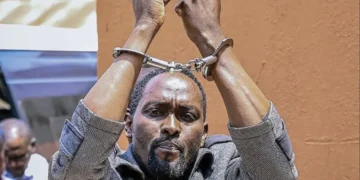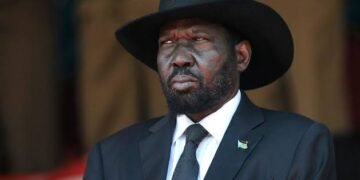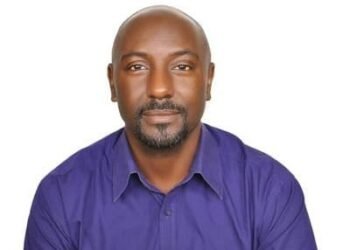

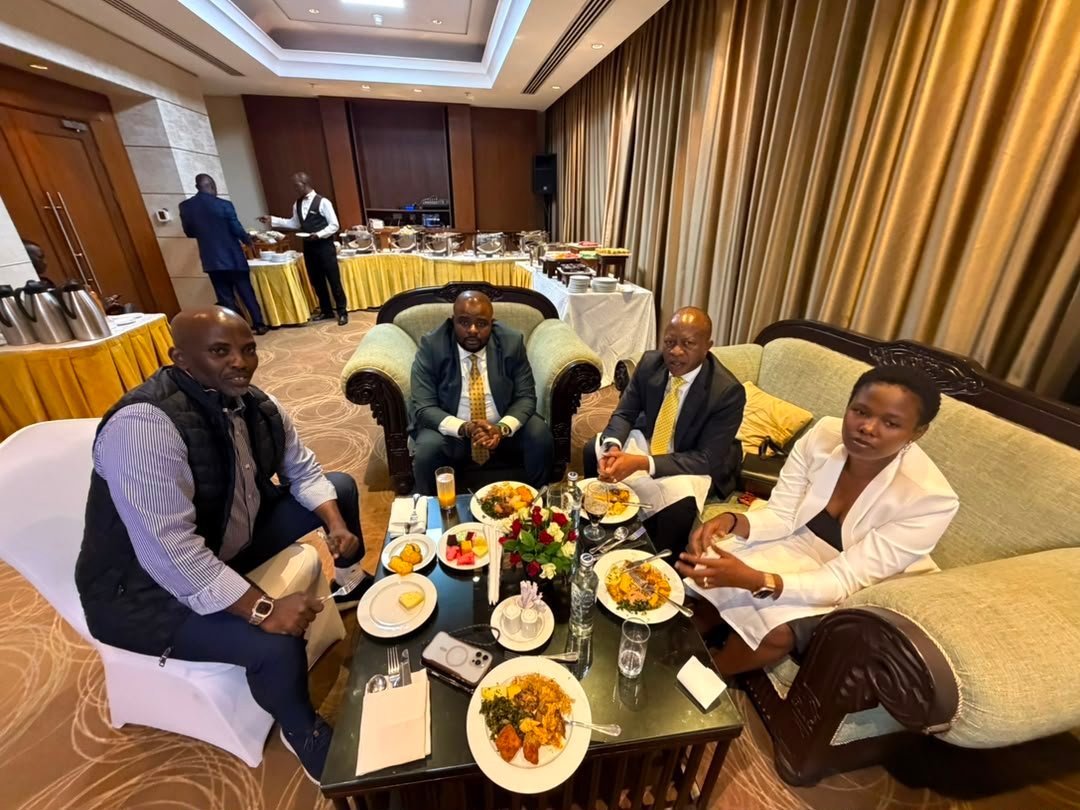
After weeks of political uncertainty, parliamentary rejection and a bruising citizenship controversy that derailed his appointment to the Ministry of Internal Affairs, Muganga has publicly congratulated the man who has taken the job that was once his.
Juma Witonze Kisekka has been sworn in as the new State Minister for Internal Affairs, formally closing the door on Muganga’s aborted Cabinet journey.
And Muganga’s reaction is striking.
There is no protest.
No attack on Parliament.
No fresh defence of his citizenship status.
No accusation that he was unfairly treated.
Instead, Muganga has offered Witonze a blessing.
“Congratulations, @HonWitonze, upon your swearing-in as State Minister for Internal Affairs,” Muganga posted.
“My brother Juma, I wish you a prosperous and enjoyable tour of duty.”
It is perhaps the clearest indication yet that Muganga has accepted defeat.
The former presidential pick has watched the Cabinet seat he was nominated for go to another man — and has now publicly acknowledged his replacement.
But behind the gracious words lies one of the most extraordinary ministerial episodes of the 2026 political season.
Muganga was President Yoweri Museveni’s choice.
Parliament said no.
And the reason was not politics alone.
It was citizenship.
THE APPOINTMENT THAT COLLAPSED
Museveni had initially appointed Muganga, the Vice Chancellor of Victoria University, as Minister of State for Internal Affairs.
On paper, it was a major political elevation for an academic who had built a reputation in higher education and administration.
But the appointment ran straight into Parliament’s Appointments Committee.
During the vetting process, questions emerged over Muganga’s citizenship status.
The committee’s investigations reportedly established links to Uganda, Rwanda and Canada.
That immediately created a constitutional problem.
Uganda permits dual citizenship, but the law imposes restrictions on dual citizens holding certain public offices.
And the Internal Affairs portfolio was never going to be an ordinary appointment.
The ministry is responsible for some of the most sensitive arms of government, including citizenship, immigration, national identification, prisons and policing.
The citizenship question therefore became explosive.
Muganga reportedly told the committee that he had started the process of renouncing his Canadian citizenship.
But the committee was not persuaded that the process had been completed.
His nomination was rejected.
Just like that, Museveni’s choice was stopped by Parliament.
THEN CAME JUMA
With Muganga out, the President needed another name.
Enter Juma Witonze Kisekka.
Witonze was subsequently nominated for the same position and appeared before Parliament’s Appointments Committee.
This time, there was no Muganga-style political drama.
The committee approved him.
The parliamentary hurdle was cleared.
And on Tuesday, August 11, 2026, Witonze finally stood before President Museveni and took the oath of office.
The symbolism could hardly be missed.
The man who replaced Muganga was being sworn into the exact Cabinet position Muganga had been forced to abandon.
And Muganga was watching.
Instead of fighting it, he congratulated him.
“MY BROTHER JUMA”
Muganga’s choice of words is telling.
He did not call Witonze his replacement.
He did not remind the public that he had originally been nominated for the job.
He called him “my brother Juma.”
Then he wished him “a prosperous and enjoyable tour of duty.”
It is a remarkably restrained response to what amounts to a major political setback.
For weeks, Muganga’s name had dominated public debate over ministerial appointments.
His citizenship became the central issue.
His nomination collapsed.
The President moved on.
And another man was appointed.
Muganga has now signalled that he too is moving on.
But the final part of his message was even more politically loaded.
“We thank H.E. President @KagutaMuseveni for remembering Abavandimwe,” he said.
“May God grant our Commander-in-Chief a long and blessed life.”
That is not the language of a man openly breaking ranks.
If anything, it is a declaration that despite losing the Cabinet appointment, Muganga remains publicly loyal to Museveni.
He has chosen gratitude instead of war.
THE IRONY IS HARD TO MISS
There is a striking twist to the entire saga.
Muganga lost the Internal Affairs job amid questions about citizenship.
Witonze has now taken over a ministry that has citizenship and immigration among its core responsibilities.
The ministry is responsible for the Directorate of Citizenship and Immigration Control, among other critical institutions.
The irony is almost impossible to ignore.
The man whose nationality became a parliamentary controversy was denied the job.
The man who replaced him now sits in the ministry responsible for managing citizenship matters.
And Muganga has publicly congratulated him.
MUGANGA’S “GREAT THING” MESSAGE
Then comes perhaps the most curious line in Muganga’s message.
“It is truly a great thing to be alive and witness this moment today.”
The statement is open to interpretation.
But coming after a failed Cabinet nomination, it reads as deeply reflective.
Muganga appears to be acknowledging the extraordinary political journey that has taken place around his name.
He was nominated.
He was vetted.
He faced questions over his citizenship.
He was rejected.
His replacement was selected.
And now he has watched that replacement take the oath.
Yet he is still here.
Still publicly thanking Museveni.
Still congratulating the man who took his position.
Still calling him brother.
It is a remarkable political exit from a controversy that could easily have produced a bitter public confrontation.
BUT THE CITIZENSHIP QUESTION IS NOT DEAD
Muganga may have lost the Cabinet position, but the citizenship issue did not simply disappear.
Reports later emerged that Rwanda had approved his renunciation of Rwandan citizenship, while questions remained over the completion of the Canadian renunciation process.
That means the legal and administrative questions surrounding his nationality continued even after Parliament had effectively closed the door on his ministerial appointment.
And that is where the story becomes bigger than Muganga himself.
The episode exposed the enormous political consequences that citizenship status can have for Ugandans seeking high public office.
It also demonstrated that presidential nomination does not automatically translate into Cabinet appointment.
Museveni can nominate.
Parliament can vet.
And Parliament can reject.
Muganga’s case provided one of the clearest demonstrations of that constitutional reality.
WITONZE INHERITS A HOT SEAT
Witonze may have won the appointment, but he has inherited a politically sensitive ministry.
The Ministry of Internal Affairs is responsible for institutions that touch the daily lives of millions of Ugandans.
Police.
Prisons.
Immigration.
Citizenship.
National identification.
These are not ceremonial responsibilities.
They involve some of the most powerful machinery of the Ugandan state.
Witonze therefore has little room for political apprenticeship.
He will be expected to deliver.
His background in political mobilisation and the ruling National Resistance Movement gives him political experience.
But ministerial office will require much more than political loyalty.
He will have to manage institutions facing persistent questions over accountability, human rights, efficiency, immigration control, national identification and public security.
And he will do so under the microscope created by the controversy surrounding the man he replaced.
THE PRESIDENT MOVES ON
For Museveni, the saga has also demonstrated his ability to quickly recalibrate.
His first choice was Muganga.
Parliament rejected Muganga.
The President nominated Witonze.
Parliament approved him.
Witonze has now taken the oath.
The government has therefore moved forward without allowing the controversy to paralyse the Cabinet.
That leaves Muganga in an interesting political position.
He remains a prominent academic and public figure.
He remains associated with Museveni’s appointment.
But he is no longer a Cabinet minister.
At least for now.
And perhaps most importantly, he has not turned his rejection into an open political fight.
Instead, he has chosen to congratulate the victor.
MUGANGA’S DEFEAT, WITONZE’S VICTORY
There is no dressing it up.
Muganga lost the Cabinet battle.
Witonze won it.
The evidence is now standing in plain sight: Witonze has taken the oath, occupied the position and assumed the responsibilities.
Muganga himself has acknowledged the outcome.
But his concession may also be a calculated act of political maturity.
By congratulating Witonze and praising Museveni, Muganga has avoided turning a failed appointment into a permanent political rupture.
He has left the door open.
Politics is rarely about the position one loses today.
It is often about what remains possible tomorrow.
And Muganga’s message appears carefully crafted with that reality in mind.
There is no bridge-burning.
There is no bitterness.
There is no public war with Parliament.
There is instead a salute to the new minister and a blessing for the President.
For Witonze, however, the congratulations mark the beginning of the real battle.
He now has to prove that he deserves the office.
He has to make the ministry work.
He has to manage Uganda’s internal security machinery.
And he has to establish his own political identity rather than remain known simply as the man who replaced Muganga.
For Muganga, Tuesday’s ceremony represents something different.
It is the moment he watched the job he was supposed to occupy go to someone else.
And his response was not anger.
It was acceptance.
“My brother Juma, I wish you a prosperous and enjoyable tour of duty.”
The Cabinet door has closed on Muganga.
Witonze has walked through it.
And Muganga, for now, has chosen to stand outside — smile, salute his replacement and move on.