
She has a mobile phone. She has a sim card. She even knows how to send money. But her mobile money account is registered in her mother’s name, because she has no national ID. She cannot borrow, cannot save formally, and when medical bills hit the family last year, she had to borrow from a neighbour. This is not the story of one woman. This is the story of millions.
New research released by Financial Sector Deepening Uganda earlier this week lays bare the uncomfortable truth about financial inclusion in Uganda: the gains of the last decade have largely bypassed young women, and the financial system, as currently designed, is not built for them.
The Numbers Are Damning
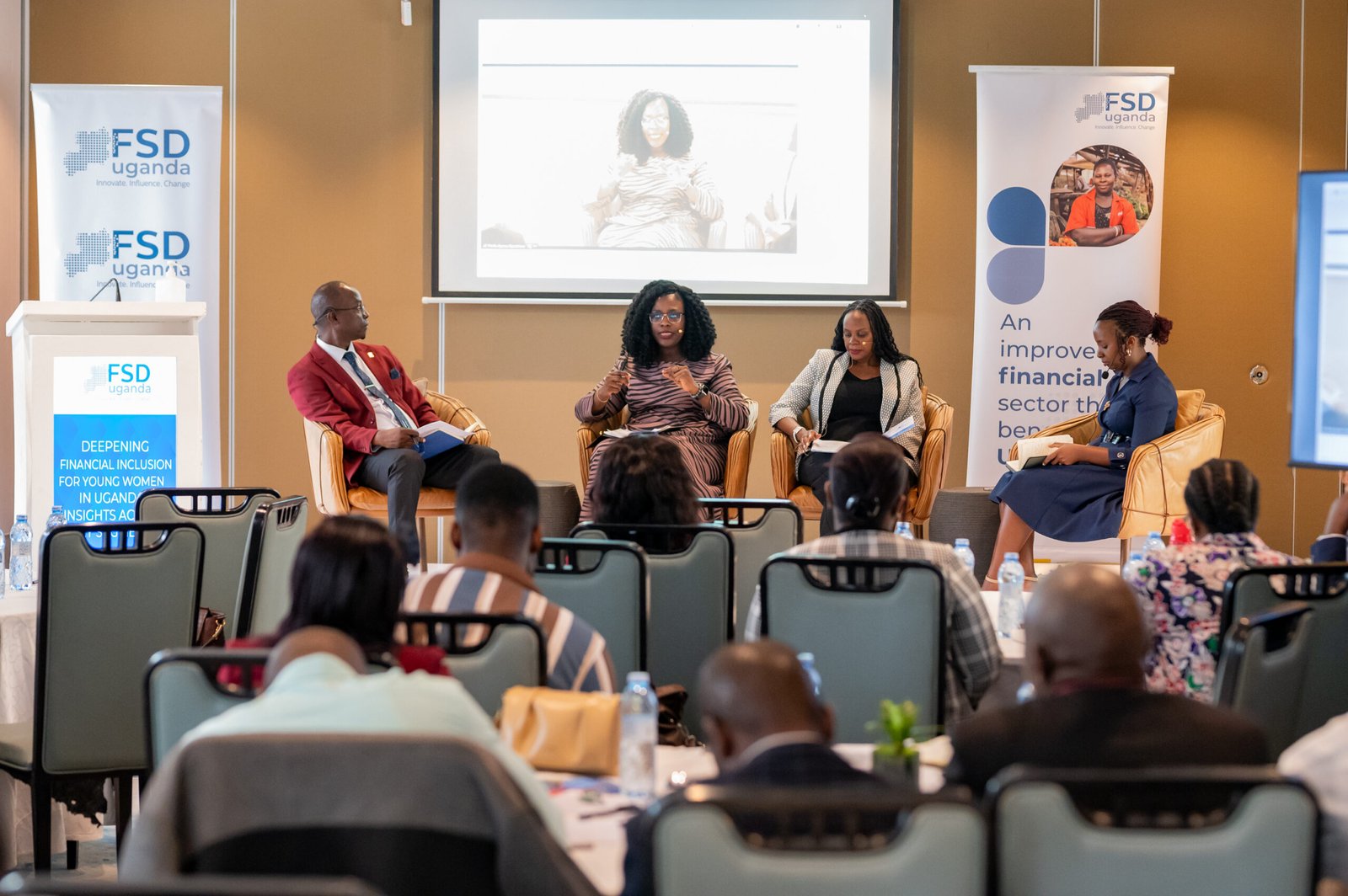
Speaking at a dissemination workshop in Kampala, Joseph Lutwama, FSD Uganda representative, did not mince his words. The study, which tracked 4.5 million Ugandan women aged 16–24, roughly 10% of the entire national population, found that despite overall financial inclusion rising from 52% to 68% over the past decade, the gender gap has actually widened. From just 1 percentage point in 2018, it has ballooned to 6 percentage points by 2023.
Consider the data: only 53% of young women own a mobile phone, against 71% of young men. Only 8% have a bank account versus 13% of young men. SACCOs? Just 4% of young women use them, compared to 14% of their male counterparts. And the gap in registered mobile money accounts, the supposed great equaliser, has sat stubbornly at 10 percentage points for an entire decade.
Why? Because you cannot open a mobile money account without a national ID. And you cannot open a bank account without one either. Yet Lutwama told the workshop that a significant number of young women in Uganda either lack national IDs entirely or simply have not picked them up after registration, an apparently small administrative hurdle that is quietly locking an entire generation out of the formal economy.
“Many young women either do not possess national IDs or have not collected them after registration, limiting their ability to participate in the formal financial system,” Lutwama said. He acknowledged the National Identification and Registration Authority (NIRA) for registering a majority of Ugandans, but said the bigger task now is empowering young women to understand and act on what an ID makes possible.
The Invisible Barriers Nobody Talks About
Beyond IDs, the research exposes a web of interlocking disadvantages that compound each other. Young women average 5.2 hours of unpaid domestic work every single day, three times the 1.6 hours logged by young men. This is not a lifestyle choice. It is a structural trap that limits the jobs they can take, the hours they can work, and the financial institutions they can physically visit.
Add to this low and irregular incomes from informal trade, the primary occupation for many young women, and account maintenance fees that eat into already-thin margins, and formal banking starts to feel not just inaccessible but actively punitive.
Then there is the confidence problem, which Lutwama described frankly. “Traditional social structures have often limited women’s participation in economic activities, affecting their ability to independently engage with financial institutions,” he said. In other words: the financial system was not designed with young women in mind, and young women have internalised that message.
Five Types of Young Women. Five Different Crises.
One of the most striking findings from the research is its refusal to treat young women as a single bloc. Using FinScope 2023 data, FSD Uganda’s team carved the market into five distinct segments, and the portrait is sobering.
The largest group, at 33%, are women using both formal and informal financial services, the most financially active, yet still vulnerable to shocks and lacking access to proper credit and insurance. The next biggest group (28%) use only formal services registered in their own names, almost entirely mobile money, but have hit a ceiling they cannot break through without bank access.
Twenty percent are the ghost users: accessing mobile money through someone else’s registered account, building no transaction history of their own, with no footprint in the financial system to leverage when they need a loan. Five percent use only informal savings groups, disciplined, community-rooted, but functionally invisible to the formal sector. And 14% are entirely excluded: younger, poorer, with no phone, no ID, and often no income of their own.
Two-thirds of all young women in Uganda fall into these four less-served categories. That is the scale of the problem, and, FSD Uganda argues, the scale of the opportunity.
What Needs to Change
The report does not just diagnose, it prescribes. FSD Uganda’s research team called on government, financial service providers, and donors to take five concrete actions: get phones into young women’s hands and IDs into their wallets; make the transition from unregistered to registered mobile money seamless and history-preserving; tie financial products to income and livelihood growth; design savings and insurance products that protect against health emergencies; and invest in financial education and trust-building in rural communities.
FSD Uganda is encouraging stakeholders to develop affordable and accessible financial products tailored to the needs of young women. Year Two of the programme, launching now, will see FSD Uganda partner directly with financial service providers to prototype and pilot products built specifically for the four excluded segments.
The Bottom Line
Uganda loves to celebrate its mobile money success story. And there is genuine progress to celebrate. But this research is a reality check. Getting young women into the system is not the same as the system working for them. A 16-year-old in Gulu accessing her aunt’s MTN account to receive school fees is not financially included. She is financially invisible.
FSD Uganda’s message to the financial sector is clear: the market is there, the evidence is here, and the window to act is now.
The full report, “Deepening Financial Inclusion for Young Women in Uganda: Use Cases Across Key Segments,” is available at www.fsduganda.or.ug