
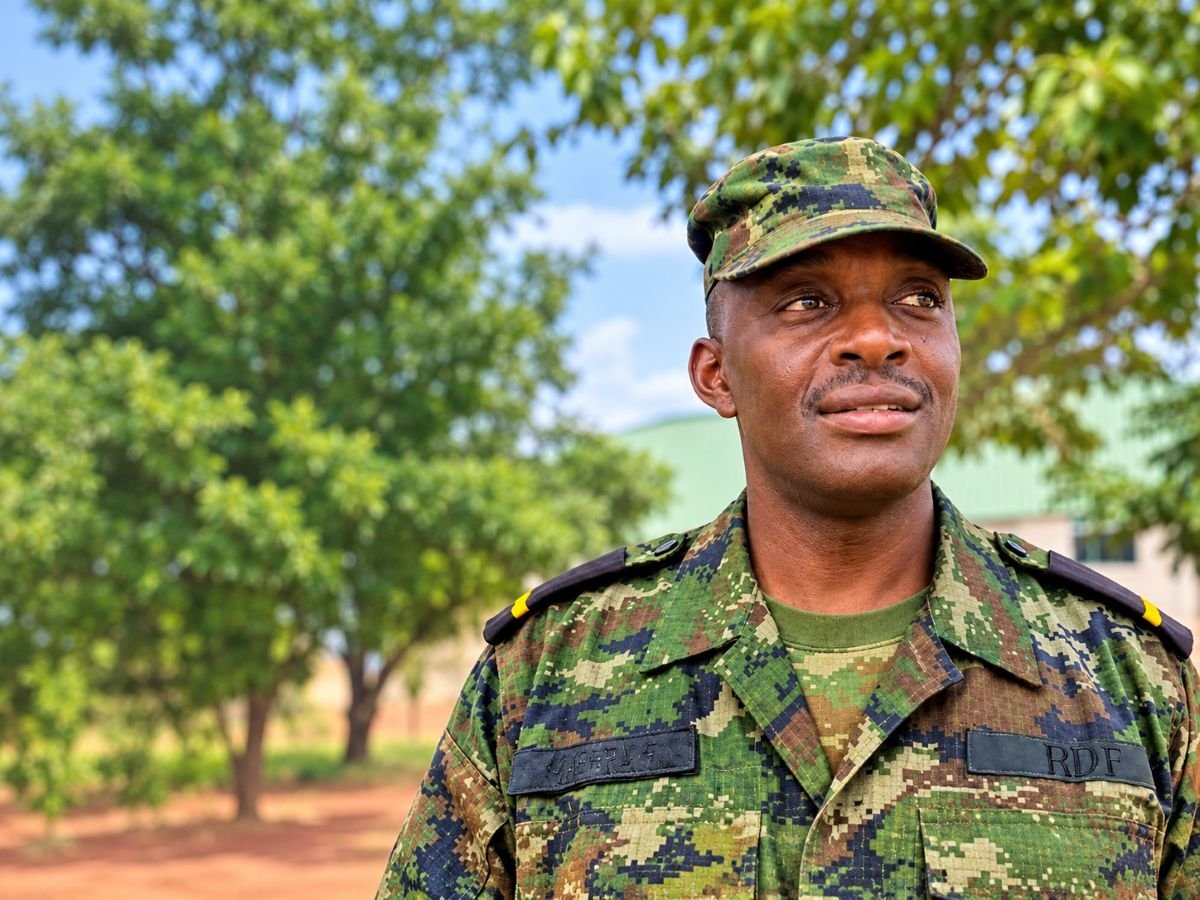
Police are investigating the murder of former Rwandan soldier Robert Kabera, whose headless body was discovered in Kamengo after he returned to his home under construction. Detectives are tracing his final movements as the motive remains unknown.
The final hours of former Rwandan soldier Robert Kabera were marked by a series of movements between his home under construction and a nearby bar in Mpigi District before his body was discovered without a head.
Kabera, 50, popularly known as Sergeant Robert, was found dead on Saturday, October 17, 2026, at a eucalyptus plantation in Luwala Village, Kamengo Sub-county, where he was building a house.
Police believe he was killed either on Friday night or in the early hours of Saturday, although the exact time and circumstances of the attack have not been established.
The missing head had not been recovered by Monday, October 19, when police publicly confirmed the murder and said investigations were ongoing. Detectives had not announced a confirmed motive or publicly identified the killers.
Kabera’s last movements
According to accounts given to investigators, Kabera returned from Kampala at about 7pm on Friday, October 16, riding on a motorcycle operated by his regular boda boda rider, identified as Innocent.
After arriving in Luwala, he reportedly greeted his brother, Oscar, with whom he lived, before leaving for a nearby bar in the trading centre accompanied by the rider.
Family accounts indicate that Kabera returned home at around 11:30pm to collect his phone before leaving again. He reportedly returned around midnight to take food home and subsequently went out once more.
These movements are among the last known activities attributed to him before his death.
However, there are discrepancies in the accounts of when he was last seen. A bar attendant reportedly told Kabera’s family that he had last been seen at approximately 9:30pm, while relatives said he returned home later that night.
Investigators will need to reconcile these accounts and establish where Kabera went after his final reported visit home.
The whereabouts of the boda boda rider who accompanied him that evening have also become important to the investigation.
Brother’s search ends at a murder scene
On Saturday morning, Kabera’s brother, Victor Agaba, became concerned when he could not find him.
Agaba reportedly went to Kabera’s house with his son but found it locked. He then visited a bar where his brother was known to spend time, hoping to establish where he had gone.
After speaking to the attendant, Agaba initially suspected that Kabera might have spent the night at a lodge. He continued looking for him before going to his gardens.
At approximately 2pm, the village defence secretary informed him that an unidentified body without a head had been discovered in the neighbourhood.
Agaba rushed to the scene, where he found the body lying in a pool of blood.
He reportedly identified the deceased as his brother through a distinctive scar on the right thumb and shoes recovered near the body.
The discovery transformed what had begun as a search for a missing family member into a murder investigation.
Evidence recovered at the scene
According to a report published by ChimpReports on October 19, investigators recovered a large stick suspected to have been used in the attack, two beer bottles—one empty and another partially filled—and shoes belonging to the deceased.
The items could help detectives reconstruct what happened at the scene, although police have not publicly confirmed that the stick was used to kill Kabera.
The recovery of the body without its head has also left investigators with an important unanswered question: where the missing remains were taken and whether their recovery could provide additional evidence.
Police have not publicly disclosed the results of any forensic examinations or established whether the recovered items can be linked to a suspect.
The remains were taken to a mortuary in Kampala for further examination as investigators worked to establish the circumstances surrounding the death.
Security teams seek answers about the boda boda rider
The investigation has also focused on Innocent, the boda boda rider who reportedly transported Kabera from Kampala to Luwala on the evening before the body was discovered.
ChimpReports reported on October 19 that an inter-agency security team was searching for the rider, whose whereabouts had become a priority as investigators reconstructed Kabera’s final movements.
The report said police, military and intelligence personnel were involved in the search.
Investigators reportedly want to establish when the rider last saw Kabera, where he went afterwards and whether he had any contact with people who might have information about the killing.
However, the rider’s reported disappearance does not establish that he participated in the murder. His role, knowledge of Kabera’s final movements and any possible connection to the crime remain matters for investigators to establish.
A former soldier who fled Rwanda
Kabera’s killing has attracted attention because of his history as a former member of the Rwanda Defence Force and his subsequent life in Uganda.
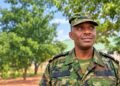
He joined the Rwandan army in 1993 and became a military instructor and soloist with the RDF Army Jazz Band. He was also known as an independent musician, with his performances earning him recognition among Rwandan audiences.
In November 2020, Kabera fled to Uganda, saying he feared persecution and for his life. After arriving in Uganda, he became an outspoken critic of Rwandan President Paul Kagame’s government.
Kabera had previously reported concerns about his safety. Human Rights Watch documented his allegations of threats, while Ugandan authorities had reportedly provided additional police protection after he sought refuge.
In October 2023, local leaders in Kampala also reportedly wrote to police following an alleged attack on Kabera along Rubaga Road. According to the letter cited in subsequent media reports, three men fled in a black vehicle after the incident.
It has not been established whether that alleged attack was connected to his murder in Mpigi.
Rwandan authorities had also previously announced an investigation into allegations of sexual abuse involving a teenage family member. Kabera denied the allegations, describing them as politically motivated. The final outcome of that investigation has not been established in the available reporting.
Was the killing politically motivated?
Kabera’s past security concerns have raised questions about whether his murder could have been connected to his political views or previous experiences.
However, investigators have not publicly established that his criticism of the Rwandan government played any role in the killing. No publicly confirmed evidence has linked the murder to any government, organisation or individual.
Police spokesperson Kituuma Rusoke said Kabera’s previous service in the Rwandan military had been brought to the attention of detectives, adding that the circumstances surrounding his life would be examined as part of the investigation.
The immediate task for detectives is to establish who was responsible, determine the precise circumstances of the attack and recover the missing head.
They must also establish Kabera’s movements after his last reported visits home, interview relevant witnesses and determine whether the items recovered at the scene can help identify the perpetrators.
For now, the killing of the former soldier and musician remains unresolved. His final movements, the missing head and the whereabouts of people who were with him that night are among the outstanding questions as police pursue the investigation.