
President Yoweri Museveni has said Uganda significantly reduced the cost of importing petroleum products after abandoning a procurement system that he claims relied on middlemen in Kenya.
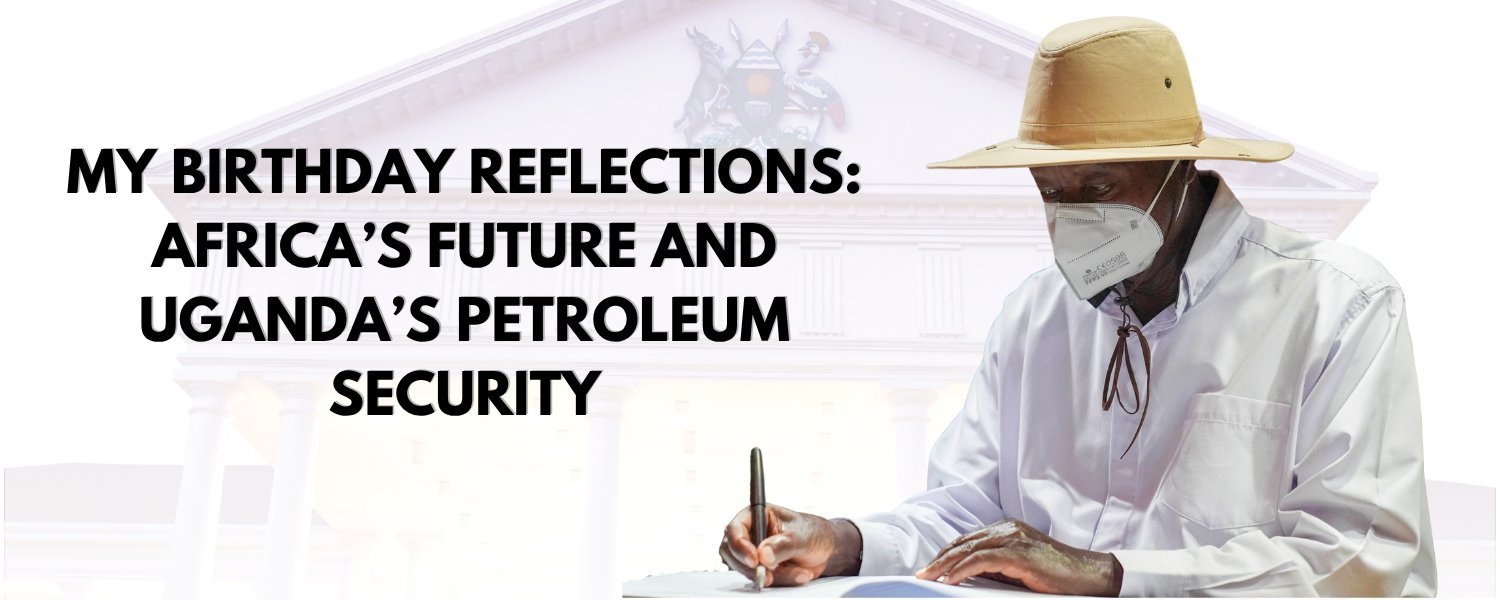
Museveni made the revelation in his birthday reflections issued after his 82nd birthday on September 15, 2026, in which he also addressed Africa’s economic integration, continental security and Uganda’s petroleum supply chain.
The President said he was previously unaware that Uganda was purchasing petroleum products through Kenyan middlemen until 2019, when Kenyan Senator Jirongo reportedly brought the matter to his attention.
“I did not know that these wonderful People were buying those products through middle-men in Kenya by tendering to those middlemen,” Museveni said.
He said he subsequently instructed then Energy Minister Irene Muloni to address the matter, but claimed that little progress was made until 2023.
According to Museveni, Uganda later entered into an arrangement with Vitol, a global energy company involved in refining and bulk petroleum supply.
He said the initial agreement signed on August 18, 2023, resulted in substantial reductions in the prices Uganda paid per metric tonne for key petroleum products.
Under the figures provided by Museveni, diesel fell from US$118 to US$83 per metric tonne, while petrol dropped from US$97.50 to US$61.50.
The price of aviation fuel, according to the President, declined from US$114.25 to US$79.25 per metric tonne.
Museveni presented the changes as part of broader efforts to strengthen Uganda’s petroleum security and reduce the country’s dependence on intermediary arrangements.
Ruto thanked over Uganda oil pipeline deal
Museveni also praised Kenyan President William Ruto for supporting the new arrangement, saying the Kenyan leader intervened when some actors in Kenya attempted to resist the changes.
“I want to thank H.E Ruto because he prevailed over some actors in Kenya who were trying to resist,” Museveni said.
The arrangement, according to Museveni, enabled Uganda to pump its petroleum products through the Kenyan oil pipeline, while Uganda secured a 20.15% shareholding in the pipeline.
“We are very happy with the Kenya Government of President Ruto on this matter,” he said.
The comments come against the backdrop of Uganda’s continuing efforts to strengthen its petroleum supply infrastructure and reduce vulnerabilities associated with fuel imports.
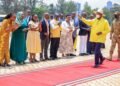
Museveni’s remarks were made shortly after he laid the foundation stone for a 320-million-litre oil storage centre at Buyala, an investment he described as part of Uganda’s petroleum security strategy.
Museveni takes aim at civil servants
In reflecting on how Uganda’s petroleum procurement system evolved, Museveni linked the issue to his broader criticism of the country’s post-independence governance and bureaucracy.
He recalled the period of the struggle against former President Idi Amin, saying the National Resistance fighters had criticised Amin’s administration for putting people he described as lacking formal education in charge of government affairs.
However, Museveni said the experience after Amin’s overthrow taught him that simply placing career civil servants in charge did not necessarily guarantee effective governance.
“Indeed, when we defeated Idi Amin, we put back the civil servants in charge of running the administration of the Country. It was much later that we discovered that those civil servants (PS, Commissioners, etc.), were ruining the Country,” he said.
He cited petroleum procurement as an example of what he considers failures within the civil service and government procurement system.
President calls for African integration
Beyond Uganda’s petroleum sector, Museveni used his birthday message to renew his call for deeper African integration.
He said Africa had three “historical missions” that remained unfinished: achieving prosperity through an integrated African common market, establishing strategic security through political integration where possible, and strengthening continental unity through what he described as “undugu”, or brotherhood.
Museveni said an integrated African market would allow wealth creators to expand across the continent, while political integration would strengthen Africa’s ability to respond to strategic security threats.
He specifically cited the proposed East African Federation as an example of regional political integration.
The President also argued that Africa’s diverse populations should be united around what he described as four major linguistic groupings: Niger-Congo, Nilo-Saharan, Afro-Asiatic and Khoisan.
“It is the fulfilment of these historical missions, that will guarantee our prosperity and strategic security,” Museveni said.
Birthday message
Museveni began his reflections by thanking what he described as eight million well-wishers who congratulated him on his 82nd birthday.
He said the messages and what he described as God’s blessings would give him and his wife another 18 years to reach 100 years of age, while he projected that his wife would reach 96.
The President signed the statement as Yoweri K. Museveni, President of the Republic of Uganda.