
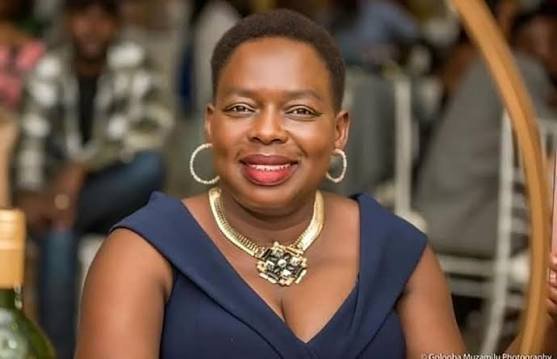
Ambassador Joy Ruth Aceng has formally entered the race for the chairpersonship of the National Women Council, promising to overhaul the institution into a stronger, more united and influential voice for women across Uganda.
Aceng launched her candidature while addressing women leaders and other stakeholders, positioning herself as a consensus-builder who intends to move the Council beyond political divisions and towards practical action on women’s economic, social and leadership concerns.
Her message was blunt: she is not seeking the position to build a personal political profile, but to mobilise women and strengthen their influence in Uganda’s development agenda.
“I am not coming to divide you. I am coming to unite you. I am not coming to compete with women. I am coming to work with women,” Aceng said.
The declaration puts Aceng in what is expected to be a closely watched contest for the leadership of an institution whose grassroots structures stretch from villages to the national level.
‘Women must have a stronger voice’
Aceng said the National Women Council needs leadership that listens to women, brings them together and ensures that their concerns are incorporated into government planning and programmes.
She pledged to build an inclusive Council capable of representing women regardless of their region, background or social standing.
At the centre of her campaign is economic empowerment.
Aceng wants women to have greater access to support programmes, business networks and opportunities capable of improving household incomes and strengthening women-owned enterprises.
She also promised to push for increased representation of women in leadership across the country, from grassroots institutions to national bodies.
Teenage girls and GBV on her agenda
Aceng has placed the skilling of teenage girls among her priorities, arguing that practical skills and economic opportunities can give young women greater independence and improve their prospects.
She also wants the National Women Council structures to become a frontline mechanism in the fight against gender-based violence.
Under her proposed approach, women council leaders at different levels would play a more active role in preventing and responding to violence against women and girls within their communities.
Aceng targets government service delivery
In a potentially significant expansion of the Council’s oversight role, Aceng said women leaders should be equipped to monitor government programmes and service delivery in their respective areas.
She argued that women council leaders should have a stronger voice in local government planning, including through participation as ex-officio members of local government councils.
The proposal would give the women’s leadership structures a more direct avenue to raise issues affecting women and ensure emerging community concerns are incorporated into development plans.
Cancer, health and the grassroots network
Health is another pillar of Aceng’s proposed agenda, with cervical, ovarian and breast cancers identified as issues requiring greater attention.
She proposed using women council leaders and Village Health Teams to increase community awareness, encourage prevention and promote early access to health services.
According to Aceng, the Council’s extensive grassroots network gives it an advantage in mobilising communities around health and women’s welfare.
She wants that network strengthened so that problems identified at village level can be escalated and placed before decision-makers.
Diplomatic experience as selling point
Aceng is also banking on her experience in national and international affairs to distinguish her campaign.
She said her background has equipped her with diplomacy, negotiation, leadership and public-service skills that she intends to deploy to strengthen the Council and attract partnerships for women.
She further pledged to use her international networks to mobilise opportunities and support for women, both for the National Women Council as an institution and for individual women seeking assistance and new opportunities.
But beyond securing external partnerships, Aceng says the Council itself must become more capable of holding government programmes to account.
Her proposed model would see women leaders not merely mobilising communities but actively tracking whether government interventions are reaching intended beneficiaries.
A contest over the future of the Council
Aceng’s campaign is therefore shaping up as a pitch for a more activist National Women Council—one that does more than represent women ceremonially and instead becomes a pressure point for economic empowerment, accountability, health advocacy and participation in government planning.
She called on women across Uganda to back her candidature and reject what she described as division and empty promises.
Her appeal is centred on three themes: unity, service and experience.
“I need you, and you need me. Together, we can build a stronger, more united and more effective voice for the women of Uganda,” she said.
Aceng says her ultimate goal is to transform the National Women Council into a platform where the concerns of every Ugandan woman—from the village to the national stage—are not merely heard, but acted upon.
The challenge now will be turning those promises into a campaign capable of winning support across Uganda’s vast women council structures and, ultimately, translating a diplomatic leadership record into votes at the grassroots.
Aceng Brings Parliamentary, Ministerial and Diplomatic Experience to Women Council Race
Aceng is not a newcomer to national leadership. She previously served as Kole District Woman Member of Parliament in Uganda’s 9th Parliament from 2011 to 2016, where she served on the Physical Infrastructure Committee and the HIV/AIDS Committee.
Her parliamentary career was followed by an appointment as Minister of State for Fisheries by President Yoweri Museveni, although the appointment was subsequently revoked.
Aceng later moved into Uganda’s diplomatic service, serving as Uganda’s High Commissioner and Ambassador to Canada from 2017 to 2024. Her diplomatic assignment placed her at the centre of Uganda’s relations with Canada for about seven years.
Her diplomatic career, however, ended controversially in 2024 when Canada declared her persona non grata. Aceng subsequently spoke publicly about her expulsion, disputing aspects of the Canadian government’s position and insisting that she had been defending Uganda’s interests.
The episode nevertheless forms part of a career that has taken Aceng from grassroots elective politics to Parliament, the Cabinet and Uganda’s diplomatic corps.
Aceng holds a Master’s degree in Management Studies, a Bachelor’s degree in Education and a Certificate in Administrative Law, according to published profiles.
She has since returned to active politics and, in 2025, sought the UPC flag to contest again for the Kole District Woman MP seat, seeking to reclaim the parliamentary position she held between 2011 and 2016.
It is this combination of political, governmental and diplomatic experience that Aceng is now presenting as a key qualification for the National Women Council leadership.
Launching her candidature, Aceng said she was seeking the position not for personal political glory but to serve women and build unity across Uganda.
“I am not coming to divide you. I am coming to unite you. I am not coming to compete with women. I am coming to work with women,” she said.
From Parliament to diplomacy—and now the women’s movement
Aceng’s campaign seeks to turn her experience in national politics and international diplomacy into a broader platform for women.
She says the National Women Council needs leadership capable of listening to women, bringing them together and ensuring their concerns are reflected in government programmes and development planning.
Her agenda includes women’s economic empowerment, increased female representation in leadership, skilling teenage girls, combating gender-based violence and strengthening women’s participation in government oversight.
She also wants women council leaders to play a greater role in monitoring government programmes and service delivery in their communities.
A particularly ambitious proposal is to strengthen the participation of women council leaders in local government planning, including their participation as ex-officio members of local government councils.
Aceng argues that women leaders should not simply mobilise communities during government programmes or elections, but should have a meaningful role in identifying community problems and influencing the plans designed to address them.
Health and grassroots mobilisation
Aceng has also placed women’s health on her agenda, identifying cervical, ovarian and breast cancers as emerging concerns requiring greater community awareness.
She wants women council structures and Village Health Teams to be used more aggressively to promote prevention, awareness and early access to health services.
Her argument is that the National Women Council already possesses something many institutions struggle to build: a grassroots network extending down to village level.
If properly strengthened, she says, that network could become an early-warning and mobilisation system for issues affecting women and girls.
Diplomatic networks for women
Aceng is also promising to deploy the international relationships developed during her diplomatic career to attract partnerships and opportunities for Ugandan women.
She says such networks could be used to support the National Women Council institutionally while also opening doors for individual women seeking skills, partnerships, markets and other opportunities.
The proposal effectively seeks to turn her diplomatic experience into an economic and development resource for women.
Her pitch therefore rests on a relatively unusual combination of grassroots political experience, parliamentary exposure, ministerial service and international diplomacy.
But the central question confronting her campaign will be whether that experience can translate into a stronger and more effective National Women Council.
Aceng is betting that it can.
She has called on women across Uganda to choose what she describes as unity over division, service over self-interest and experience over empty promises.
“I need you, and you need me. Together, we can build a stronger, more united and more effective voice for the women of Uganda,” she said.
Her stated ambition is to transform the National Women Council into an institution where the concerns of Ugandan women—from the village level to the national stage—are not simply collected, but taken into government decision-making and acted upon.