

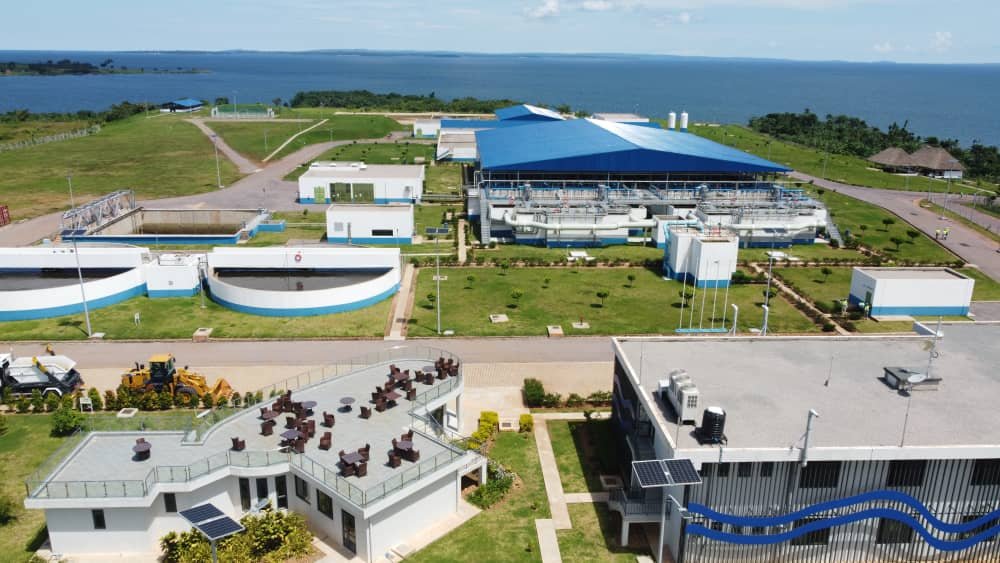
The Government of Uganda is stepping up efforts to tackle persistent water supply pressures in the Greater Kampala Metropolitan Area (GKMA) with the expansion and restructuring of the city’s water distribution network.
The project, being implemented through the National Water and Sewerage Corporation (NWSC), is expected to connect communities across Kampala, Wakiso, Mukono and surrounding areas to the high production capacity of the Katosi Water Treatment Plant.
Dubbed the Rehabilitation, Restructuring, Rezoning and Extension of the GKMA Water Supply Network Project — Package 2B, or Katosi Distribution Network Expansion, the multi-million-dollar infrastructure programme is designed to strengthen the movement of treated water from Katosi to rapidly growing urban and peri-urban communities.
The project comes as Greater Kampala continues to experience rapid population growth, urban expansion and increasing demand for reliable piped water.
Under the current works, contractors are installing 71 kilometres of transmission mains, alongside construction of three new water reservoirs and two booster stations. The project also includes upgrades to the Supervisory Control and Data Acquisition (SCADA) system to improve monitoring and management of the water network.
The infrastructure is being designed to support water supply requirements through 2040, signalling a long-term attempt to move Kampala’s water system ahead of demand rather than repeatedly responding to shortages after they occur.
Relief targeted for Namugongo, Kira and surrounding areas
One of the most closely watched components is a 7.7-kilometre DN1000 transmission pipeline intended to serve communities in the eastern and northeastern parts of the metropolitan area.
The pipeline will supply Namugongo, Kira, Buwaate, Bulindo, Mulawa, Kasangati and surrounding communities, areas that have experienced rapid residential and commercial development.
According to the project update, the pipeline is targeted for completion in January 2027, potentially providing an early boost to water availability in the rapidly expanding corridor.
The large-diameter pipeline is expected to increase the capacity to move treated water into areas where demand has grown significantly alongside new housing estates, businesses and institutions.
Boosting pressure and storage
The expansion also includes the Kungu and Kabulengwa booster stations, which are expected to play a critical role in pushing water through the expanded network and maintaining adequate pressure across different elevations and demand zones.
Three reservoirs — Kanyanya, Mutungo and Kabulengwa — are also part of the works.
The additional storage capacity is expected to strengthen the network’s resilience by providing strategic reserves and helping balance fluctuations in demand.
The SCADA upgrades will further enable NWSC to monitor and manage elements of the network more efficiently, potentially allowing faults, pressure changes and other operational problems to be detected and addressed more quickly.
Katosi at the centre of the expansion
The project is built around the capacity of the Katosi Water Treatment Plant, which has become a major component of Uganda’s strategy to increase treated water production for the capital and its metropolitan area.
The challenge, however, has increasingly shifted from production alone to distribution — ensuring that water produced at treatment facilities can effectively reach fast-growing communities.
The Katosi Distribution Network Expansion is therefore intended to close that gap by developing the transmission and storage infrastructure required to move water deeper into Greater Kampala.
If delivered as planned, the project could significantly reshape water distribution across the metropolitan area, particularly in fast-growing parts of Wakiso and Mukono districts.
For residents who have endured intermittent supply, low pressure or dependence on alternative water sources, the January 2027 target for the eastern corridor will be an important early test of whether the massive investment in network expansion can translate into water flowing more reliably from the treatment plant to their taps.
The wider project, however, is being positioned as more than a short-term intervention. With infrastructure planned around projected demand up to 2040, the government is seeking to build a water distribution system capable of supporting Greater Kampala’s continued expansion.
The latest construction progress includes works on the transmission pipelines, booster stations and reservoirs — critical pieces of infrastructure in the government’s broader push to bring treated water closer to millions of residents across the metropolitan area.