
Businessman Amos Nzeyi has offered to refund money paid to him by the National Social Security Fund (NSSF) for the disputed portion of land at Temangalo, Wakiso District, in a fresh attempt to resolve the long-running ownership and possession dispute that has returned to the centre of parliamentary scrutiny.
Nzeyi, through his lawyer Peter Kabasi of Kampala Associates Advocates, told the Parliamentary Committee on Commissions, Statutory Authorities and State Enterprises (COSASE) that he is prepared to give NSSF back the money it paid for the contested land if the Fund is unwilling to purchase his remaining portion of the property.
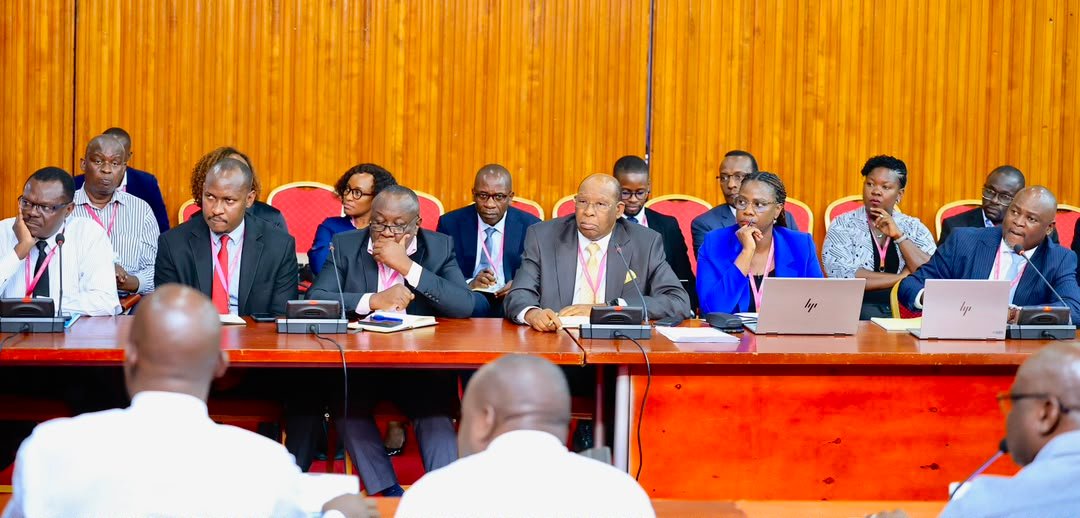
The offer came as COSASE continued its investigation into NSSF’s acquisition of the Temangalo land following an on-spot inspection by MPs.
The development could provide a new avenue for resolving a dispute that has persisted for nearly two decades since NSSF purchased land from Nzeyi in 2008.
Nzeyi’s position is that he is willing to vacate the land, but only after a financial settlement is reached with NSSF.
Nzeyi puts money on the table
Appearing before COSASE, lawyer Kabasi presented Nzeyi’s position on the disputed property, telling MPs that his client is prepared to resolve the matter financially.
Nzeyi has offered two possible options.
Under the first option, NSSF would purchase the portion of land that remains in his possession. If the Fund agrees to that proposal, Nzeyi would vacate the property.
However, if NSSF does not want to acquire the remaining portion, Nzeyi says he is willing to refund the money NSSF paid for the contested land.
The offer shifts the focus of the dispute from a prolonged confrontation over physical possession to the possibility of a financial settlement between the two parties.
It also gives COSASE a new issue to examine: whether a refund of the money paid for the disputed portion could bring the matter to a final conclusion.
NSSF rejects additional purchase
The proposal comes against NSSF’s position that the remaining portion of land occupied by Nzeyi does not meet the Fund’s criteria for acquisition.
This means that while Nzeyi is offering NSSF the option of purchasing the land, the Fund has apparently indicated that it has no interest in acquiring the additional portion.
Nzeyi’s alternative offer — to refund the money already paid for the contested land — could therefore become the more significant issue before the committee.
The businessman is effectively telling the Fund that if it does not want to acquire the land, he is prepared to return the money associated with the disputed transaction.
The exact amount Nzeyi is prepared to refund, however, remains subject to clarification before the committee.
Dispute over land sold in 2008
The Temangalo controversy dates back to 2008 when NSSF purchased hundreds of acres of land from Nzeyi.
The transaction subsequently became controversial, with questions being raised over the acquisition, valuation and management of the property.
Years later, the Fund says it has still not secured full possession of all the land it purchased.
NSSF management recently told the public that it had initiated further action to secure possession of the land, including pursuing the eviction of Nzeyi from the portion he continues to occupy.
The businessman, however, maintains that there is a way out of the dispute.
His latest proposal effectively puts a financial settlement on the table, either through NSSF purchasing the remaining portion or through the refund of money paid for the contested land.
COSASE wants clarity
COSASE, chaired by Muwad Nkunyingi with George Musisi as deputy chairperson, is now probing the circumstances surrounding the continued occupation of the land.
The committee has directed NSSF Managing Director Patrick Ayota and his management team to provide more information on the acquisition, ownership and current status of the property.
MPs also want details on projects and developments undertaken on the land since its acquisition.
The committee’s investigation follows an on-site inspection of the property, where legislators sought to establish the actual situation on the ground and compare it with information previously presented to Parliament.
Nzeyi’s financial offer now provides another avenue for the committee to investigate as it attempts to determine how the long-running dispute can be brought to an end.
What happens to the money?
A major question likely to arise from Nzeyi’s offer is whether NSSF would accept a refund instead of pursuing possession of the disputed property.
If the Fund accepts the proposal, the parties would have to establish the exact amount to be refunded and the legal implications of such a settlement.
They would also have to determine what portion of the original transaction the refund would cover and whether it would completely extinguish NSSF’s claim over the contested land.
The committee will therefore need to scrutinise the original sale agreements, payment records, land titles, boundaries and other documentation before determining whether Nzeyi’s proposal can provide a legally and financially satisfactory solution.
For Nzeyi, however, the message to Parliament is clear: he is prepared to put money on the table to settle the matter.
A fresh chance to end the Temangalo saga?
The offer could potentially mark a turning point in the Temangalo saga.
For years, the dispute has revolved around the question of whether NSSF has obtained full possession of land it says it purchased.
Now, the businessman who sold the property is offering to refund the money for the contested portion if NSSF does not want to purchase the land he still occupies.
The proposal places the ball in NSSF’s court and gives COSASE an opportunity to assess whether a negotiated financial settlement would be preferable to continued litigation and efforts to secure possession through eviction.
However, the Fund has not indicated that it accepts Nzeyi’s proposal, and the dispute remains under parliamentary investigation.
Until NSSF responds formally and the exact terms of any proposed refund are established, the Temangalo land battle remains unresolved.
But Nzeyi’s willingness to refund the money paid for the contested land introduces a significant new development — and could give Parliament a potential pathway towards closing one of Uganda’s most enduring public land disputes.