

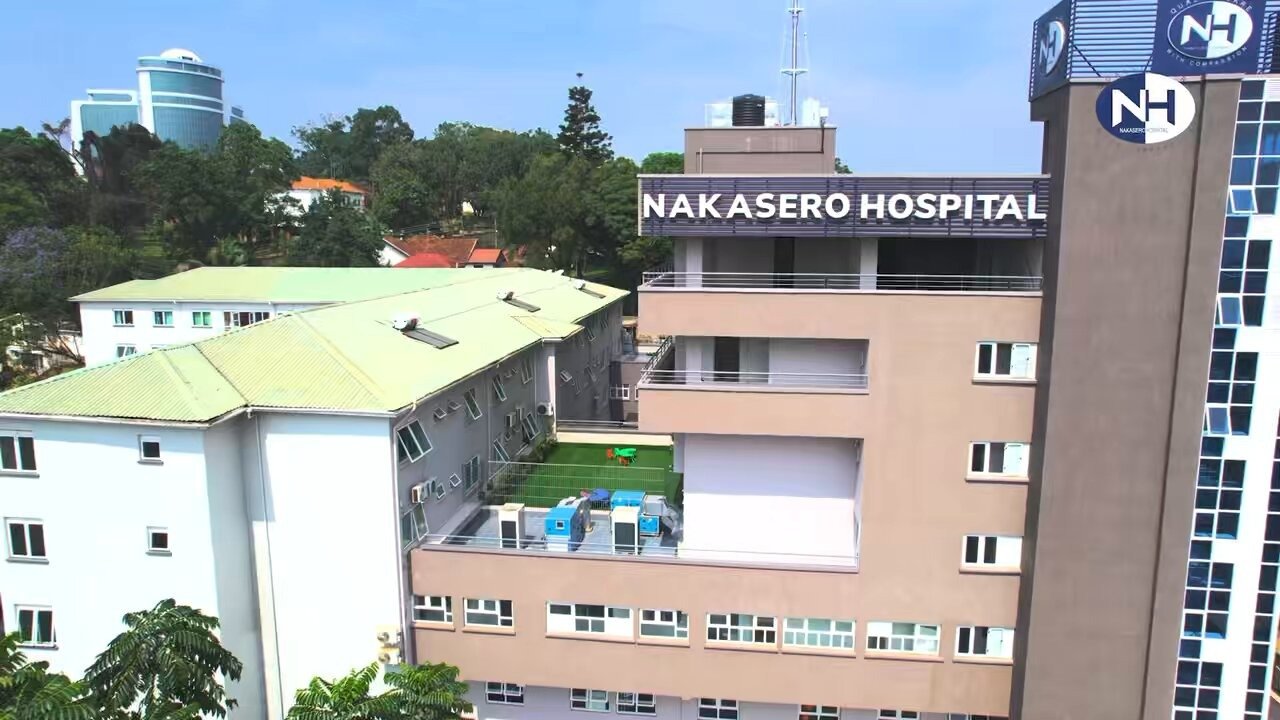
KAMPALA — The Industrial Court has found that Nakasero Hospital unlawfully dismissed one of its senior nurses after denying her adequate time to prepare for a disciplinary hearing, but stopped short of vindicating the health worker, ruling that she had indeed absented herself from duty without authorization and fundamentally breached the trust placed in her profession.
In a judgment delivered on June 22, Justice Anthony Wabwire Musana and a panel of Industrial Court assessors declared the dismissal of Oliver Kabalisa procedurally unfair but upheld the hospital’s decision to sack her over prolonged absenteeism, describing the conduct as a serious breach of duty in a profession where lives depend on staff presence.
The court awarded Kabalisa only UGX 1.6 million, equivalent to four weeks’ salary, rejecting her multimillion-shilling claims for damages.
Battle Over Dismissal
Kabalisa, a registered nurse who joined Nakasero Hospital in 2013 before moving to the dialysis unit in 2017, had challenged her summary dismissal in August 2019.
She argued that her absence from work between July 22 and August 2, 2019, was justified because she was caring for her sick daughter who had been hospitalized and was also attending studies at Aga Khan University under an arrangement allegedly known to hospital management.
The nurse further accused the hospital of violating her right to a fair hearing by summoning her to a disciplinary hearing with barely a day’s notice.
Nakasero Hospital, however, maintained that Kabalisa had disappeared from work for more than five days without authorization and failed to communicate properly with her supervisors, conduct classified as gross misconduct under the hospital’s code of conduct.
The hospital also argued that she had been informed about the disciplinary proceedings through WhatsApp before formal service of the hearing notice.
Court Endorses WhatsApp Notices
In one of the notable aspects of the ruling, the Industrial Court recognized WhatsApp as a valid mode of communication in employment disciplinary processes.
Justice Musana noted that modern legal developments have increasingly accepted electronic communication as a legitimate means of service where receipt can be demonstrated.
The court found that Kabalisa had indeed received the disciplinary invitation through WhatsApp on August 12, 2019, and later signed for the physical notice on August 14.
However, the judges ruled that the hospital still failed the test of procedural fairness because the time given to prepare for the hearing was inadequate.
The hearing took place on August 15, leaving the nurse with only a short period to organize her defense.
The court held that three days from electronic service—and effectively just one day from formal acknowledgment—could not be considered sufficient preparation time.
Medical Emergency Defence Falls Apart
Despite finding fault with the disciplinary process, the court delivered a devastating assessment of Kabalisa’s explanations for her absence.
The judges scrutinized medical records she produced to support her claim that her daughter’s illness forced her away from work.
According to the court, several of the documents contained inconsistencies that undermined her account.
While the records confirmed that her daughter had indeed been unwell, the court found contradictions between hospital documents, timelines, and Kabalisa’s own testimony regarding where she was during the disputed period.
The court further noted that although Mondays and Tuesdays had apparently been approved study days under her university program, she failed to satisfactorily explain absences on several other dates.
Under cross-examination, Kabalisa admitted she did not formally apply for leave and could not produce evidence showing she had delegated her duties or obtained authorization to remain away from work.
The judges concluded that her explanations were not credible enough to justify the prolonged absence.
“Patients Left Unattended”
In one of the strongest passages of the judgment, the court emphasized the unique responsibility carried by nurses and healthcare workers.
Justice Musana observed that nursing is not an ordinary office job but a profession directly linked to the safety and survival of patients.
The court warned that unauthorized absenteeism in a hospital environment can have immediate consequences for vulnerable patients who depend on medical staff for care.
“In healthcare, a nurse’s presence is a core operational necessity,” the court noted, adding that absenteeism could amount to an “unpardonable breach of duty” because patients are the first casualties when healthcare workers fail to report for duty.
The judges found that Kabalisa’s unexplained absence for more than five days had severely damaged the relationship of trust between her and the hospital.
As a result, the disciplinary committee was justified in concluding that gross misconduct had occurred and recommending her dismissal.
Massive Damages Claim Rejected
Kabalisa had sought UGX 150 million in general damages and another UGX 50 million in aggravated and exemplary damages, claiming economic hardship, emotional distress, and reputational harm.
The court dismissed those claims in their entirety.
Justice Musana said labour law does not allow employees to profit from their own misconduct and warned that awarding substantial damages in such circumstances would amount to rewarding wrongdoing.
The judges also found no evidence that Nakasero Hospital had acted maliciously or with bad faith.
Instead, they described the hospital’s mistake as a procedural error rather than deliberate victimization.
“The record shows that the Respondent’s committee acted with professional decorum,” the court observed, noting that the disciplinary panel had even acquitted Kabalisa of other allegations including gross negligence, endangering life, fraud, and forgery.
Final Verdict
The Industrial Court ultimately reached a split conclusion.
While Nakasero Hospital was faulted for denying the nurse adequate time to prepare her defense, the judges firmly held that the underlying reason for dismissal was valid.
The court declared the dismissal procedurally unfair and unlawful, awarded Kabalisa UGX 1.6 million as statutory compensation for the procedural violation, and ordered each party to bear its own legal costs.
The ruling serves as a warning to employers that even where misconduct is proven, disciplinary procedures must strictly comply with the law. At the same time, it underscores the court’s unwillingness to shield employees whose conduct fundamentally undermines workplace trust—particularly in critical sectors such as healthcare where absenteeism can directly affect human lives.