
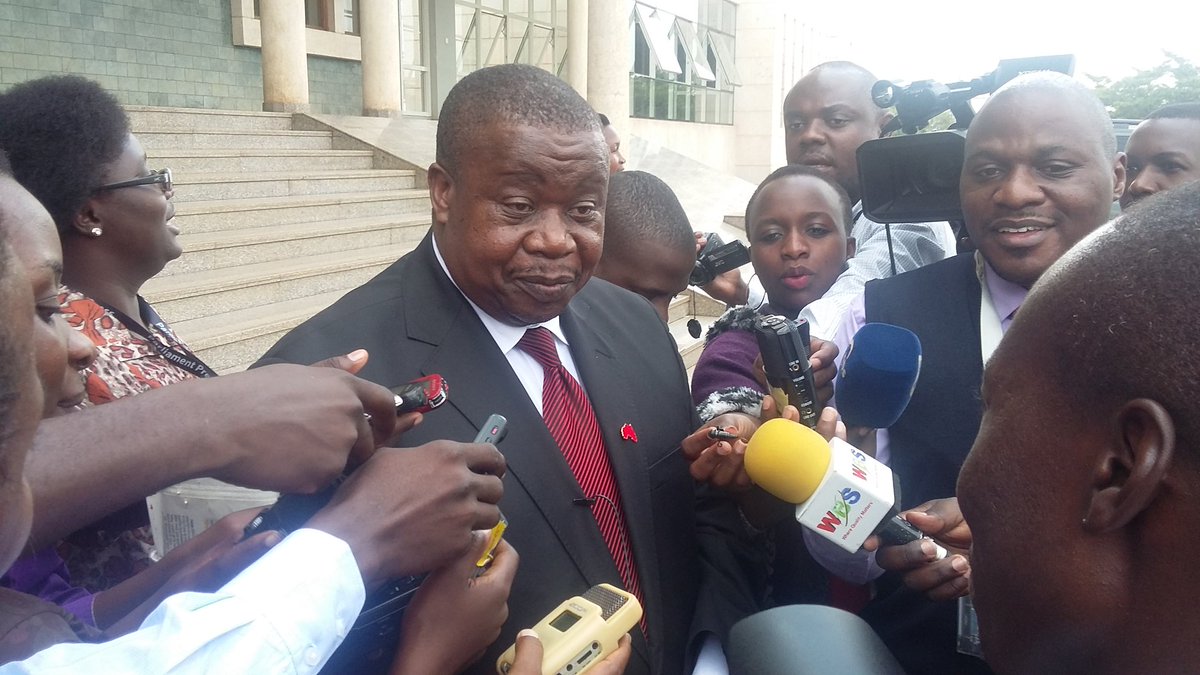
A purported leaked telephone conversation between retired Major General Kahinda Otafiire and Uganda’s Ambassador to the European Union, Mirjam Blaak, has shed new light on the diplomatic challenges Uganda faced in the aftermath of the controversial 2026 general elections, revealing apparent frustration among senior officials over social media posts by Chief of Defence Forces Gen. Muhoozi Kainerugaba and their impact on the country’s international image.
The alleged transcript, which has circulated online but whose authenticity has not been independently verified, appears to capture a candid discussion between the two officials as Uganda battled growing criticism from European institutions over allegations of political repression, arbitrary arrests, and the treatment of opposition supporters following the elections that returned President Yoweri Museveni to power.
At the centre of the controversy was the disappearance from public view of National Unity Platform (NUP) president Robert Kyagulanyi Ssentamu, popularly known as Bobi Wine, amid widespread reports that security agencies were pursuing opposition leaders and supporters across the country.
The conversation suggests that Ugandan diplomats stationed in Europe were under intense pressure to explain the government’s position to European lawmakers who had become increasingly concerned about developments in Uganda following the elections.
According to the transcript, Ambassador Blaak had just concluded meetings with members of the European Parliament, where she was attempting to counter criticism directed at Uganda and defend the government’s handling of the post-election situation.
“We are trying to defend our country, hand, tooth, nails, whatever it is at our disposal in regard to the European Parliament resolution,” Blaak is quoted as saying.
“We have just been with the European Parliament.”
The exchange provides a rare glimpse into the behind-the-scenes diplomatic efforts undertaken by Ugandan officials as the government sought to contain the fallout from international condemnation and preserve its standing with key European partners.
A major issue raised during the conversation was the status and whereabouts of Bobi Wine, whose disappearance had become a focal point for international concern.
European lawmakers, according to the transcript, wanted clarity on whether the opposition leader was being actively pursued by the state.
“The problem is, of course, Bobi Wine mostly. Is he a wanted man?” Blaak reportedly asked Otafiire.
The veteran politician and former cabinet minister responded with a categorical denial.
“Not a wanted man,” Otafiire replied.
The response appears to have been significant for the ambassador, who indicated that she intended to communicate the clarification to European officials.
“No, no. I know. I’m glad to say that, because I’m going to officially declare this now,” she reportedly said.
However, the transcript suggests that diplomats faced a major obstacle in convincing European lawmakers of that position because of statements that had already been made publicly by Gen. Muhoozi Kainerugaba on social media.
Blaak reportedly explained that some European officials had questioned Uganda’s position because social media messages appeared to suggest otherwise.
“She wants my quote, and I had already stated it, but I said, ‘Let me be sure, because you know there are certain tweets that have said differently,'” she said.
Although she did not specifically mention Muhoozi by name, the remarks appear to refer to a series of controversial posts the Chief of Defence Forces made on X during the tense post-election period.
In the aftermath of the elections, Muhoozi repeatedly described Bobi Wine as a “terrorist” and publicly called on him to surrender. In some posts, he warned that the opposition leader would be treated as an outlaw if he failed to do so.
One particularly controversial post reportedly suggested that security forces had killed several alleged NUP supporters and expressed hope that Bobi Wine would meet a similar fate, comments that drew condemnation from opposition figures and human rights advocates.
The leaked conversation suggests these statements created a significant diplomatic burden for officials attempting to present a different narrative abroad.
At one point, Otafiire appears to openly acknowledge the damage caused by the social media posts.
“It’s the tweets causing us problems,” he reportedly says.
He then uses a vivid analogy to describe the situation, saying it was “like giving alcohol to a hungry man.”
According to the transcript, Otafiire further admitted that the posts appeared to reinforce claims being made by Bobi Wine and his supporters.
“The tweets confirm what Bobi is saying,” he reportedly noted, referring to the opposition leader’s assertion that he was effectively being hunted by state authorities.
The comments, if authentic, would represent one of the clearest acknowledgements by a senior government figure that public statements by top military officials were complicating Uganda’s diplomatic engagements at a critical moment.
The conversation also highlights concerns within government circles about Bobi Wine’s influence among European policymakers and institutions.
Blaak reportedly acknowledged that the opposition leader had developed substantial support within the European Parliament, making Uganda’s diplomatic efforts more difficult.
“We are doing well, I think, with the European Parliament. It’s always causing us a lot of problems, because he has a lot of influence around the European Parliament, and that is not good,” she said.
Her remarks suggest that Ugandan officials viewed European institutions as an important battleground in the broader political contest between the government and the opposition.
Otafiire appeared to share those concerns, noting that government representatives were constantly being called upon to respond to criticism and questions emerging from Europe.
“We have every day have to fight this every day. We are the ones getting to answer for it,” he reportedly said.
Political analysts say the conversation, if genuine, offers a revealing insight into the international dimensions of Uganda’s post-election crisis and the challenges faced by diplomats seeking to defend government policies while navigating conflicting public messages from powerful figures within the state.
The alleged leak also underscores the growing influence of social media in shaping diplomatic relations, particularly when statements made online by senior officials become subject to international scrutiny.
As debate over the authenticity and implications of the transcript continues, neither Otafiire nor Ambassador Blaak had publicly commented on the contents of the conversation by press time.
Efforts to obtain responses from both officials were reportedly unsuccessful.
Nonetheless, the leaked exchange has already sparked fresh discussion about the intersection of politics, diplomacy, and social media in Uganda’s governance landscape, raising questions about message discipline within government and the broader impact of public statements on the country’s international standing during periods of political tension.