
Uganda has committed Shs13.56 trillion to health, education, water and social protection programmes in the 2026/27 budget, underscoring government’s belief that human capital development remains critical to achieving long-term economic transformation.
The allocation represents one of the largest investments in people ever made by government and comes as Uganda seeks to improve service delivery while preparing its workforce for a rapidly changing economy.
Education alone will receive Shs6.66 trillion.
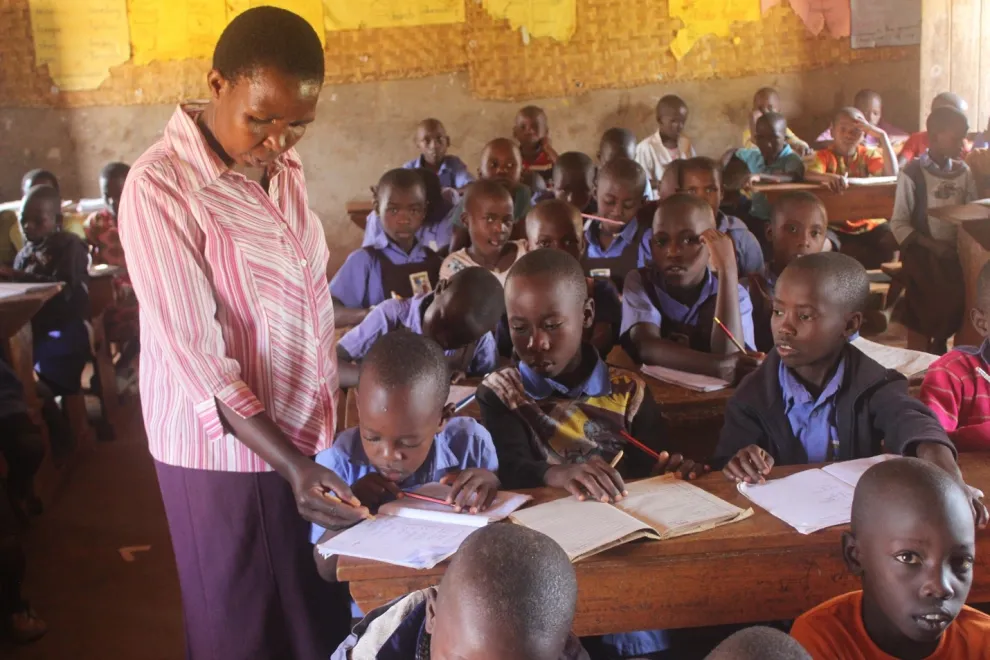
The sector continues to absorb a significant share of public resources due to growing enrollment under Universal Primary Education and Universal Secondary Education programmes.
According to the budget speech, approximately 9.52 million learners benefited from UPE during the current financial year, while nearly one million students were supported under USE and post-O-Level education programmes.
Government has also expanded secondary school access through construction of additional seed schools.
Ninety new schools were completed during the year while 259 seed schools have now been operationalized.
Perhaps the most politically significant announcement in the education sector is a salary enhancement package worth Shs568.65 billion.
The funds will be used to increase salaries for primary school teachers and arts teachers in secondary schools and technical institutions.
The decision follows years of complaints from teachers regarding pay disparities, particularly between arts and science educators.
Government hopes the salary improvements will boost morale, enhance retention and improve learning outcomes.
Investment in STEM education, vocational training and digital literacy will also continue.
Officials believe technical skills development is essential for preparing young people to participate in emerging sectors such as manufacturing, information technology and industrial production.
The health sector will receive Shs5.23 trillion.
One of the key achievements highlighted in the budget is increased funding for essential medicines.
Government raised allocations to the National Medical Stores to Shs862.93 billion during the current financial year.
The objective is to reduce dependence on donor funding and ensure uninterrupted supply of medicines including antiretroviral drugs, malaria treatments and vaccines.
Healthcare infrastructure development also continues.
Seventeen Regional Referral Hospitals and twenty-five General Hospitals were equipped with Neonatal Intensive Care Units.
Fourteen Regional Referral Hospitals received CT scan machines.
Construction and upgrading of health facilities in Karamoja is ongoing while major investments in specialized healthcare continue.
Uganda recently achieved a medical milestone when the Uganda Cancer Institute successfully performed the country’s first bone marrow transplant.
The Uganda Heart Institute conducted more than 600 cardiac interventions during the year.
Construction of the new Cardiac Hospital in Naguru and the International Specialized Hospital of Uganda in Lubowa is progressing.
Regional cancer centres are also under development.
Government believes these investments will reduce the need for expensive treatment abroad while improving access to specialized care.
Preventive healthcare remains a major priority.
Immunization coverage has reached impressive levels, with child vaccination rates exceeding 90 percent.
National campaigns against malaria, HIV/AIDS, Ebola, cholera and yellow fever have also continued.
The budget allocates resources for maternal and child health, nutrition improvement, emergency response systems and exploration of pathways toward universal health coverage.
Water and sanitation programmes will receive Shs1.013 trillion.
Government reports that access to improved water sources now stands at 71 percent nationally.
Hundreds of villages gained access to safe water during the year through expansion of water systems and installation of solar-powered facilities.
Social protection programmes continue supporting vulnerable groups.
The Social Assistance Grant for Empowerment has reached nearly 490,000 elderly beneficiaries.
Special grants for persons with disabilities and labour market interventions are also being expanded.
Government argues that investments in people are not simply social expenditures but strategic economic investments.
A healthy and educated population is essential for productivity, innovation and competitiveness.
As Uganda pursues its goal of becoming a USD500 billion economy, officials believe human capital development will determine whether economic growth translates into broad-based prosperity.
The challenge, however, remains ensuring that increased spending results in improved service delivery.
Citizens continue to raise concerns about teacher shortages, medicine stock-outs, overcrowded classrooms and healthcare staffing gaps.
The effectiveness of the Shs13.56 trillion allocation will therefore be measured not only by how much is spent but by the outcomes achieved.
For millions of Ugandans relying on public schools, hospitals and social services, the coming financial year will provide a crucial test of government’s commitment to investing in people.