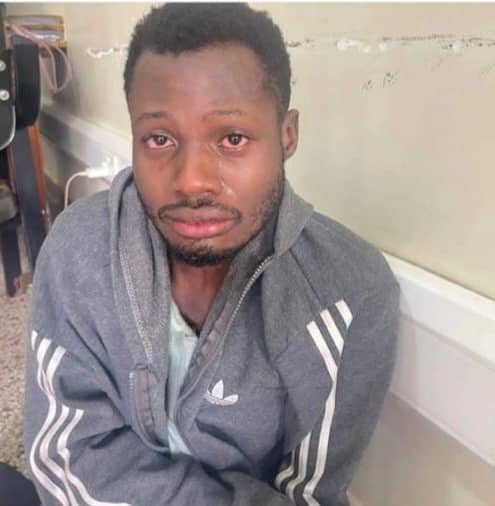


Shock and fury filled the courtroom as Christopher Okello Onyum, the man accused of butchering four helpless toddlers at a Ggaba daycare, was finally brought to face justice—his appearance doing little to calm a nation still reeling from one of the most horrifying child killings in recent memory.
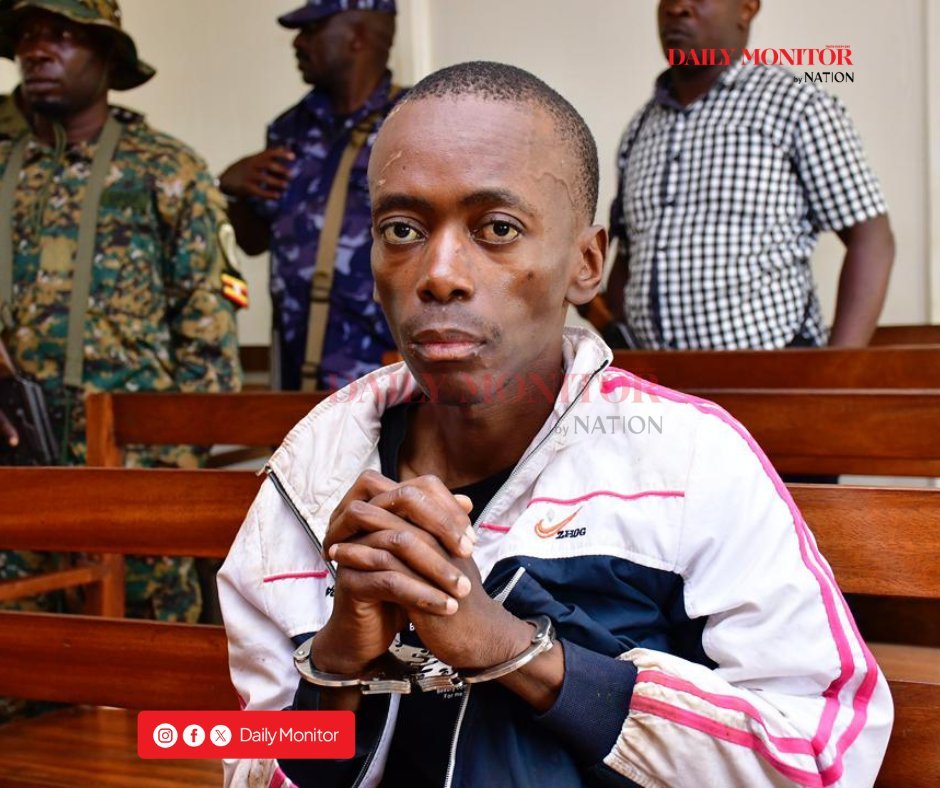
Onyum, 38, was marched into court at exactly 4:07pm under heavy armed guard, with officers forming a tight human shield around him as stunned onlookers craned their necks for a glimpse of the suspect at the centre of a massacre that has shaken Kampala to its core.
Before Grade One Magistrate Aidah Nanjala, the accused stood silent as multiple murder charges were read out. He was not allowed to respond—lower courts lack the authority to try capital offences—adding a chilling stillness to proceedings already thick with tension.
Prosecutors, led by Chief State Attorney Jonathan Muwaganya alongside Ann Kiiza, revealed that investigations into the April 2 killings are nearly complete.
“We pray for a short adjournment to conclude the remaining investigations,” Muwaganya told court.
The magistrate swiftly remanded Onyum to Luzira Prison until April 8 at 2pm, when the case will return for mention.
But the real drama erupted after the session.
As Onyum was escorted out, other inmates in custody erupted in rage, shouting and demanding to confront him.
“Bring him here—we also show him!” they yelled, their anger boiling over in a moment that nearly spiralled out of control.
Sensing imminent danger, security officers moved with urgency, whisking Onyum away and bundling him straight onto a prison bus under heightened guard, narrowly avoiding what could have turned into instant mob justice within the court premises.
Earlier, the suspect had refused to record a charge and caution statement when presented before a magistrate—an act that only deepened the mystery surrounding his motive.
According to the charge sheet, Onyum faces four counts of murder under Sections 171 and 172 of the Penal Code Act.
The details of the crime itself are nothing short of chilling.
Investigators say Onyum carefully plotted his way into the Ggaba Early Childhood Development Centre by posing as a parent seeking admission. He reportedly paid Shs180,000 in fees to gain trust and access.
Once inside, witnesses say he blended in seamlessly—chatting with staff, observing routines, and even joining children at play.
Then, without warning, the calm turned into chaos.
“He pretended to join their games, then suddenly turned violent,” one eyewitness recounted.
Panic erupted as the attacker turned on the children, leaving four of them dead before anyone could stop him.
Residents, alerted by the commotion, descended on the scene and captured him as he attempted to flee. An enraged mob nearly lynched him on the spot before police from Ggaba intervened—firing shots into the air to disperse the crowd and save him from being torn apart.
He was later transferred to Kabalagala Police Station.
The brutal killings have ignited nationwide outrage, raising urgent questions about the safety of children in early learning centres and exposing alarming gaps in security.
For many Ugandans, the image of a man calmly walking into a daycare—only to unleash unimaginable horror—remains deeply disturbing, with calls growing louder for stricter protections to ensure such a tragedy never happens again.